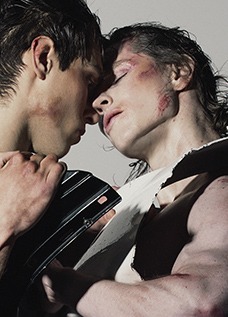
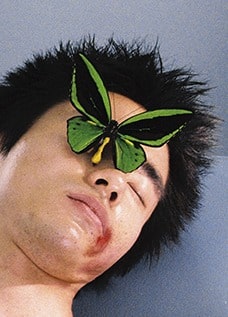
Artists filip custic and Virgen María, supported by Colección SOLO, have created a striking balloon sculpture that defies the norms of urban space. Their bodies, covered by realistic helmets, are arranged in acrobatic positions and supported by dozens of colorful balloons. The sculpture, titled dreamcore, looks like a surreal monument that blends with the city’s statues, but also questions them.
Ver esta publicación en Instagram
The balloons, which vary in size and color, give the impression of a floating structure that occupies the public space with determination. The artists’ skin, expressionless faces, and shiny plastic contrast with the marble-like surface of the urban statues. However, the viewers soon realize that the sculpture is not a solid monument, but an anti-monument that challenges the conventional representations of power and history that fill the city’s squares and streets.
The sculpture also establishes a connection with the street artists who use their bodies as a creative medium in the city. The artists freeze their figures for hours, like the performers who pretend to be statues, robots, or plush toys. They also invite the public to interact with the sculpture, by popping the balloons that hold them up. The sculpture thus becomes a live performance that involves the audience and the city.
Dreamcore is a project that reflects the interests of filip custic, an artist who explores the internet culture, the processes of dehumanization, and the effects of filtering and editing. The artist leaves the virtual space and translates his realities into a simulation that appears on the horizon of the metropolis. The sculpture is a hybrid of hard and soft, ethereal and concrete, skin and pixel, that allows the artist to inhabit the creative gap between these polar opposites.
The sculpture also creates a contrast between the inhospitable and the colorful, the distant and the intimate, the cheerful and the desolate. The square, which is usually bright and decorated, becomes a bleak place, where the lights and the shop windows highlight the virtues and the vices of the present. The balloons and the circus poses of the artists contrast with the frozen smiles on their faces. The playful and childish elements of the sculpture dialogue with the unsettling and uncanny aspects of the work. The work exists between a birthday party and a dissected body, between a piñata and a humanoid robot, between a square and a backroom, between sculpture and flesh.

When the public pops the balloons, the sculpture reveals its contents: confetti, money, glitter, colored liquids… What seemed to be a marble pedestal or a strange monument becomes a communal ASMR session, where the senses are stimulated and the pleasure is shared. The sculpture is then destroyed, and the fiction that sustained it is exposed, revealing the contemporary condition. What was unstable becomes solid, and the doubt disappears. However, the experience remains, like a lucid dream, and the pact is sealed. The square returns to its normal state, but the memory of the dreamcore persists.