Back in 2022, Loewe’s SS23 collection featured a “grass” coat in collaboration with bio-designer Paula Ulargui Escalona whose sustainable practices involve cultivating plants to grow on clothes in order to “raise awareness of our need to reconnect with nature”. Fast forward to today, and the discussion around environmentalism that has permeated the fashion system has significantly decreased. Life cannot exist without healthy soil. Soil intersects food, textiles, life, why not art too? For this reason, the newly opened exhibition Arts of the Earth at the Guggenheim Bilbao seems more urgent than ever against the current climate while highlighting works where environmentalism is intersectional with equality, race, and class.
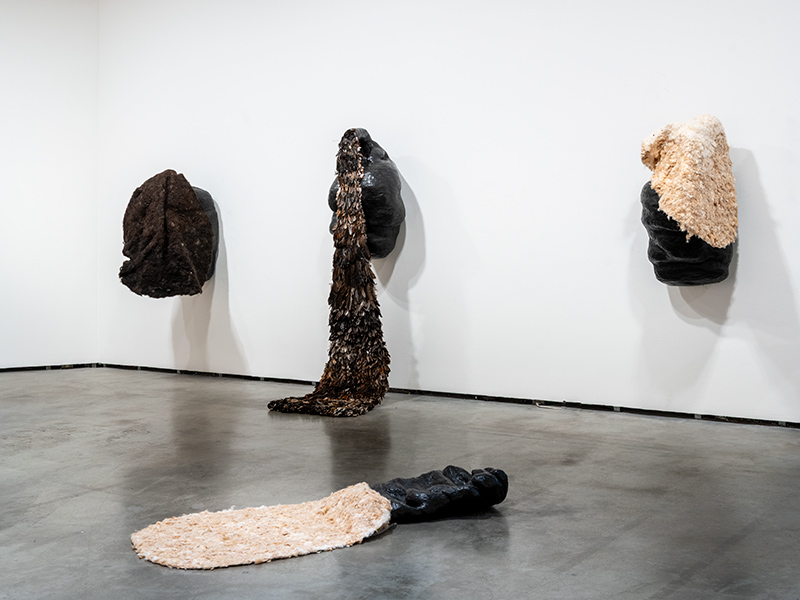
Arts of the Earth at the Guggenheim Museum Bilbao is an ambitious exhibition on humanity’s shifting relationship with our planet, soil, and biodiversity. Curated by Manuel Cirauqui, the exhibition brings together more than forty artists from across generations and geographies to explore soil not only as a material, but as a living, political, and cultural subject. Through sculpture, installation, performance, architecture, design and craft, the show traces how artists have responded to ecological transformation from the mid-twentieth century to today, many of which address.
“Earth, clay, silt from Bilbao’s estuary, grass, trees, roots, leaves, textiles of plant origin or made with sheep’s wool… Nature inundates the exhibition space, incorporated into artworks that we perceive and interpret with our senses, our mind, and our awareness. In Basque, the word harreman (relationship) brings together the duality of receiving (hartu) and giving (eman), effectively defining what we aim to highlight with this exhibition. How can we learn from the Earth? How can we give back its gifts?” stated Miren Arzalluz, Director General of the Guggenheim Museum Bilbao.
The exhibition unfolds through material affinities, where earth, clay, plants, textiles, and organic matter create intuitive connections across the galleries. Included are works by Claire Pentecost exploring the intersectionality between today’s agricultural practices, composting and art, Delcy Morelos, Mel Chin known for reshaping the role of art as a tool for ecological repair, social action, and scientific collaboration, Gabriel Orozco, Giuseppe Penone, Frederick Ebenezer Okai and the collective Unión Textiles Semillas who’s practices span land intervention, remediation, ancestral knowledge and collaborative making. Rooting together the heart of the exhibition, artist Asad Raza created a living installation made up of 26 trees that will later be replanted in the Basque Country. Following the show’s opening was the activation of Yoko Ono’s Wish Tree for Bilbao, reminding us of the role of trees in the cityscape. Pieces made with local materials will go back to their origins at the end of the exhibition.
For those of us in the fashion industry, Arts of the Earth offers a rare chance to engage with sustainability beyond trend-driven “eco” aesthetics and into the deeper systems that shape materials, labor, and production. The exhibition’s focus on soil, natural resources, craft, and regeneration mirrors fashion’s urgent reckoning with supply chains. Unión Textiles Semillas directly addresses issues that resonate with textile innovation, circular design, and responsible sourcing. What the fashion industry lacks that art proposes is powerful visual and conceptual references for rethinking luxury, craft, and sustainability as lived processes rather than marketing narratives. Looking at regenerative art should inspire us to be more collaborative with ecologists, farmers, and local populations in forward-building.
We need to stop looking at the West and technology for innovation. Art can be a space where we can invent something new. It’s the demand for products, not just climate change, that ruins soil. We need artists who merge with the bio world. Fashion can learn from Earth Works as we need a new generation of designers to draw on the movement’s DIY spirit en masse. Imagine an economy based on soil that forces us to decenter the human to understand that we are part of a bigger system. Fashion could be in an ongoing organic metamorphosis status.
Beyond the artworks themselves, Arts of the Earth also reflects the Guggenheim Bilbao’s commitment to sustainable exhibition-making, from reduced carbon transport to recyclable display materials. A calendar of activities during the show’s run will see creative sessions, documentary screenings, talks, music, tours, and workshops. More than an exhibition about nature, it becomes a living framework for rethinking how culture and nature can co-exist in the future.
Arts of the Earth at Guggenheim Bilbao is running from December 5, 2025 to May 3, 2026.
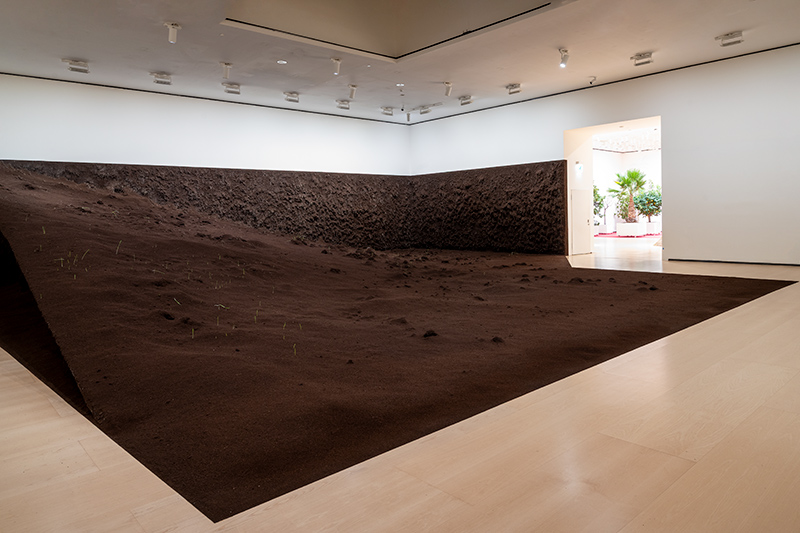
Delcy Morelos
Sorcière (Sorgin), 2025
Earth and mud on a wooden structure.
Dimensions variable.
Courtesy Delcy Morelos & Marian Goodman Gallery
© Delcy Morelos, Bilbao, 2025
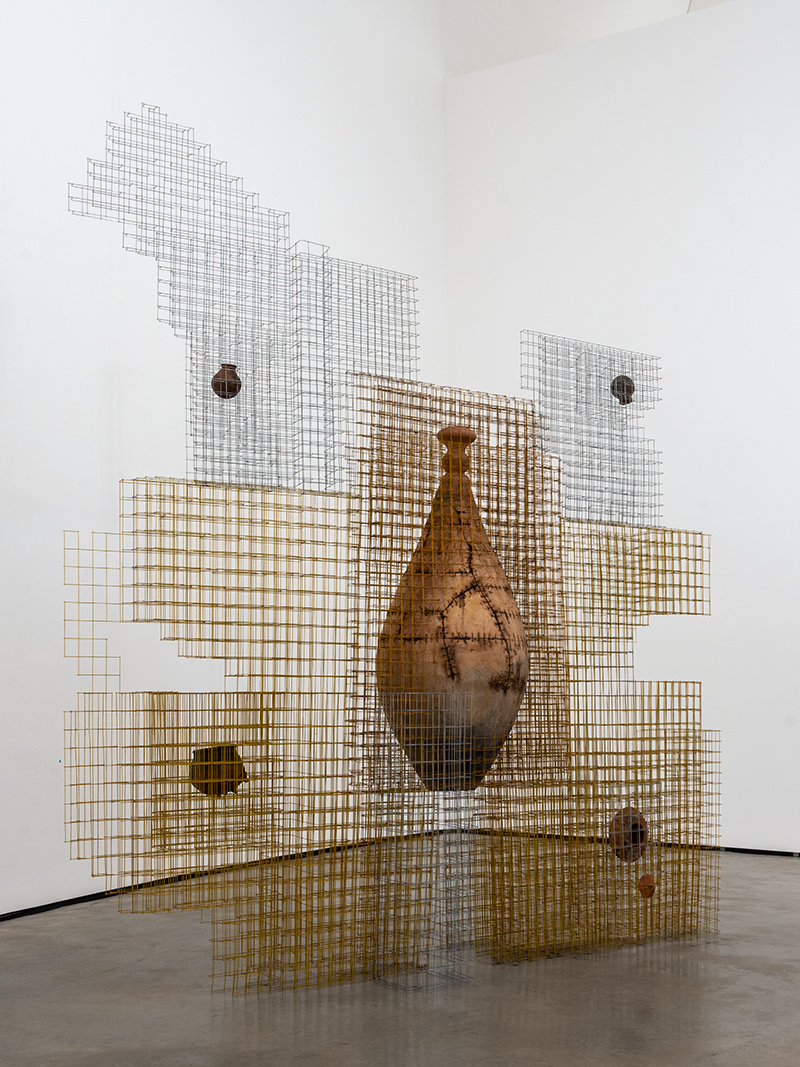
Frederick Ebenezer Okai
Butterfly I (Papillon I , 2022)
Terracotta vases, welded wire mesh, fire, wood-fired kiln
299.7 x 386.1 x 137.2 cm
Courtesy of the artist
© Frederick Ebenezer Okai, Bilbao 2025
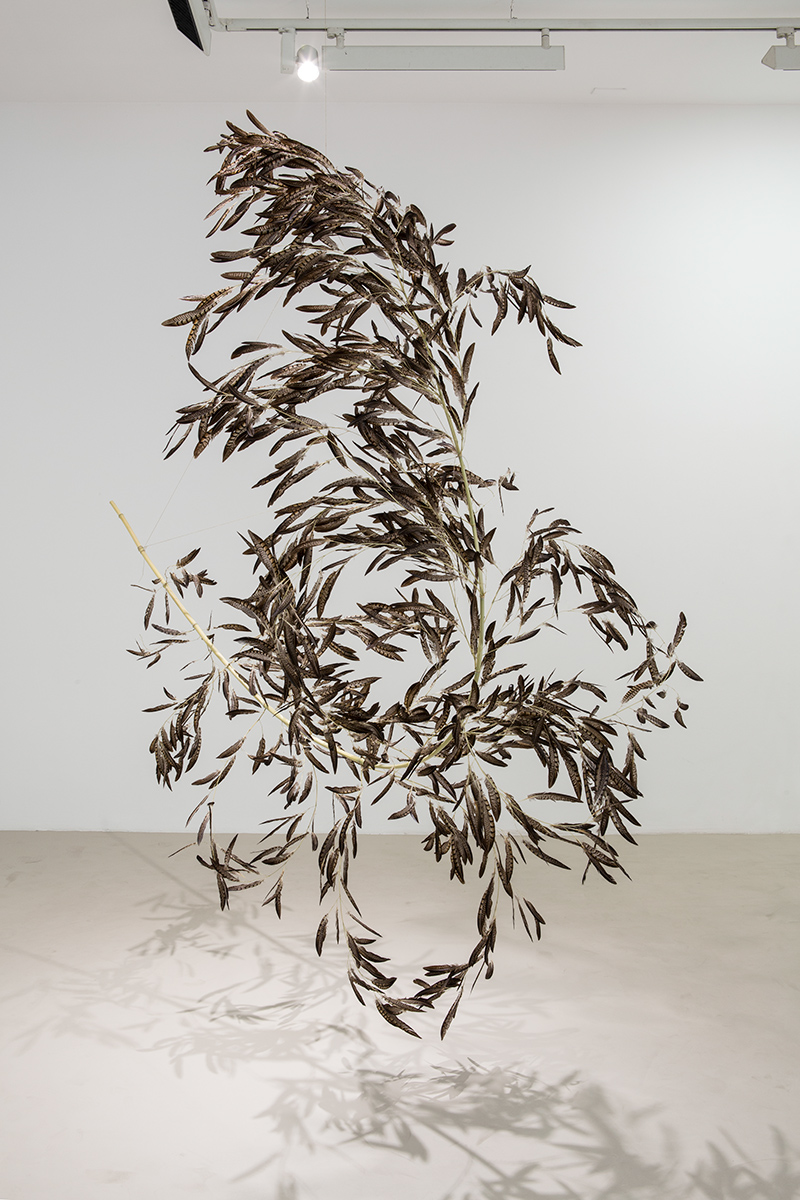
Gabriel Orozco
Roiseau 6 , 2012
Bamboo branch and feathers
290 x 270 x 190 cm
Courtesy of the artist and Galerie Chantal Crousel, Paris
Photo: Florian Kleinefenn
© Gabriel Orozko, Bilbao 2025
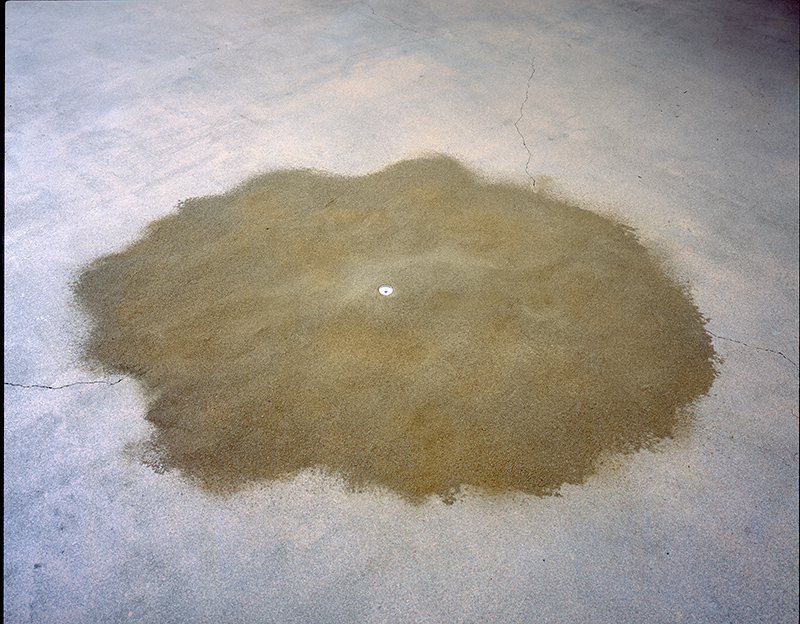
Giovanni Anselmo
Mente la terra si orienta , 1967/2007
Earth, magnetic needle
Variable dimensions
Castello di Rivoli Museo d’Arte Contemporanea, Rivoli-Torino on loan from the Fondazione per l’Arte Moderna e Contemporanea CRT
© Giovanni Anselmo
Photo: Paolo Pellion
© Giovanni Anselmo, Bilbao 2025
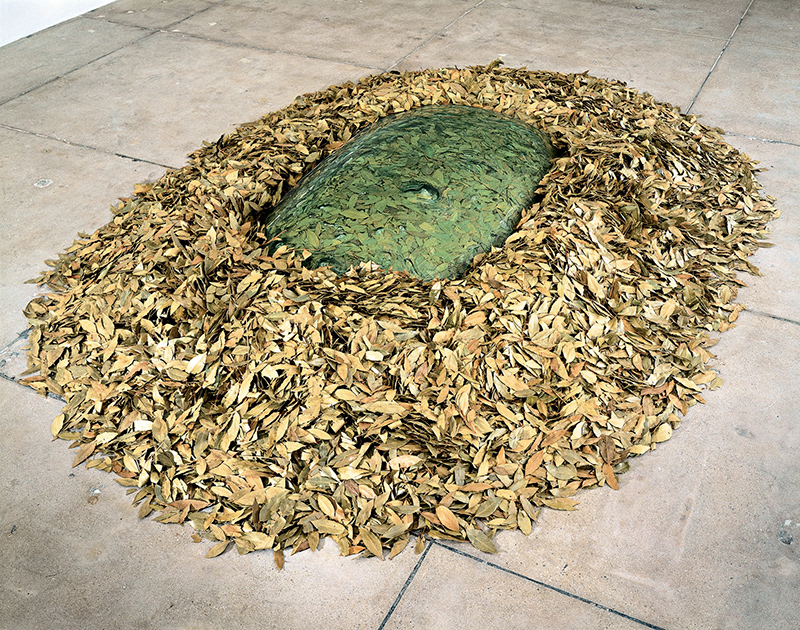
Giuseppe Penone
Nail and bay leaves ( Unghia e foglie di alloro , 1989)
Glass and bay leaves.
Courtesy of the artist and Marian Goodman Gallery.
Photo: Alex Yudzon
© Giuseppe Penone, VEGAP, Bilbao 2025
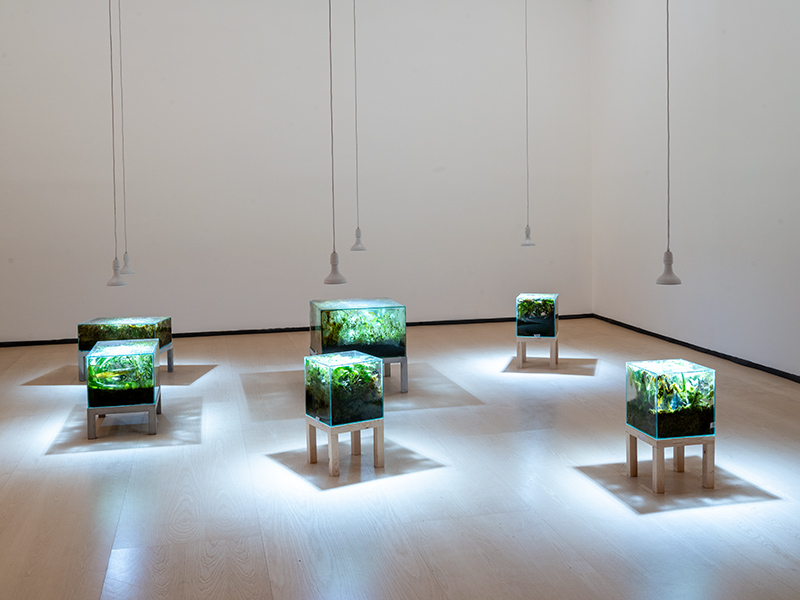
Isa Melsheimer
Wardian Case ( Wardian Case, 2023)
Glass, potting soil, seeds, plants.
Variable dimensions (installation view at the Guggenheim Museum Bilbao).
Courtesy of the artist and Galerie Jocelyn Wolff, Paris.
© Isa Melsheimer, Bilbao 2025
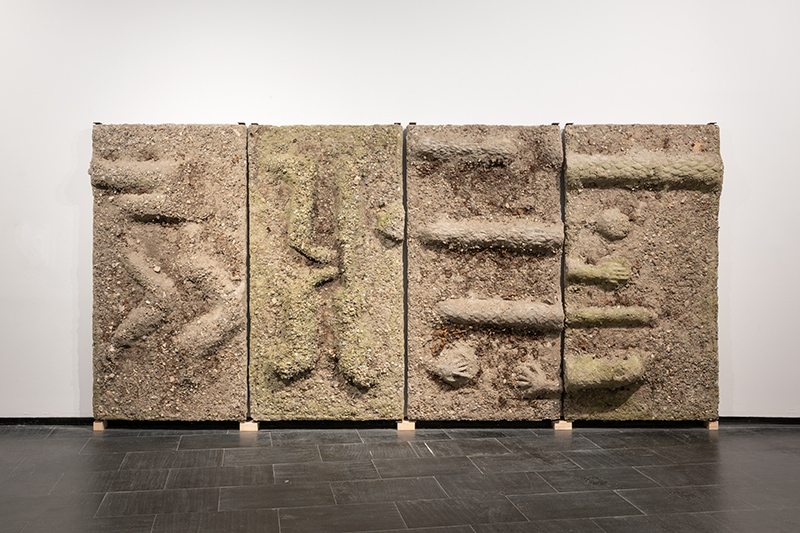
Jorge Satorre
I will never forget the way you told me everything without saying a word. (reliefs), 2021
Four reliefs. Cellular concrete, reinforcing bar, and soil from the CRAC Alsace garden.
Four pieces: 205 x 107 x 15 cm each.
Courtesy CarrerasMugica
© Jorge Satorre, Bilbao 2025
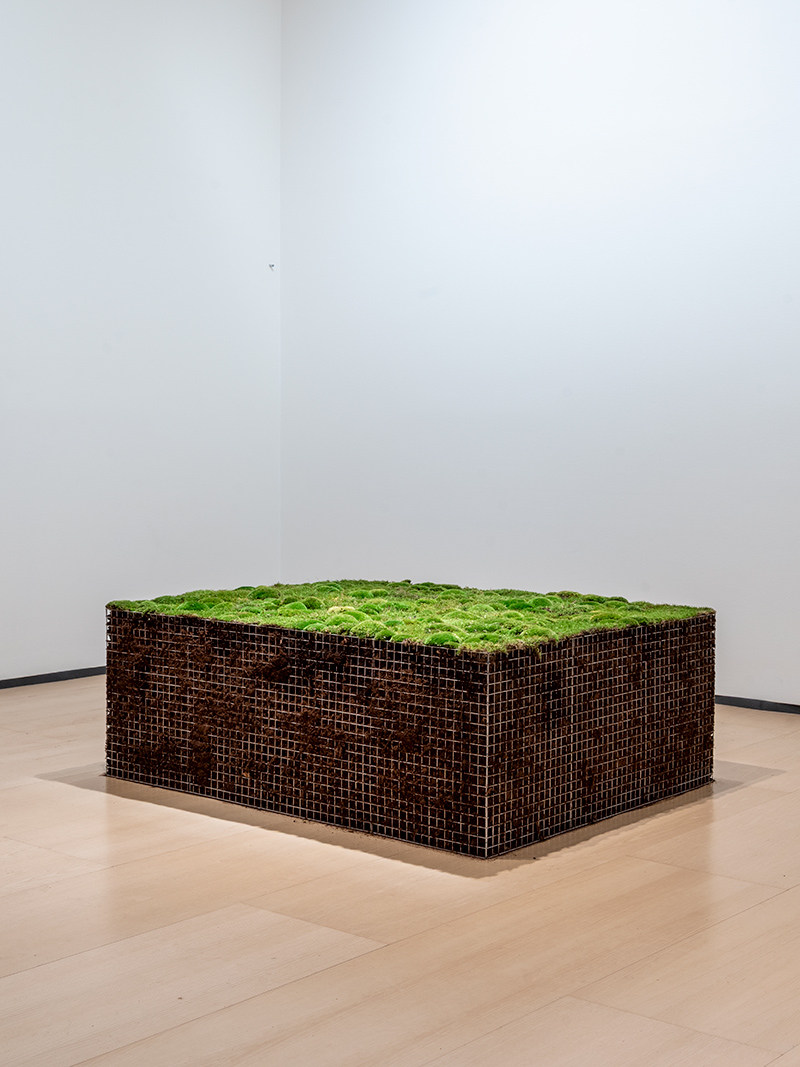
Meg Webster
Volume for Lying Flat ( 2016 )
Peat, green moss, soil, galvanized steel mesh
55.9 x 149.9 x 207 cm
Courtesy of the artist and Paula Cooper Gallery, New York.
© Meg Webster, Bilbao, 2025
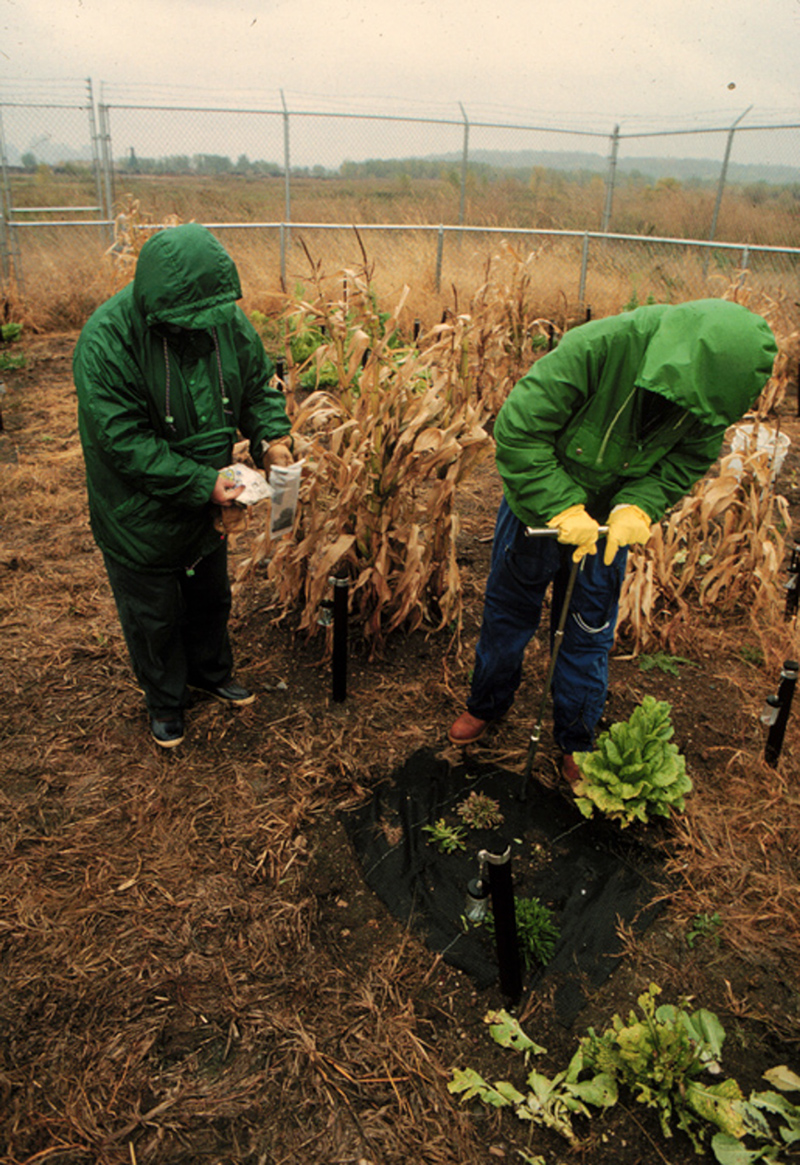
Mel Chin
Revival Field ( 1991-ongoing)
Plants and industrial fencing at a hazardous waste landfill:
an ongoing project in collaboration with Dr. Rufus Chaney, Senior Agronomist Researcher, USDA.
Courtesy of the artist.