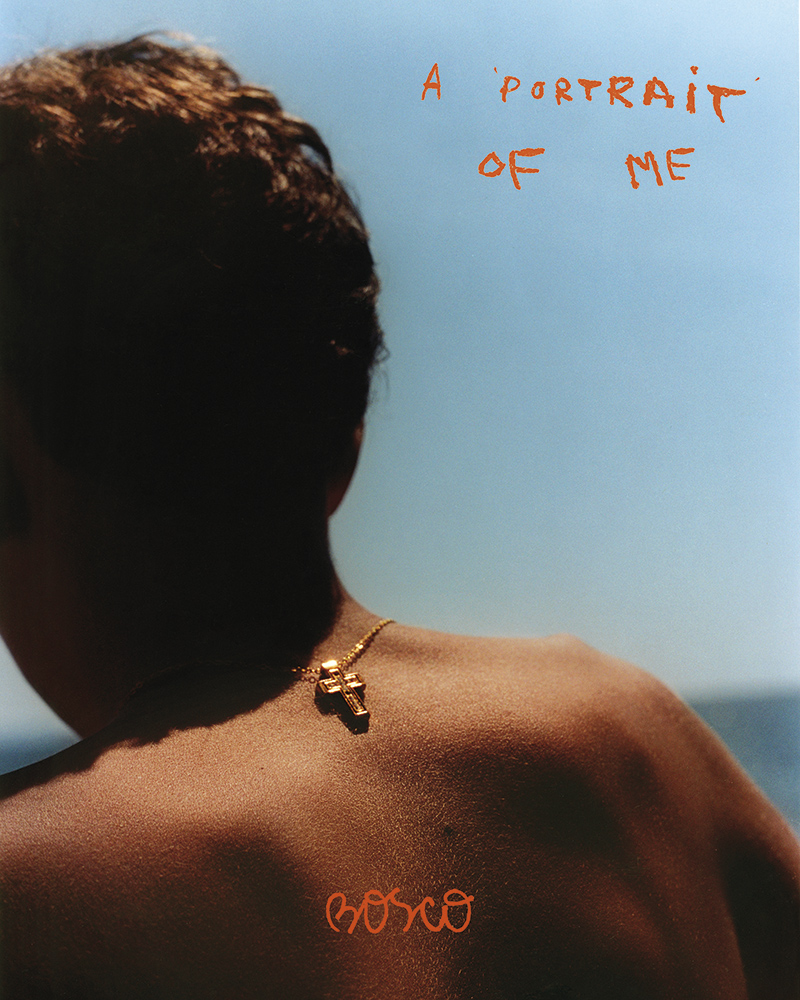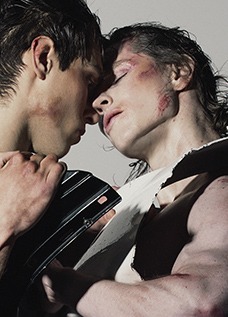
Chino Amobi’s new project, “Eroica II: Christian Nihilism”, marks a striking and deeply personal return from an artist known for expanding the edges of sound, image, and storytelling. Set for release on October 31st via Drowned By Locals, the album follows his acclaimed 2017 debut “Paradiso”, which plunged listeners into the chaotic heat and rhythms of the global South. This time, Amobi shifts into an entirely different emotional climate, cooler, quieter, and more spacious, embracing folky drones, glacial ambient textures, spectral trap, and echoes of sacred musical traditions. If “Paradiso” burns with urgency, “Eroica II” feels like stepping into its smoke-filled aftermath, moving from confrontation toward contemplation.
The heart of the album lies in Amobi’s ongoing spiritual reckoning, which he describes as a meditation on Christianity amid a world overwhelmed by nihilism. His reflections bring a vulnerable, introspective weight to the work, as he navigates the light and shadow within faith, scripture, and personal history. Rather than offering answers, the project lingers in silence, memory, and uncertainty, inviting listeners into a space where doubt and transcendence coexist. It’s an album shaped by voids and upheaval, one that dares to sit with the questions that refuse easy resolution.
Amobi’s evolution toward this moment feels rooted in a lifetime of interdisciplinary creation. Born in Alabama to Nigerian parents and raised in Virginia, he grew up traveling between cultures, making art and experimenting with music from an early age. From his raw, conceptual beginnings as Diamond Black Hearted Boy to co-founding the influential NON Worldwide collective, he has continually pushed against aesthetic and political boundaries. His work across visual art, film, and fashion, along with recent releases like French Extremism and Labyrinth, all build toward the distilled, haunted minimalism of “Eroica II”. The new album stands as a pivotal step in his expanding practice, offering an intimate and transformative chapter in one of the most compelling artistic journeys of his generation.
To celebrate the release of “Eroica II: Christian Nihilism”, Chino Amobi curated an exclusive playlist with songs that inspired him while making this project:
Veeze – L.O.A.T
“I really love how Veeze brings this effortless, laid-back vibe, like he’s gliding through the beat rather than chasing it. His voice sounds relaxed and unbothered, yet it carries these sharp little moments of clarity and wit that pierce through the haze. In that video, I’m into how the flow feels unhurried, like someone speaking in slow motion with full intention. That’s exactly the energy I’m drawn to: that space between moving and hovering, where you’re not forcing momentum but letting something unfold. It loosens me up as a listener and reminds me of the moments in my own work where I want sound to breathe rather than yank you forward.”
Malibu – Spicy City
“Malibu’s ambient soundscape and visuals are always stunning. The waves, the horizon, the way light catches the surface, it all breathes. The visual panorama feels less like a “view” and more like a waiting room for something sacred: there’s this hush, this slow, in-between time when you’re neither fully here nor gone. The sound, stretched out and shimmering, creates this suspended space where you can feel your edges blur.”
Reddo – Everybody Sees The Light
“Brodinski’s brutalism and futuristic realist production is immeasurably influential to contemporary rap music. His production sets the tone for my album in a major way. It’s been a dream and an honor to have tracks produced by him on it. The mood on this song’s production, combined with Reddos’ smooth, dispassionate flow yet earnest, raw lyrics, is unprecedented.”
Jandek – Upon the Grandeur
“There’s something about the slow-molasses drift in Jandek’s Houston-based music over the years that hits. In song, the tempo hovers like thick syrup. Each guitar stroke, each vocal moan, stretched into the kind of deliberate, hovering stillness that feels shaped by the humidity and space of Houston nights, as if time itself had melted. The voice is slack and spare, not pushing to deliver but allowing each syllable to resonate and fade, while the guitar lingers in untuned territories. You’re not being carried along so much as immersed. That spacious, droney hush creates a zone where spiritual fatigue and transcendence meet.”
Ricky Nelson -Lonesome Town
“There’s a strange, luminous beauty to the haunted-pop aura of this song and video. The melody glides like a phantom through autumn dusk, soft yet insistent, mixing melancholic sweetness with a whisper of unease. The vocals sound like a southern ghost telling a secret,half-sung, half-murmured, with echoes trailing behind them and an undercurrent of something shadowed. What captivates me is how the pop structure remains intact. hook, chorus, melody, but everything is drenched in subtle distortion, spectral reverb, a slight dislocation of what you expect. It’s the kind of soundscape that opens a door into a psychical space, pop you can dance slow to, but also wander in.”
Песня из фильма – Мы жили по соседству
“I’m totally drawn into the charming folk simplicity of this song and video. The melody moves with effortless playful ease, no flashy production, no overly elaborate gestures, just something honest, direct, and warm. The visual feels like a casual snapshot. minimal, gentle, unforced. That kind of old Russian aesthetic, plain but poignant, speaks to me because it leaves space for personal reflection. In my own work, I’m realizing how much I value that less is more quality: sound and image pared back so the emotion becomes uncluttered.”
Koyaanisqatsi – Ending Scene
“I’m profoundly impacted by the minimalist architecture of Philip Glass and the sweeping visuals of Kooyanisqatsi, how the repetitive motifs, gradual shifts, and sparse yet rich layers create a space of thought and immersion. That aesthetic became a blueprint for my album, where I aimed to weave restraint and repetition into sonic form: long patterns, subtle evolutions, and moments of stillness rather than drive. On the visual side, the video’s sense of motion held in a slow dissolve, changes so incremental you only realize them in hindsight. That too mirrored the visual palette I imagine for the album: minimal yet charged, every frame quietly and richly alive.”
Ryoji Ikeda- Datamatics
“What fascinates me about Ikeda’s work is his radical transformation of raw data into something you feel, not just intellectually, but physically, emotionally, almost spiritually. In his series datamatics, for instance, he uses hard-drive errors, software code, mathematical and scientific datasets, streams of “zeros and ones”, and renders them as immersive visuals and soundscapes. These raw data-sets aren’t hidden. They’re exposed, abstracted, and deconstructed into highly minimal, almost skeletal forms of audio-visual spectacle. He isn’t simply illustrating data, he’s giving it presence, mass, texture, movement.”
Arvo Pärt – Tallinn Chamber Orchestra Tõnu Kaljuste Elbphilharmonie (live)
“There’s a quiet gravity in the work of Arvo Pärt that I find deeply human and foundational for how I approach my own sound and visuals. Pärt’s signature “tintinnabuli” technique, where one voice moves step-wise, and the other arpeggiates a triad, creating a sound world that feels elemental, meditative, and sacred — shows how minimal materials can open immense space.”