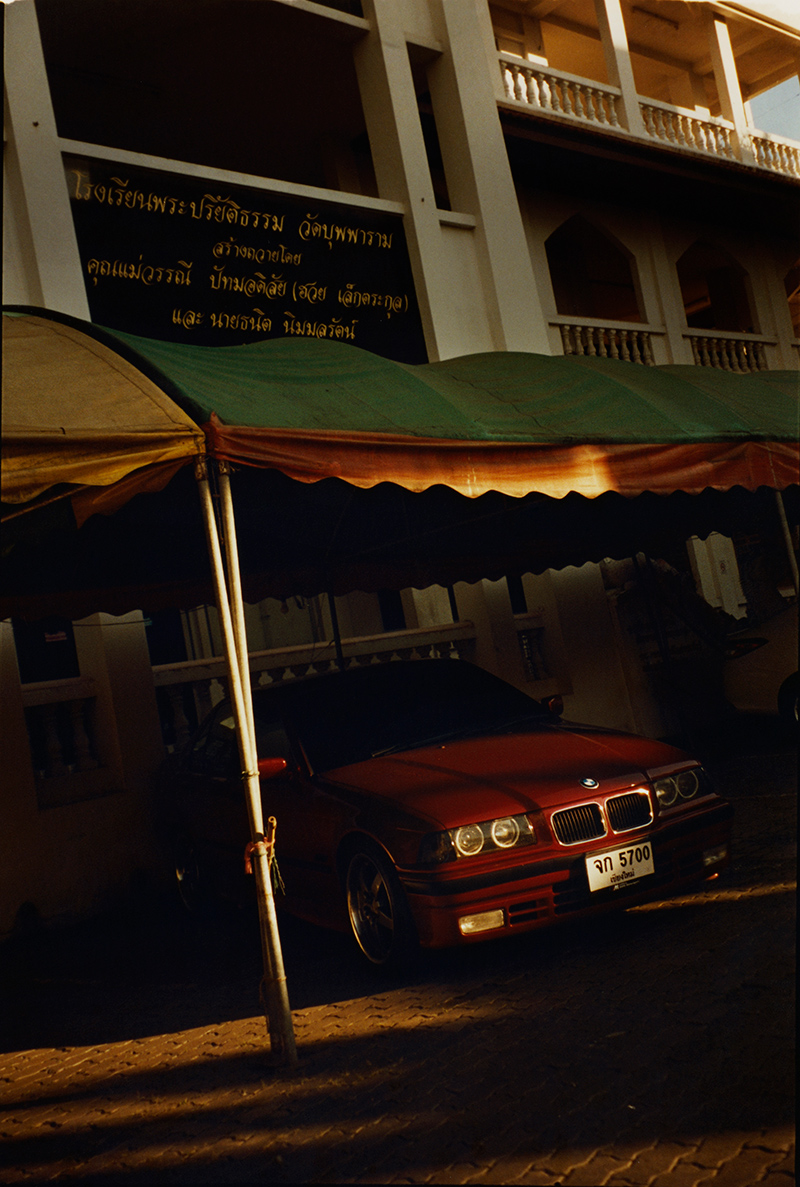
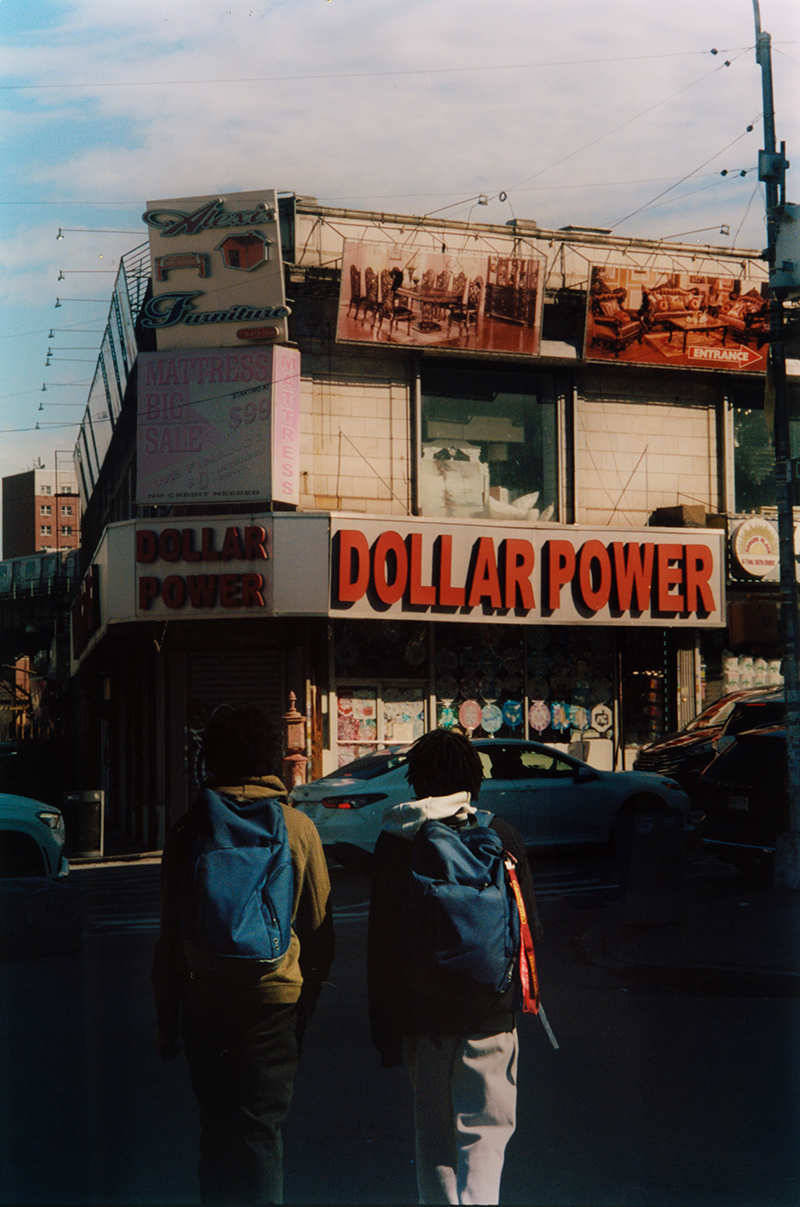
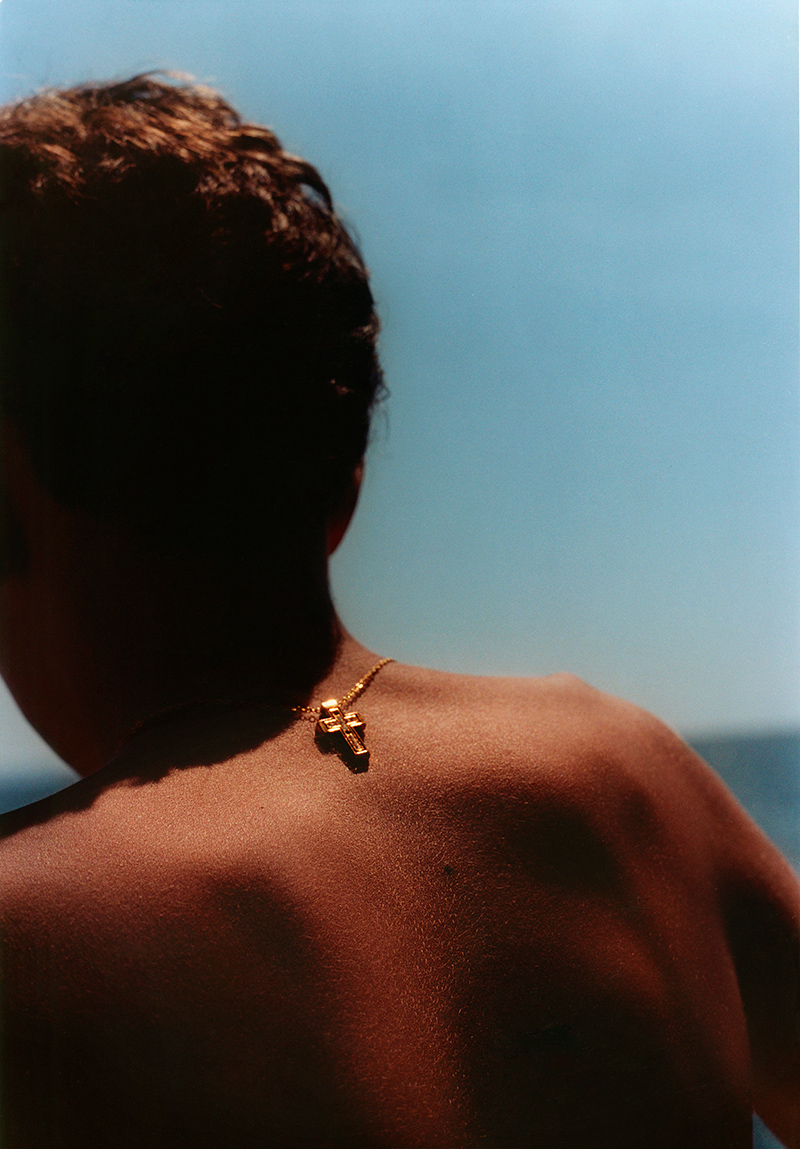
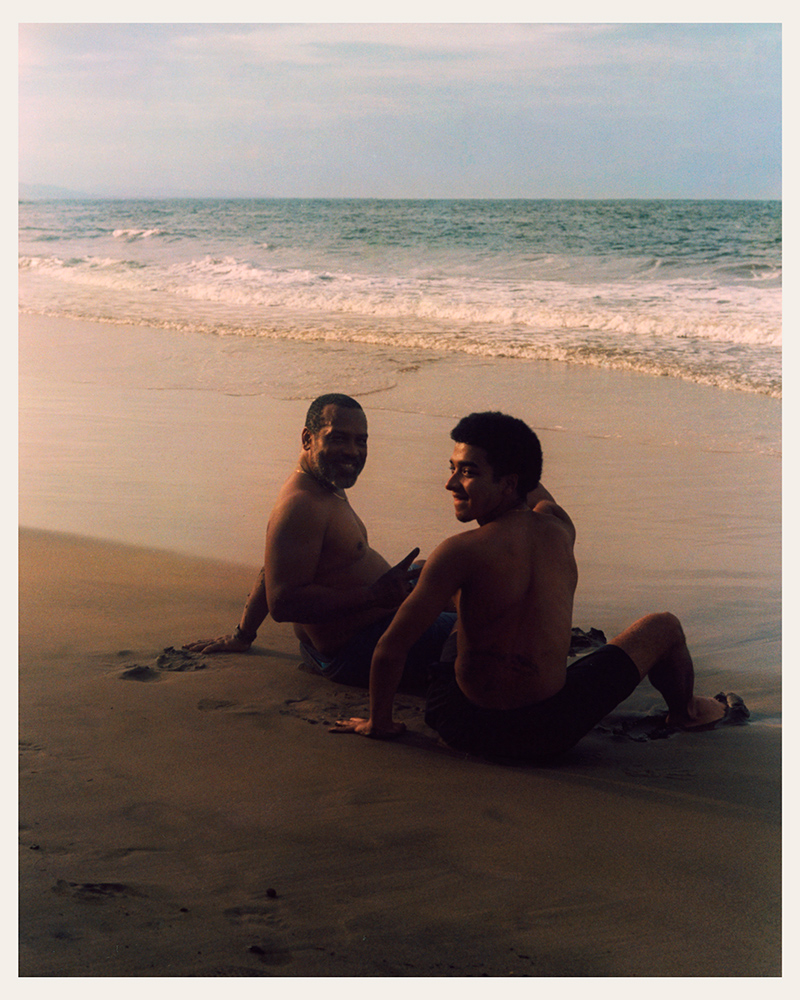
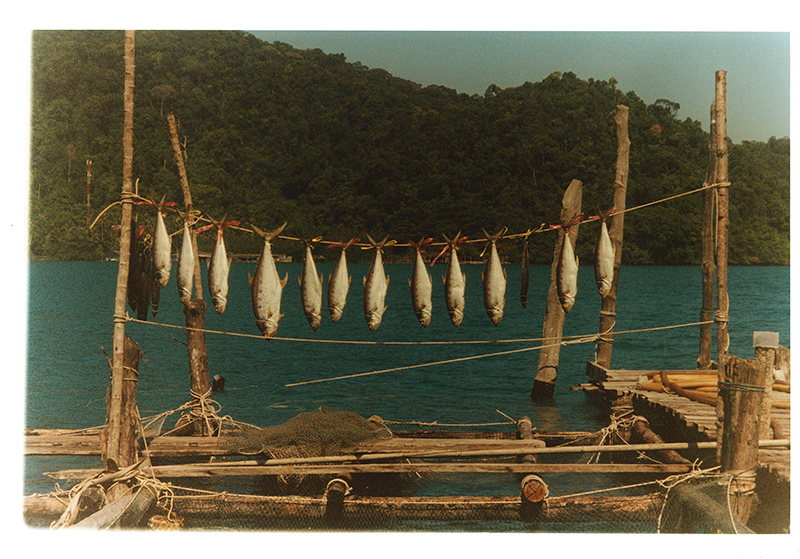
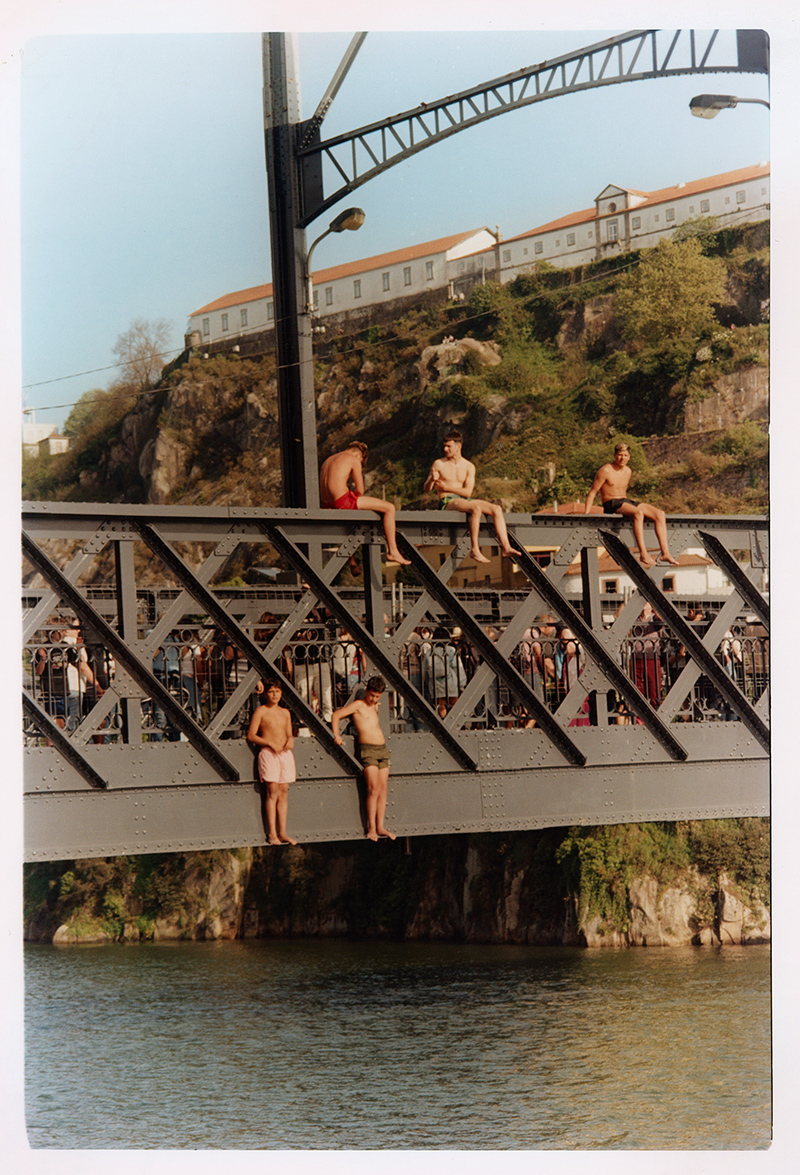
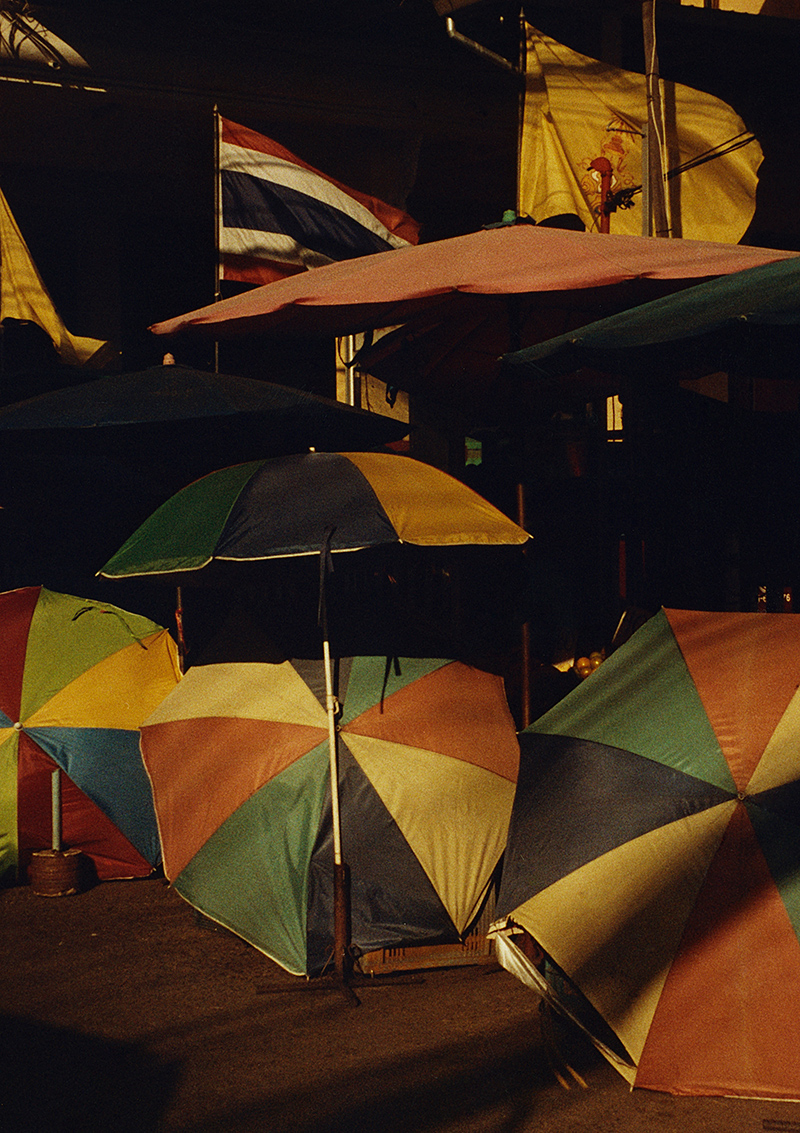
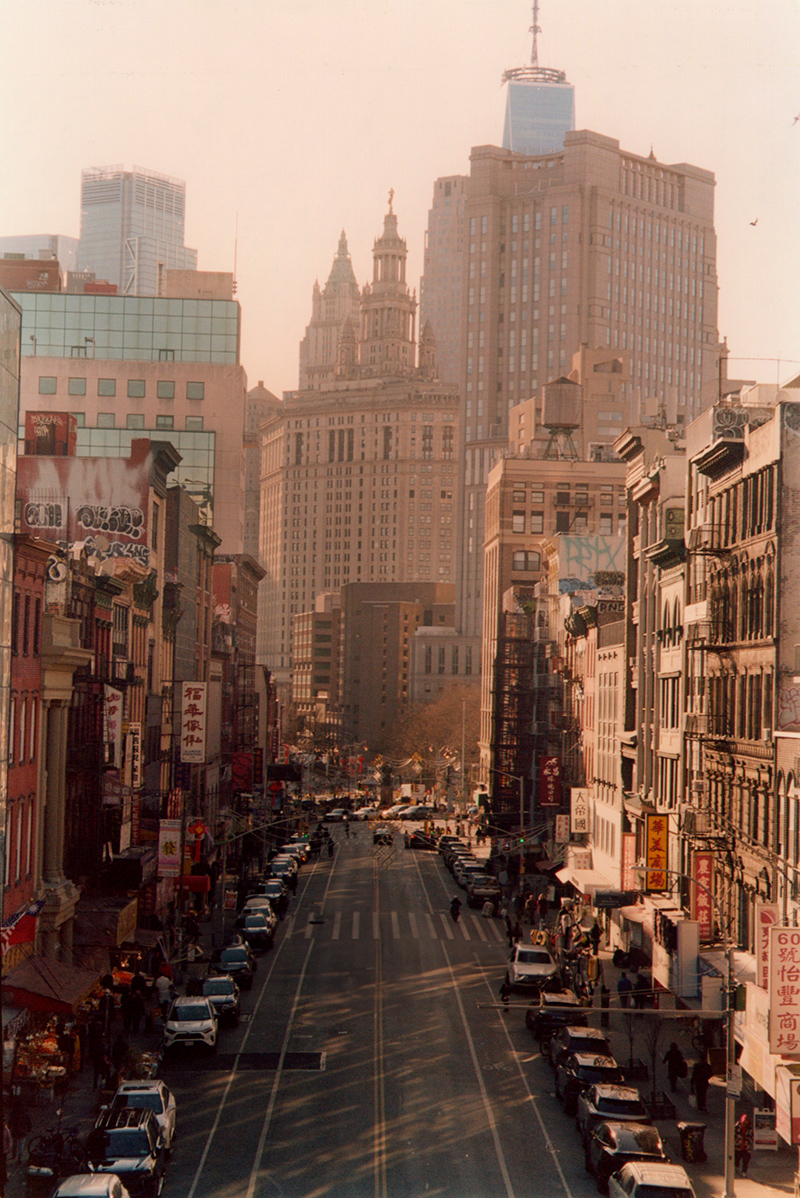
Bosco travels with an analog camera not just to document places, but to understand them. His new fanzine, A “Portrait” of Me, gathers three years of spontaneous encounters and landscapes into a physical record of how he sees the world.
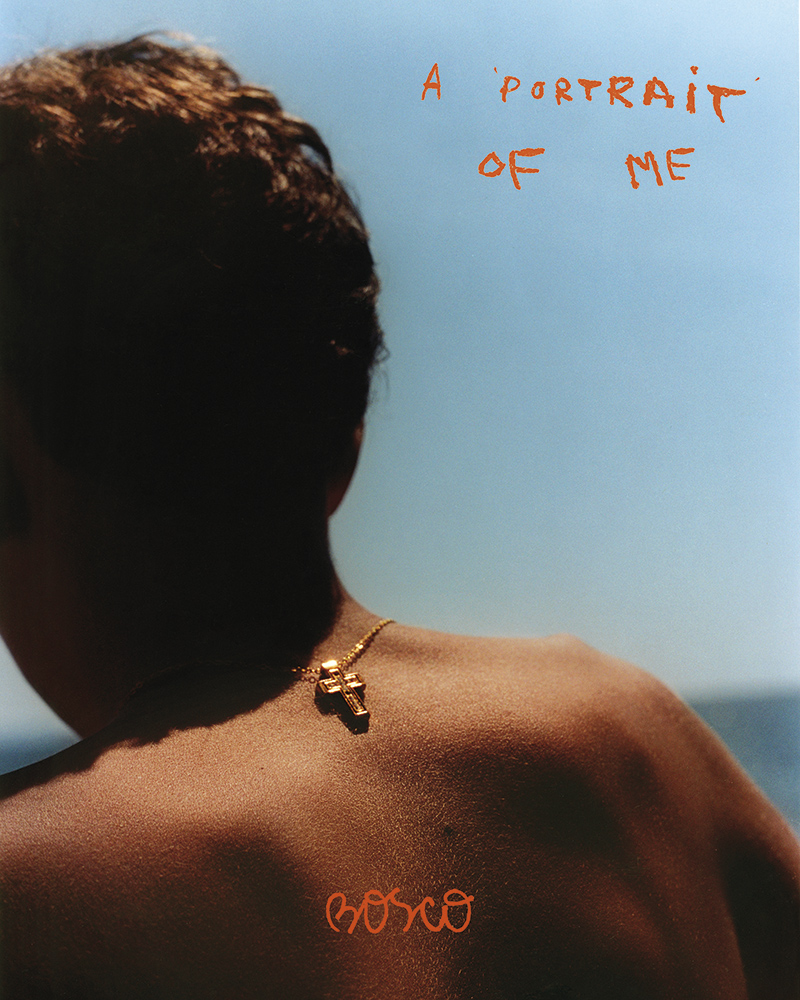
There are photographers who travel to take pictures, and others who take pictures to remember how they travelled. For Bosco, both things coexist. His analog camera is far more than a tool: it’s the way he relates to the world, a physical reminder that looking with intention carries a weight and a depth no screen can replicate. Each roll of film demands focus, patience and commitment. There’s no room for endless shots or instant feedback; only for capturing what truly matters. And maybe that’s why, when he returns to Madrid and develops the images he made far from home, it feels like retrieving fragments of his own memory.
This impulse began years ago, on his first trip to Thailand, when he realised that taking photos with his phone simply didn’t hold the same value. From that moment on, carrying a camera became a need rather than a habit, a way of being present. What draws him in is not just the light or the landscape, but the people who give life to each place: young locals whose spontaneity he reads as truth, communities that reveal how a city or a neighbourhood really breathes. His photographs, often candid, are guided by intuition but anchored in respect; if the magic breaks, if anyone feels uncomfortable, the picture is gone. There is no point in keeping it; authenticity is everything.
For three years, he gathered images from Thailand, New York, Argentina, Costa Rica, Egypt, southern Italy and beyond without a clear intention. Until he realised they formed a larger narrative: an accidental self-portrait. That discovery became A “Portrait” of Me, a fanzine that turns fleeting travel moments into something physical, something that resists the pace and ephemerality of social media. A project that fixes his gaze on paper, and invites us to travel through it with him.
You often travel with your analog camera. What does shooting on film allow you to capture that feels different from digital?
Shooting on film is a more authentic way of making photographs. Having a limited number of shots forces you to concentrate more, only capturing what truly matters, and it gives you something physical, not just images that end up on a hard drive. Finishing a roll of film leads you into a manual, artisanal process with results that are nothing like those of a digital camera. Creating hand-made prints afterwards adds a texture and color palette that are unique and impossible to replicate with digital files.
I enjoy analog photography more because of the process involved in creating each image. There’s also that flutter of excitement when you’re traveling and can’t wait to develop the film, revisiting moments and discovering photos you had forgotten you took. Instead of constantly checking your shots while on holiday, arriving back in Madrid and seeing the body of work you created during that time is far more rewarding.
When did carrying a camera everywhere become a natural part of how you move through the world?
This whole idea really began with my first trip to Thailand. I realized that iPhone photos didn’t hold the same value as shooting with a camera, not only because of the final result, but also because carrying a camera made me approach photography in a more intentional way. Being able to photograph such a wide variety of places, people, and landscapes made having a camera feel almost essential. It quickly became a tradition.
On top of that, I genuinely enjoy doing it, it never feels like work. It adds something special to the experience of traveling, so taking a camera everywhere naturally became part of who I am.
What draws you to photograph young people and local communities during your trips?
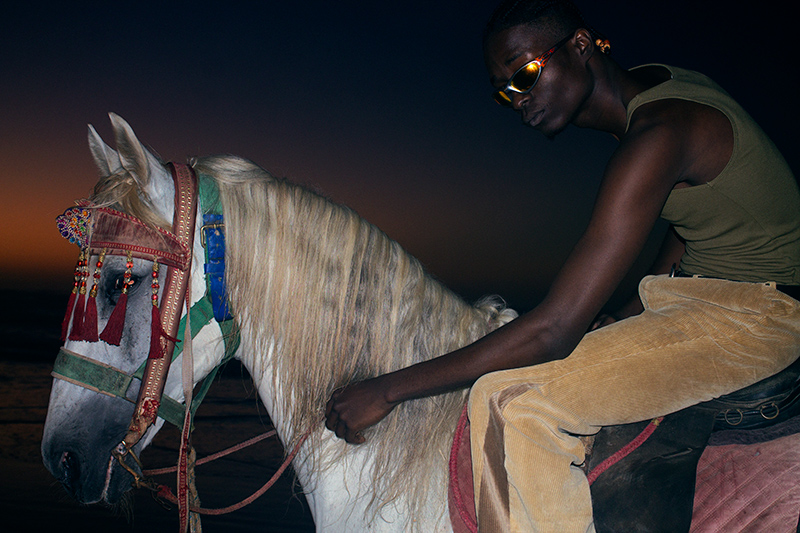
I’m drawn to photographing young people because they are the ones who best reflect the authentic energy of a place. For me, traveling with a camera is not just about capturing landscapes or beautiful moments, but about understanding how people live, how they relate to one another, and what kind of energy flows through the streets where the locals spend their time. Young people, in particular, tend to move with a spontaneity and freedom that carries much more impact; they’re less restrained and allow their personality to come through naturally.
Your images often feel spontaneous or like stolen moments. How do you balance intuition with respect for the people you photograph?
As I mentioned, when I travel, I like to find the authenticity of each place, the uniqueness of every local person and the different habits that come with each culture or background. That’s why the best way to capture this is by taking candid photos. It’s the only way to genuinely and faithfully show everything I look for in travel photography.
This, of course, comes with a clear challenge: when you shoot posed photos, you control everything that happens around you; with candid shots, you have to be quick and catch the exact moment. I believe spontaneity has nothing to do with a lack of respect. Usually, when I take a photo, I’m looking through the viewfinder, waiting for the precise instant to press the shutter. If someone feels uncomfortable, it’s very noticeable, and at that point the photo opportunity disappears because the authenticity and spontaneity are lost. For me, that means the photo loses its value and becomes one I discard.
Over the last three years, you collected images without a clear intention. When did they start feeling like a coherent project?
This kind of photography is a hobby for me. I really enjoy traveling with my camera, and when I took my first long-haul trip to Thailand, I took photos that I thought were only for my portfolio or Instagram. As the years went by, I kept collecting travel photos from New York, Argentina, Costa Rica, Egypt… among other places, and I realized that if I put them together, I could create a story. It felt worthwhile to bring out all those images that had never seen the light of day and give them life by turning them into a meaningful project.
It was this summer, after coming back from my holidays in southern Italy, that I noticed, while scanning my film, that some images contained scenes that told a story. I began reviewing my archive and realized it was the right moment to make my first fanzine. In the end, the photos are guided by the things I find beautiful, so whether I’m in Thailand or Egypt, even though the cultures, lifestyles, and experiences are completely different, the style of the images remains the same. That’s also where the name of the project comes from: A “Portrait” of Me. The fanzine is a portrait of the beauty I see every time I travel with my camera. It’s a self-portrait of how I experience the world when I leave my country to discover different people and cultures.
What made you decide these photographs needed to become a physical object rather than remain on hard drives or social media?
For me, physical objects hold far more value than digital ones, just as I mentioned with analog film rolls. The tangible aspect, the texture of the paper, the printed and real color, not the one shown on a screen, are elements that add significant value to the project. I also wanted it to be something that would stand the test of time, because nowadays everything on social media is so fleeting. Creating something material means people can have the fanzine at home and, from time to time, leaf through it, remember the project, and enjoy it as often as they want.
How did you approach the selection and sequencing process for the fanzine?
I relied heavily on a photographer who has been like a mentor to me in the world of photography: Fede Delibes, with whom I always work closely. He accompanied and guided me throughout the entire process. I believe it’s very important to have the perspective of someone external, because doubts or complications often arise during the selection and sequencing stages, and his help has been invaluable at every moment.
I feel incredibly fortunate and grateful to have shared that phase of the project with him. He’s a photographer I consider a true reference, and having his support has been a privilege. It has been a long and sometimes challenging process, but I’m extremely happy with the result and with everything I’ve learned along the way.
What emotion or narrative were you hoping the fanzine would convey to the person flipping through it?
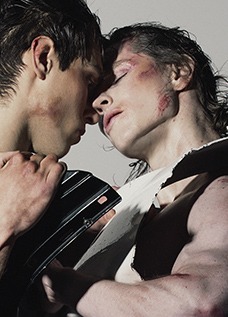
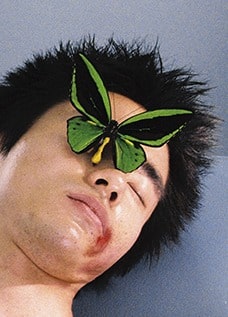
With the fanzine, I wanted to convey the feeling of being present in those moments, as if the person leafing through it could walk alongside me through the places I visited. I wasn’t looking to tell a linear story, but rather to show the variety of moments I experienced. In the fanzine you’ll find everything from portraits to landscapes, young people enjoying themselves and even fighting… a diversity of emotions that enriches the narrative and offers a more truthful glimpse into the lives of the local people in each destination.
I also didn’t want it to be something idyllic, not at all, and I think that becomes clear in the selection and layout of the images. But, as I mentioned, the main goal was for whoever viewed the fanzine to feel as if they were traveling with me, experiencing the scenes and places that, for me, had something to say, and that’s why they earned a place in the project.
Is there one photograph in the fanzine that you feel best represents your way of seeing?
I couldn’t choose a single photograph that represents my way of seeing, because every image in the fanzine has its own story and its own energy. There’s a lot of variety, different places, cultures, ages, races… and although there’s a consistent style that runs through the whole body of work, no photo is directly connected to another in terms of content.
Each photograph also carries a deeply personal value for me: when I look at it, I relive specific moments from my travels, happy memories shared with loved ones, and countless funny stories that made each trip unique. These memories are vivid and very different from one another, which is why I wouldn’t be able to choose a single image as the one that best represents my perspective. For me, the strength of the fanzine lies precisely in that diversity and in everything each photo evokes.
How have your travels shaped your identity as a photographer?
My travels have had a profound impact on my identity as a photographer, because experiencing different cultures also enriches me as a person. Every place has its own values, customs, and ways of relating to the world, and engaging with them makes me more aware, respectful, and open-minded.
From a photographic perspective, traveling allows me to appreciate the unique beauty of each location. Seeing local art, the tastes, and the creativity of people in each community opens up a world of inspiration for me: it teaches me new ways of looking, composing, and finding beauty in everyday life. This experience enriches me because I’m not just documenting images, I’m learning to appreciate different forms of expression and sensibilities, which ultimately is reflected in my work and in the way I perceive the world.
Has any particular place or encounter significantly influenced your visual perspective?
I’m a very curious person, and much of my approach as a photographer has developed from observing and studying the work of other photographers whose style resonates with mine. I enjoy collecting books by photographers I admire and spending time going through their series and projects, paying close attention to how they use composition, light, framing, or how they approach visual storytelling. I also follow their work on social media and exhibitions, often analyzing what works and what draws me to their way of photographing.
I believe that life is a continuous learning process, and over time you discover new things that can shape different tastes or inspire you from unexpected places, which naturally leads to the evolution of your own style.
Do you see this fanzine as the closure of a personal chapter as much as a creative one?
I don’t see this fanzine as the closing of a personal or creative chapter at all. Creating this type of photography is something I genuinely enjoy, and traveling is one of my passions; in fact, taking photos during my trips is one of the main reasons I love traveling so much.
I don’t know if there will be a second edition of the fanzine, but what I do know is that I will continue taking travel photos, this is 100% guaranteed. For now, I’m fully enjoying the first fanzine, and I would love for it to become a recurring project over time, creating new fanzines with images from my upcoming travels. But one step at a time: right now, I’m focused on enjoying the process and everything that creating A “Portrait” of Me has meant.
How would you describe your photographic style to someone who is discovering your work for the first time?
I would describe my photographic style as very natural. I’m very drawn to spontaneity, the moments that happen unplanned and without too much posing. I’m interested in capturing people as they are, without forcing situations or gestures.
I also enjoy photographing young people because they bring a freshness and innocence that aligns perfectly with the way I see the world through my camera. That energy makes the photos more genuine and direct, and it forms an important part of my visual style.
As someone who works primarily with analog photography, how do you feel about sharing your work in digital spaces like Instagram?
I have a love-hate relationship with Instagram. On one hand, I find the constant pressure to stay updated and present on social media a bit overwhelming; it can be exhausting. At the same time, knowing that you can reach so many people is incredibly rewarding.
Thanks to Instagram, my fanzine has reached people in Italy, the United Kingdom, Australia… and having such a diverse audience appreciate your work is an amazing feeling. That kind of reach would be impossible otherwise.
Instagram also has a very positive side: it allows me to see the personal work of photographers I consider references, something that would be much harder to follow so closely outside of social media. So, while it can be overwhelming at times, it’s also a tool that brings me a lot of value.
Now that this fanzine exists in the world, what do you hope it opens up for you, creatively or personally, moving forward?
Honestly, I don’t have any specific expectations now that the fanzine exists. It’s a very personal project that I simply wanted to see come to life. I was excited for people who appreciate my work to be able to see my travel photos in a physical format, rather than having them remain forever on a hard drive.
Being involved in the entire process, selection, editing, and layout, has also been a huge learning experience, and in the end, I grew very attached to photos I never thought would see the light of day.
At the same time, the fanzine has been a great way to make myself known within the industry. I’ve felt very privileged by the number of people who attended the exhibition and by the positive reception the project has received. All of this has helped me grow tremendously, both personally and creatively.
So rather than expecting anything specific for the future, I’m focused on enjoying the journey and everything this project has already given me.