
As conversations around masculinity continue to evolve alongside the rise of the manosphere, ideas around possessiveness, dominance and emotional detachment can become entangled with what young men are told relationships are supposed to look like. Abuse is ultimately about power and control, but those dynamics do not always fit the image of abuse that we have been taught to recognize, particularly within same sex relationships and other LGBTQ+ partnerships. Add a generation with a fundamentally different relationship to privacy because of social media, and the question becomes even more complicated: how do we understand healthy intimacy when surveillance can look like affection and control can be mistaken for care?
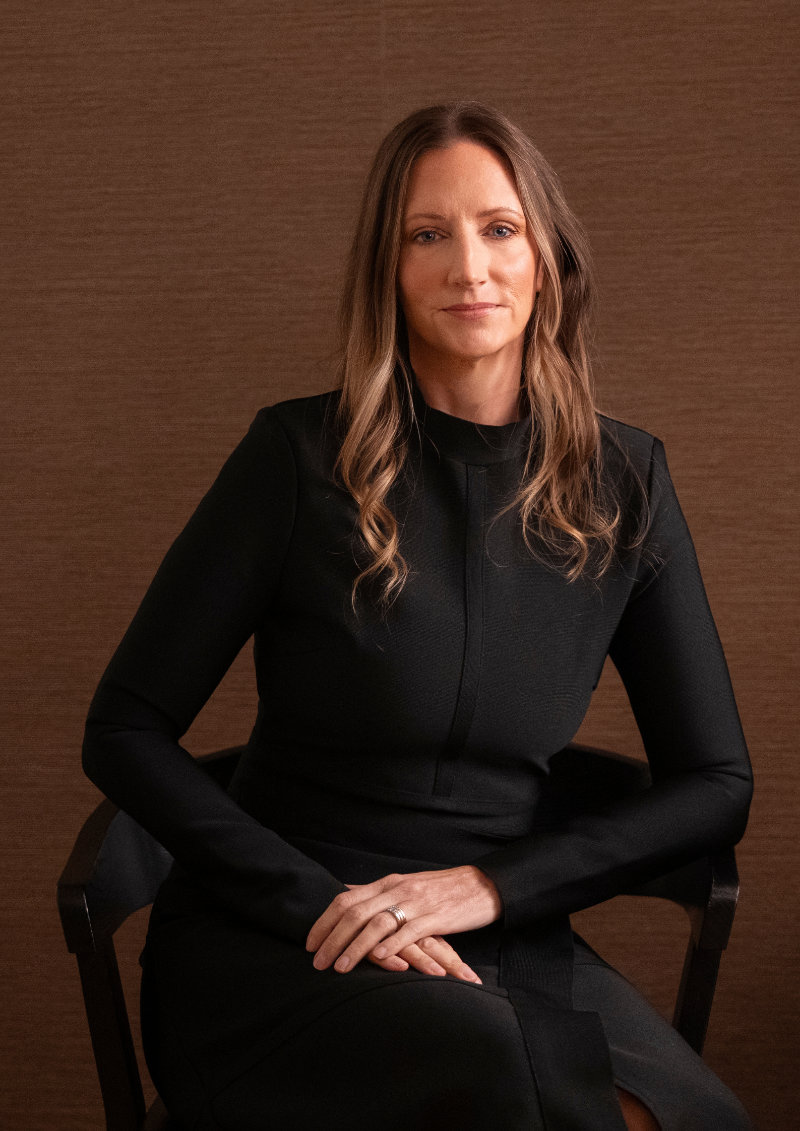
Dr. Nina Jane Patel
It is this blurred territory that psychologist Dr. Nina Jane Patel explores in new thought leadership for YSL Beauty’s Abuse Is Not Love initiative. Her work looks at technology-facilitated intimate partner violence and the ways digital habits can make abusive behaviour incredibly difficult to identify, particularly among young people aged 16 to 24. Abuse Is Not Love is YSL Beauty’s global program to fight against and prevent intimate partner violence (IPV), the most common form of violence against women. 1 in 3 women will experience violence by a partner in their lifetime, whether it is sexual, physical, psychological, or financial.
But recognising abuse is not only about understanding technology. When we talk about abuse, we often imagine something overt, such as physical violence towards women, which can make the less visible forms of control even harder to identify. I have been thinking a lot about the wider conversation around male sexual abuse following Richard Gadd’s Baby Reindeer, particularly because the series showed a man experiencing abuse while also grappling with shame, confusion, and a sense of responsibility for what was happening to him. It can be incredibly difficult for someone, including a young man, to recognize themselves as a victim while they are still inside an abusive or controlling situation.
There is another layer to consider, too.
And now AI is adding an entirely new dimension. Generative tools can be used to create deceptive messages, manipulate images, and facilitate deepfake extortion, giving abusive partners new ways to exert power while technology continues to evolve faster than our vocabulary for describing what is happening.
We spoke to Dr. Patel about where the line between intimacy and control really lies, why young people can struggle to recognize digital abuse, and how ideas around masculinity shape our understanding of victimhood.
Do you think young people are growing up with a different understanding of privacy because of social media, location sharing, DMs, and constant digital access? Has technology changed what controlling behavior can look like?
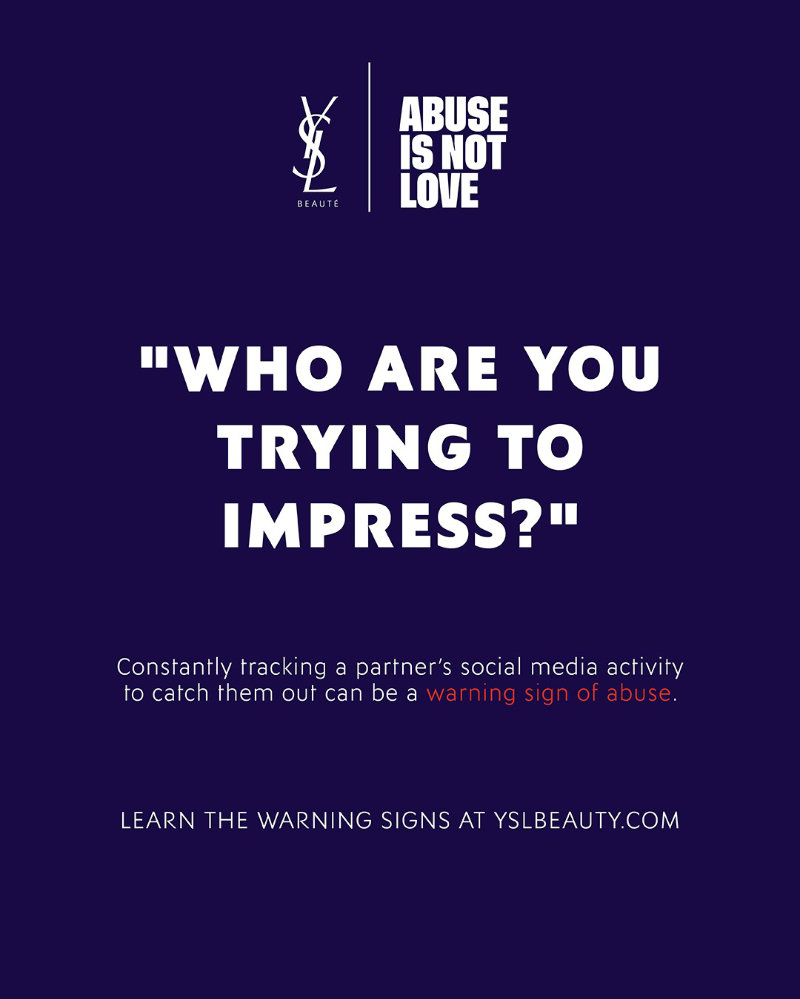
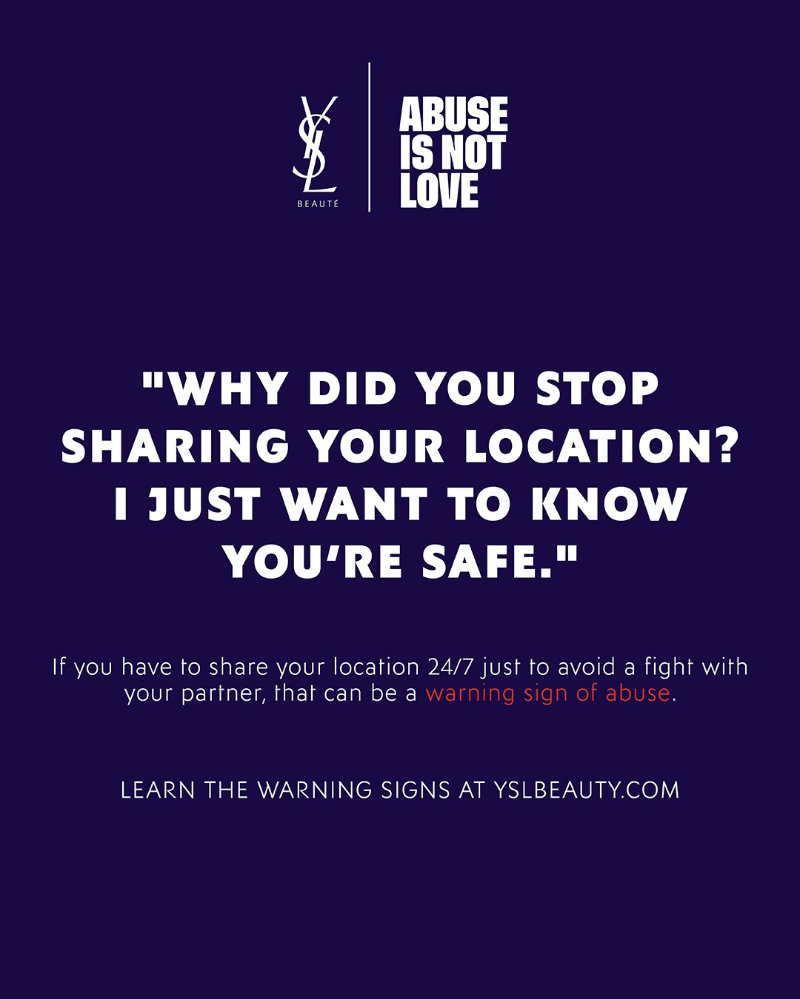
DR. NINA JANE PATEL: Many young people have grown up with parental monitoring built into their devices and social media. For many, a first phone came so parents or caregivers could stay in touch on the way to and from school and could keep an eye on online activity “just to know you’re safe.” Parents and caregivers track their children’s locations, monitor their messages, and demand their device passwords under the very reasonable guise of safety and care. However, this carries an unintended, silent lesson: if you love me and want me to feel safe, you must have no digital privacy. So, when a partner asks for the same access, it may not feel like a violation. It feels familiar.
Technology hasn’t invented controlling behaviour, but it can make it constant, harder to see, and easier to disguise as love. Control once needed someone in the room. Now it can fit in a pocket: checking where you are in real time, reading your messages, questioning who you liked or followed. Because there’s often no physical injury, it can be hard to recognise as abuse.
What would you say to a young man who thinks, “This isn’t abuse because my partner hasn’t physically hurt me”?
DR. NINA JANE PATEL: Abuse isn’t defined by bruises. It can show up as fear, pressure, and losing the freedom to make your own choices. Ask yourself: can you say no to sharing your location or password without it becoming a fight? Do you feel anxious when you miss a message? Do you find yourself constantly proving where you are and who you’re with?
If the answer is yes, that may be a sign of control, and that deserves to be taken seriously. Many people only recognise it after speaking to someone who has been through it, or to a professional trained to identify this kind of abuse. Digital abuse can begin long before any physical violence, and sometimes it never becomes physical at all. It is still abuse. Waiting for it to become physical before taking it seriously can mean waiting too long.
Are there behaviors that young people commonly dismiss as jealousy or affection that you would encourage them to take much more seriously?
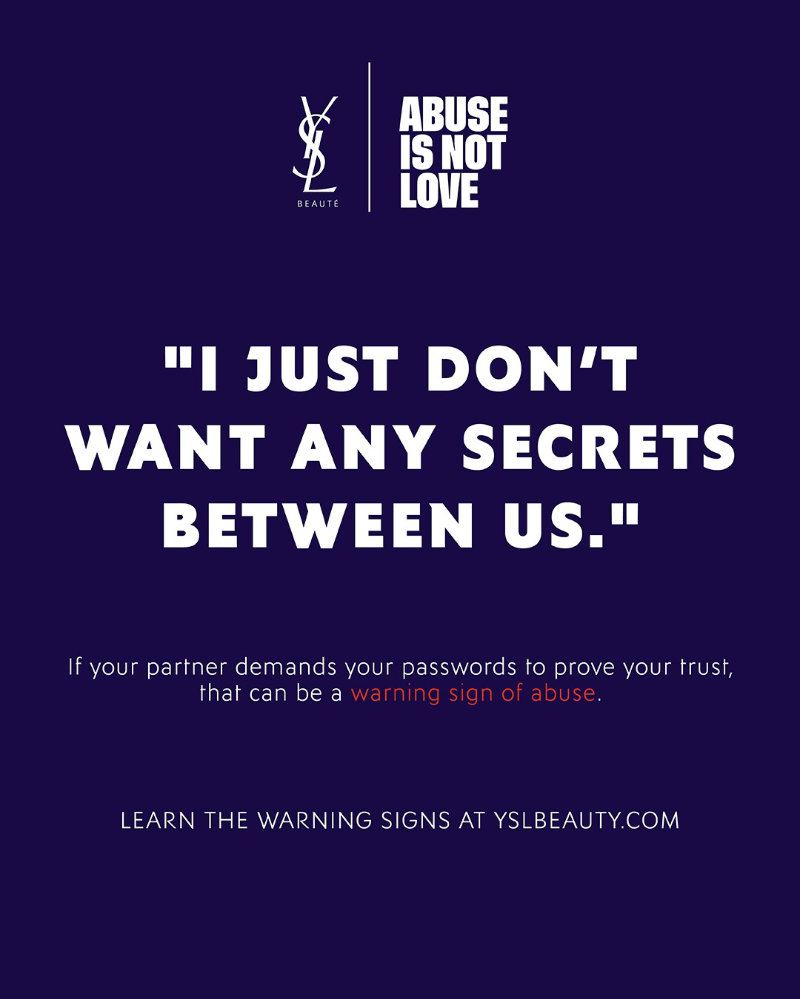
DR. NINA JANE PATEL: YSL Beauty’s Abuse Is Not Love program, a global initiative focused on preventing intimate partner violence among young people, has adapted the 9 Warning Signs of Abuse specifically for the digital space. These signs provide a practical, behavior-focused vocabulary to help people identify when everyday digital habits start to cross the line into abuse. Some behaviours are easy to explain away as love, but may be early warning signs:
Manipulation: being asked to “prove” your loyalty by handing over your phone, passwords or social media logins, for example, “if you loved me, you’d give me your password.”
Intrusion: constant location tracking, especially when refusing to share leads to accusations.
Jealousy: being questioned about who you followed, what you liked or commented on, or the DMs you’ve sent and received.
Control: being told who you can follow or what you can post, or having to ask “permission” before sharing photos.
Intimidation: anger over read receipts, or dozens of missed calls when you don’t reply straight away.
Isolation: being pushed to delete contacts, block friends or leave group chats.
On their own, some of these can seem minor. As a pattern, they deserve a closer look. A surveilled relationship is not a safe relationship. The Abuse Is Not Love programme’s nine warning signs are designed to help people recognise these patterns early.
Finally, and perhaps most importantly, what would you like young men to understand about vulnerability that they may not have been taught growing up?
DR. NINA JANE PATEL: Parents and caregivers track their children’s locations, monitor their messages, and demand device passwords under the very reasonable guise of safety and care. Technology platforms and service providers reinforce this too, building parental control features and marketing them as the responsible choice for child safety online. The intent, from every side, is protective.
However, this carries an unintended, silent lesson: if you love me and want me to feel safe, you must have no digital privacy. I heard this again and again in my interviews with YSL Beauty’s Abuse Is Not Love NGO partners: children are taught to accept being controlled, and to believe that’s what love looks like. When these young people enter their first intimate relationships, they cross no boundary when a partner demands passwords or tracks their phone, because they’ve never been allowed a digital boundary at home. The problem isn’t the technology, or the parents’ intentions. It’s that no one has taught digital consent as part of a healthy relationship at home, or anywhere else.
It was never the tracking. It was that no one asked. Teach a child that boundaries can be discussed, and they’ll carry that into every relationship.
YSL Beauty is, of course, a beauty brand rather than a traditional organization working in violence prevention. Why do you think it is important for a beauty company to enter this conversation?
DELMARI VAN ZYL, CORPORATE COMMUNICATION DIRECTOR, YSL BEAUTY: Beauty has always been deeply connected to identity, self-expression, and dignity. It holds a personal place in people’s lives, and that proximity brings a unique form of influence that extends well beyond aesthetics. We believe beauty can be a force for positive change, because our industry plays such an important role in shaping how people perceive themselves and one another.
With the reach and cultural visibility of YSL Beauty, we are not simply part of culture – we also help influence it. We take that responsibility seriously. IPV is an urgent crisis that calls for greater understanding and awareness. It remains one of the most widespread, yet significantly underreported, barriers to women’s freedom, and therefore stands in direct contradiction to YSL Beauty’s core values. For this reason, we believe it is our responsibility to speak up and use our platform and resources to contribute to the fight against it.
This is not about presenting ourselves as experts in IPV. It is about acknowledging that we have a voice and choosing to use it in support of the experts, advocates, and survivors who have been advancing this work for far longer than we have. If a beauty brand can help bring a difficult and underrepresented issue a little further into public awareness – whether by helping someone identify warning signs, feel less alone, or start a conversation that may not otherwise have taken place – then we believe that is a meaningful way to use the influence we have been given.
Beyond young people, who else might be particularly vulnerable to digital relationship abuse? Are there specific groups, circumstances or life stages where the risk can increase?
DELMARI VAN ZYL: Globally, IPV occurs in all settings and can impact anyone. And similarly, tech-facilitated IPV can impact anyone, as digital connectivity touches every aspect of modern life.
While IPV can affect individuals across various life stages, YSL Beauty’s Abuse Is Not Love program specifically focuses on young people as many of them are entering into relationships for the first time. We see it as our vital role to educate young people early – providing them with the vocabulary and awareness they need to recognize warning signs and set healthy boundaries before abuse can escalate.