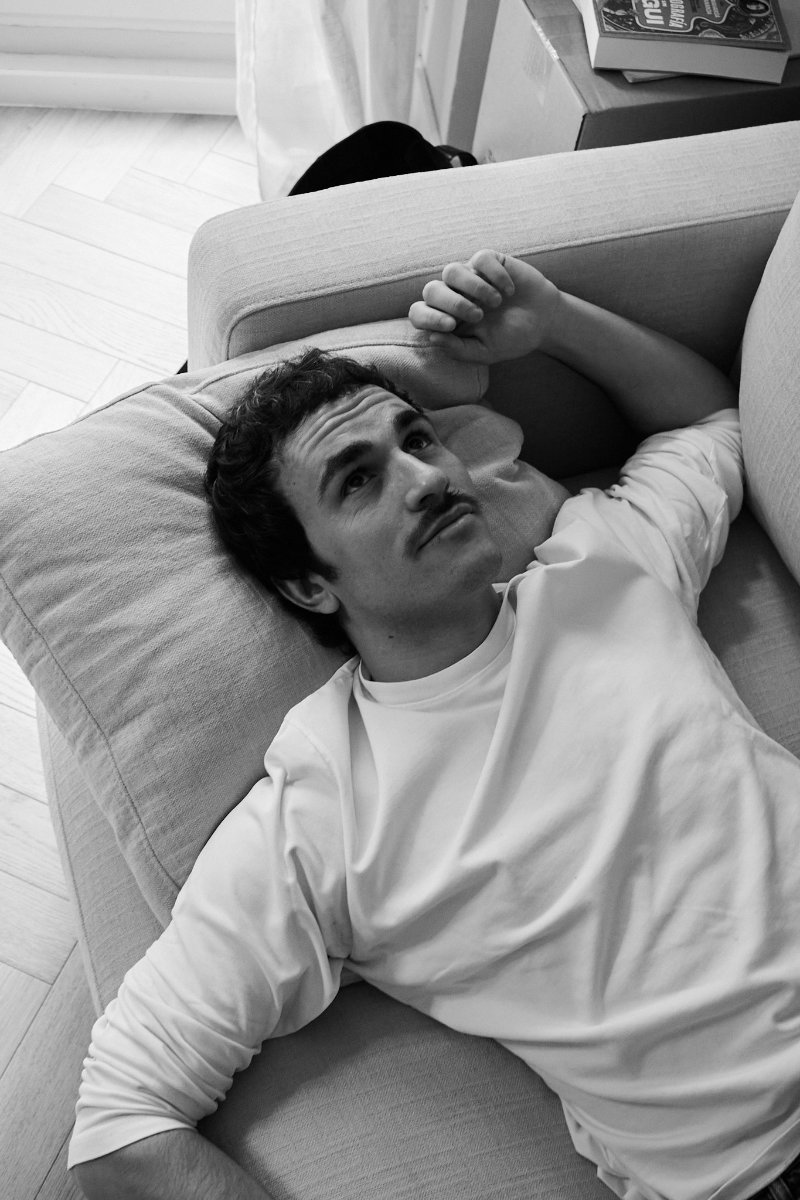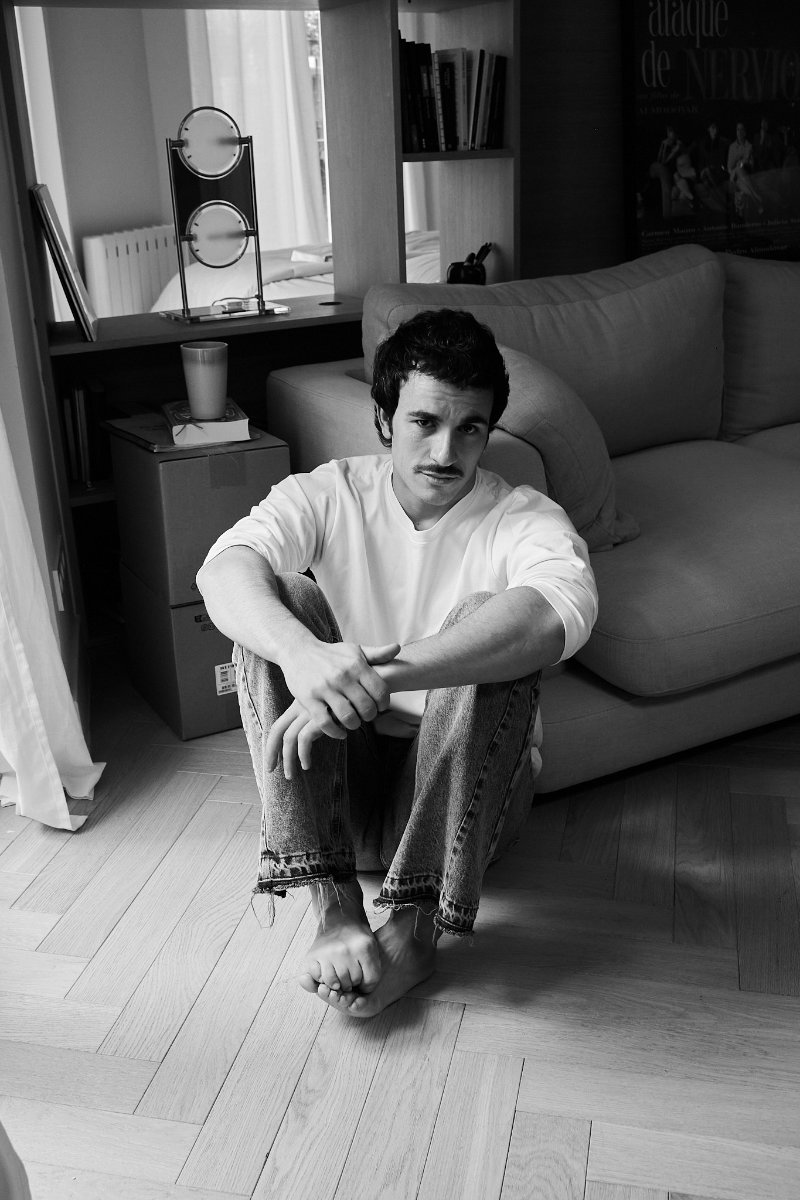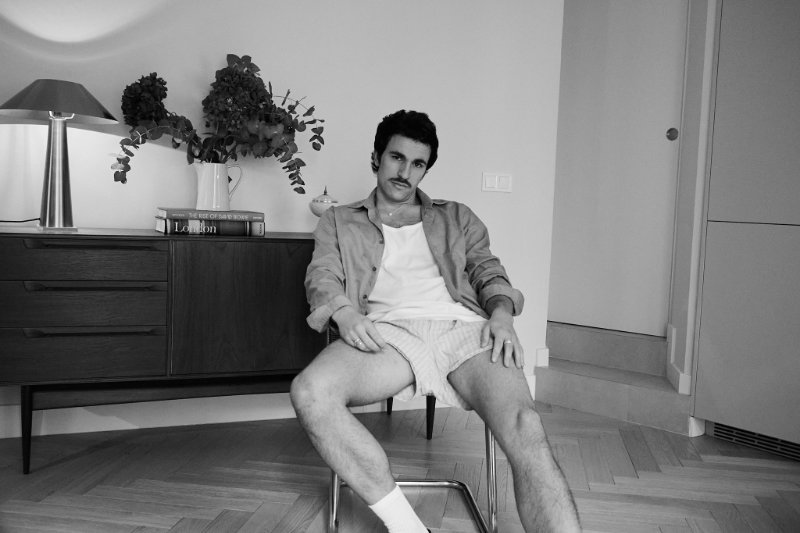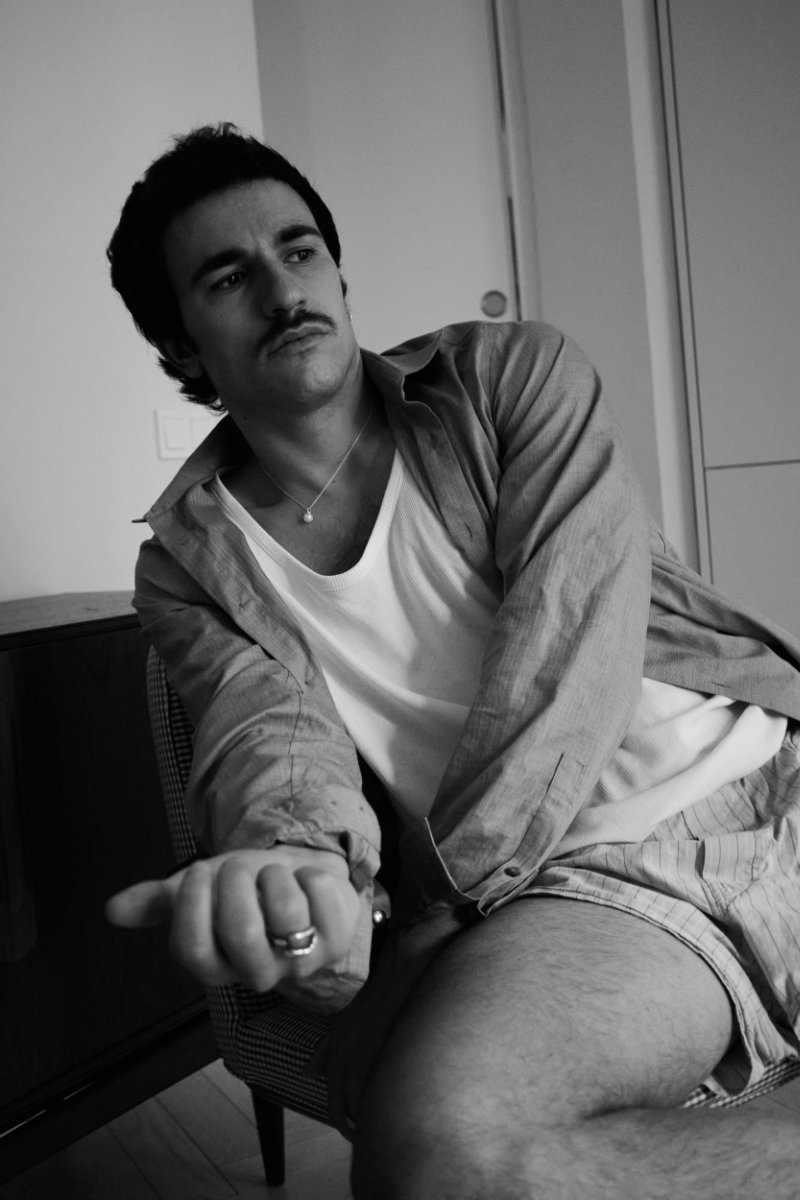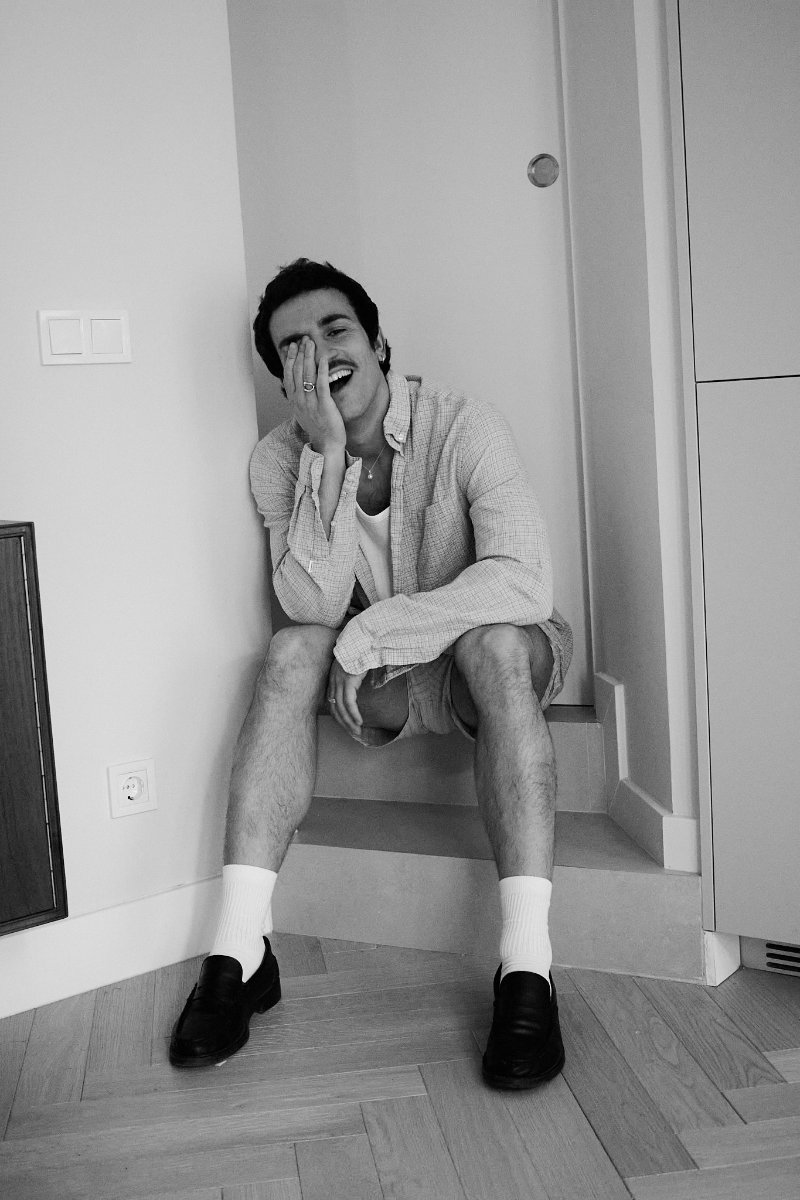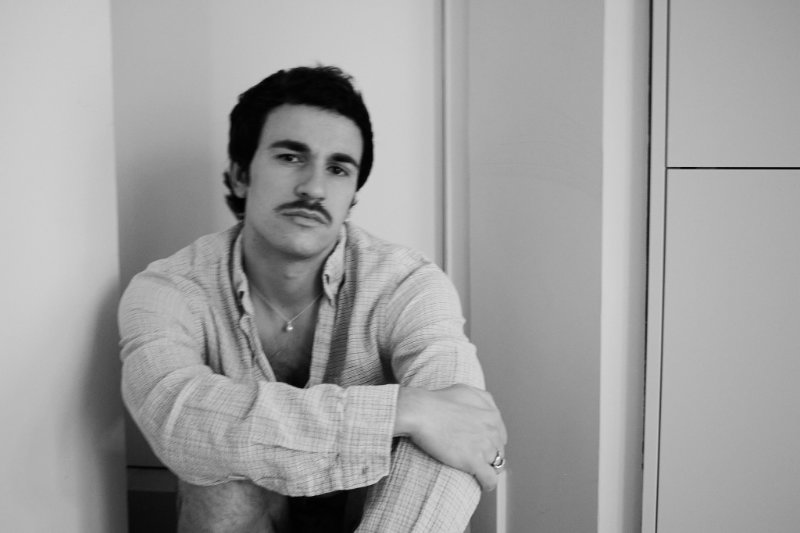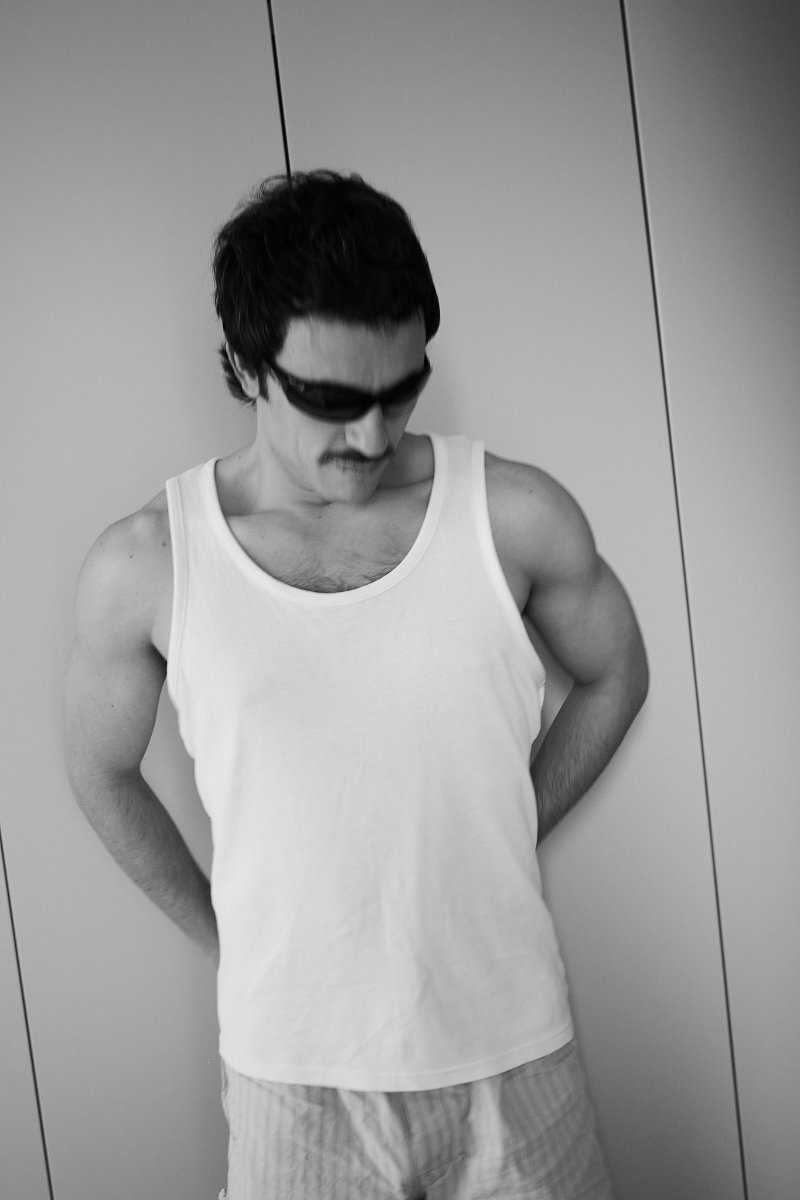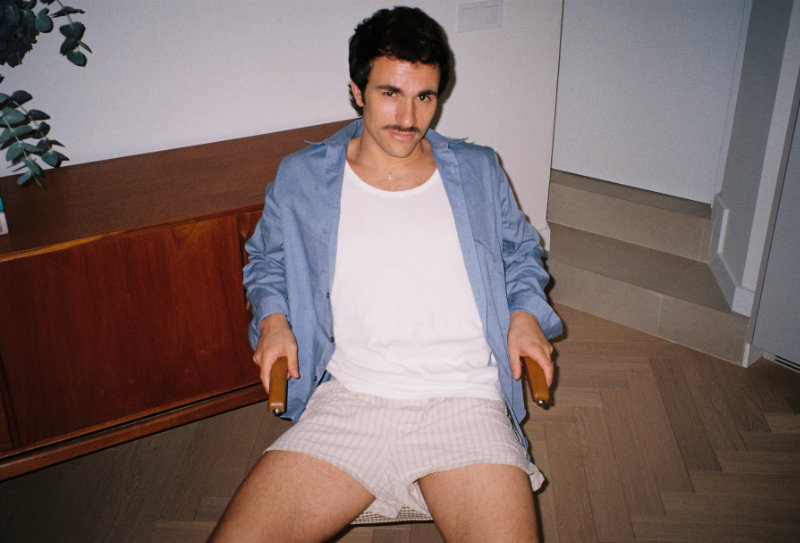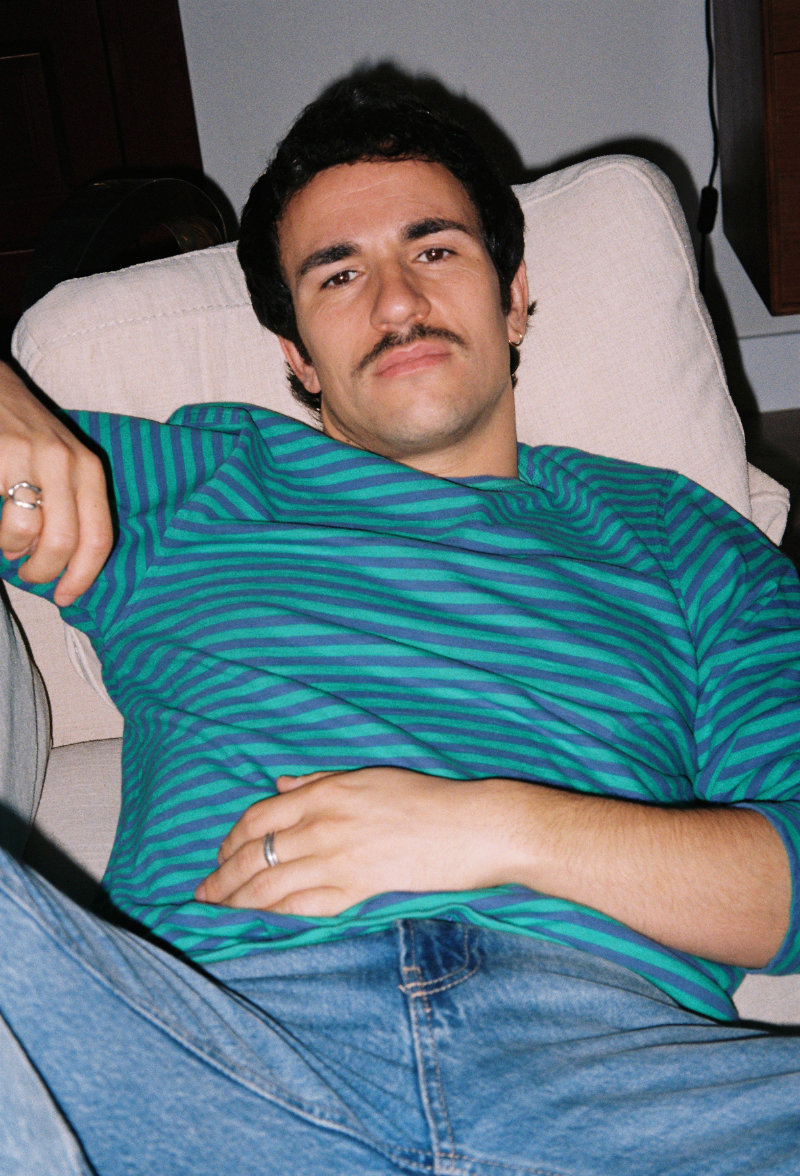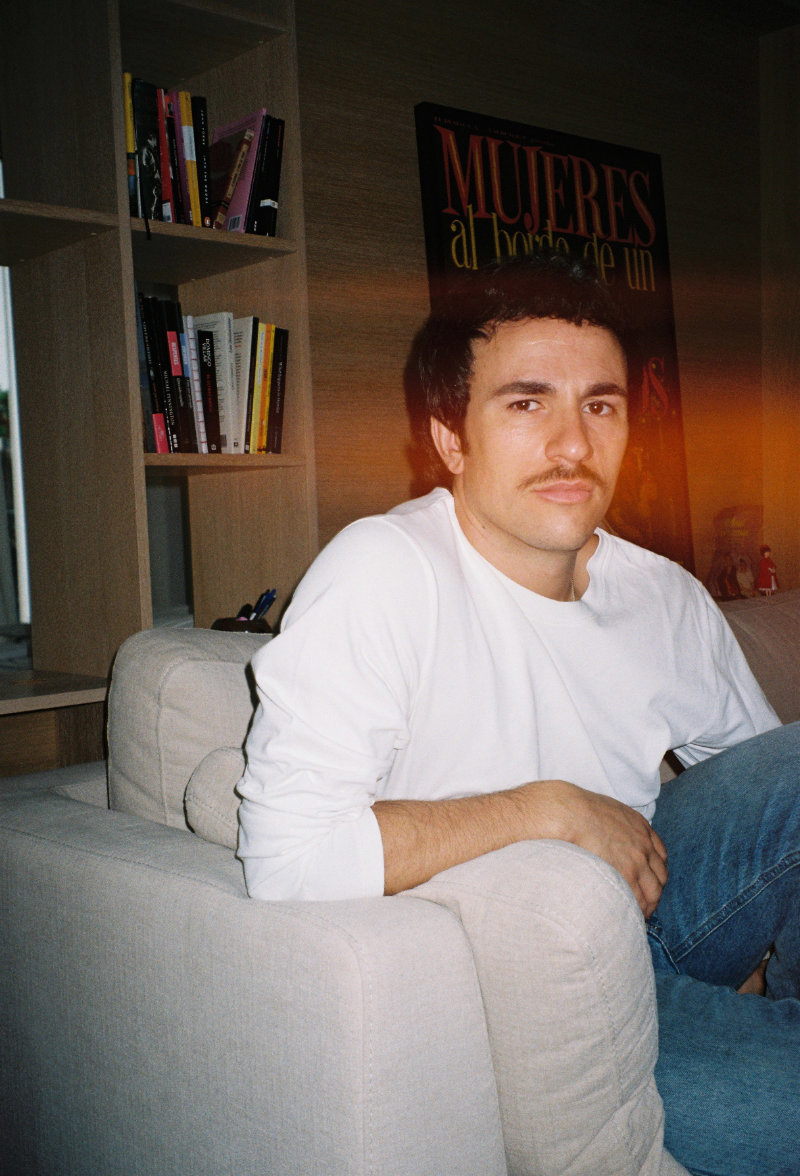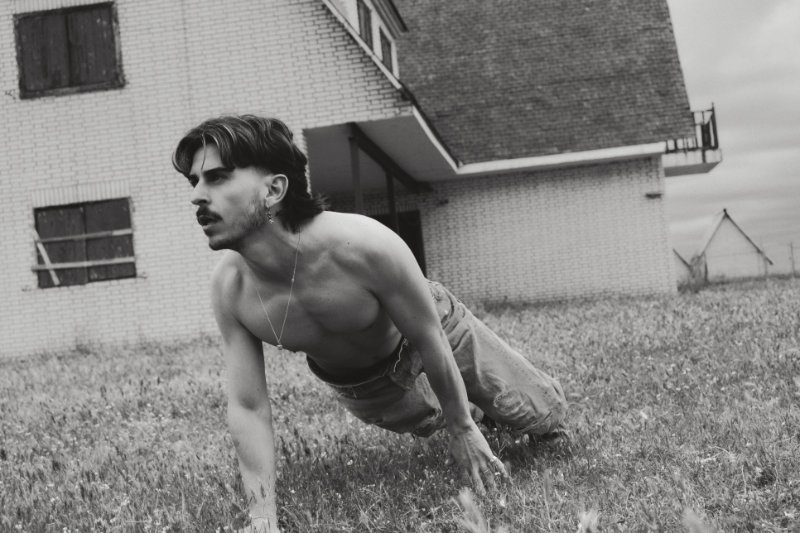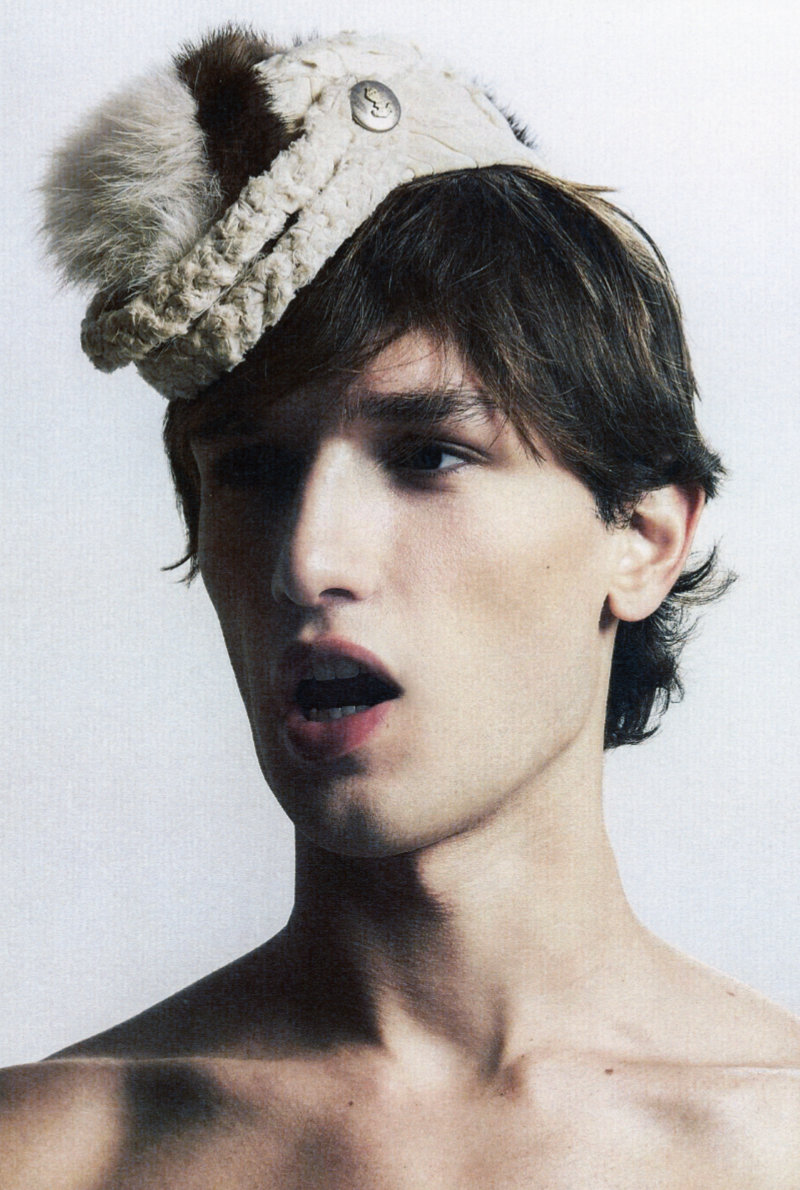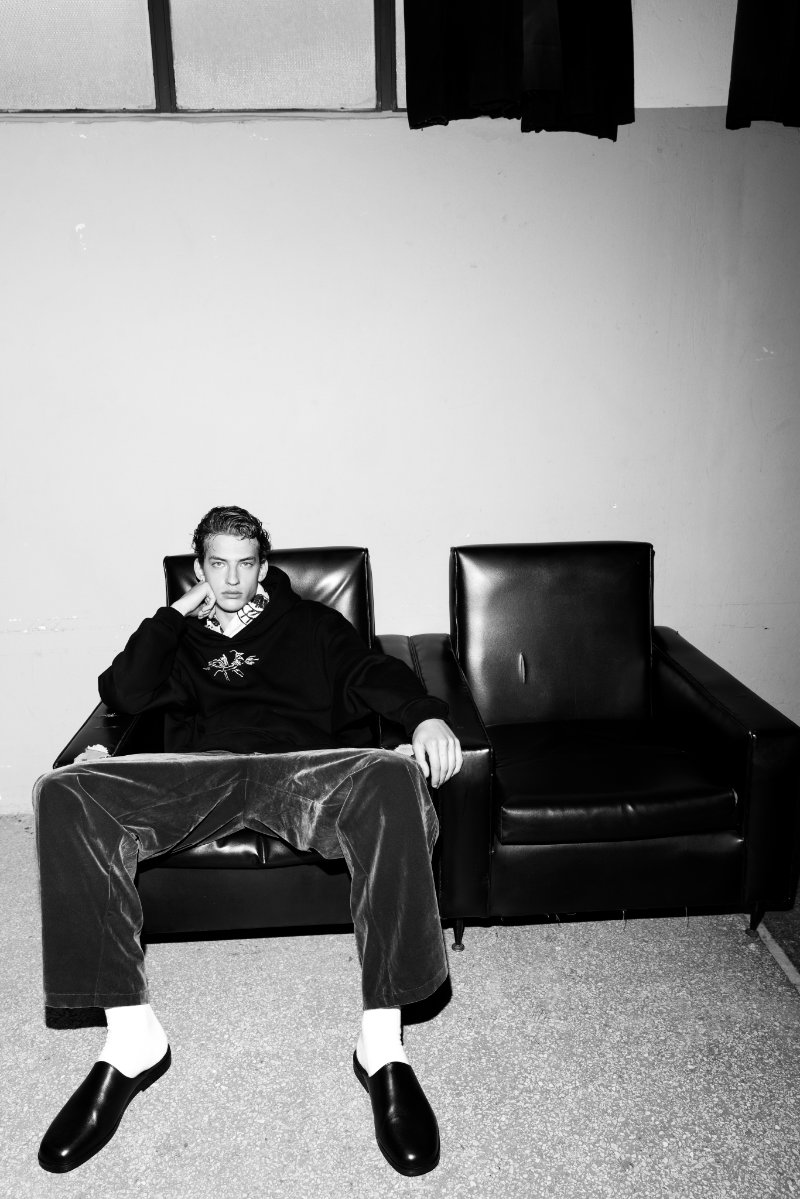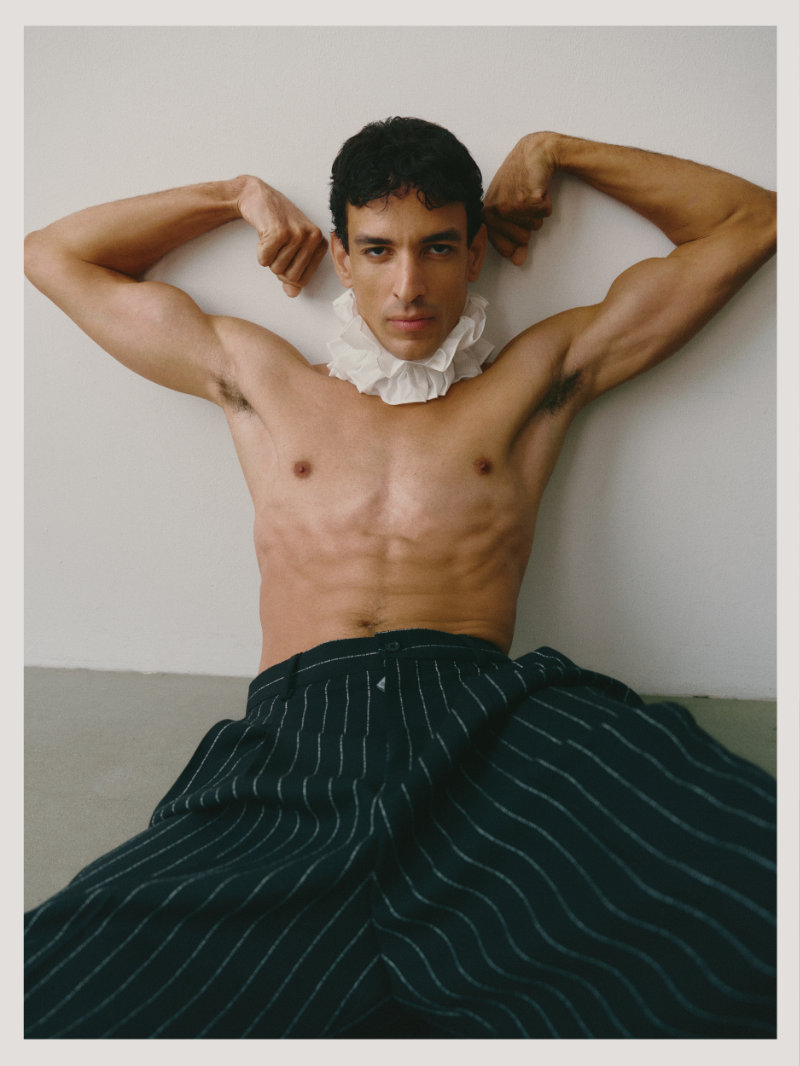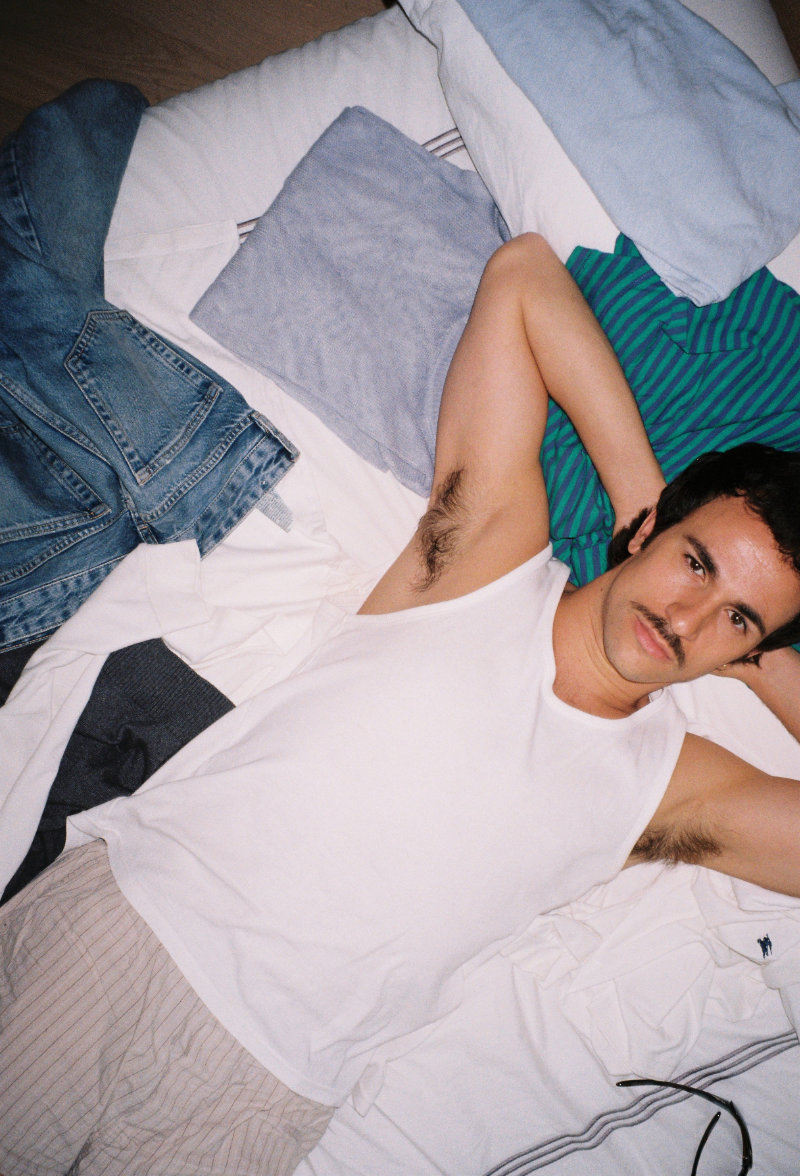
There is an undeniable, electric magnetism that Alejandro Jato brings to the stage, the kind of rare presence that effortlessly holds an audience in the palm of his hand from the moment he steps into the spotlight. Known for his captivating intensity and fluid emotional range, Jato has established himself as one of the most compelling and versatile actors of his generation.
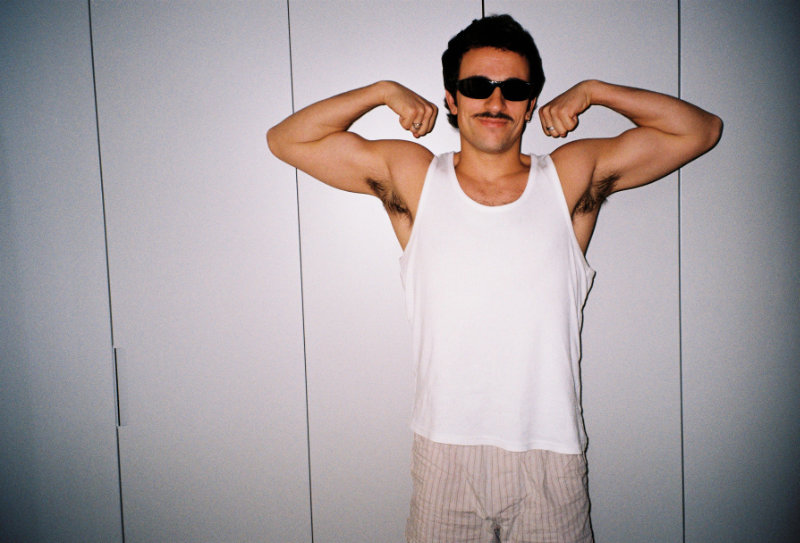
In his latest work starring in Al final de las cosas, directed by Noemí Rodríguez at Madrid’s Centro Dramático Nacional, Jato showcases the full spectrum of his artistic dexterity. Seamlessly shifting from chaotic, play-filled energy to moments of profound emotional gravity, he brings a deeply human complexity to his character, making the performance simultaneously relatable, unpredictable, and magnetic. Off-stage, his thoughtful perspective on the craft reflects a performer who isn’t afraid to embrace uncertainty, risk, and vulnerability. In this conversation, Alejandro opens up about the thrill of theatrical chemistry, navigating life’s existential crossroads, and why finding humor in human imperfection might just be the ultimate key to connecting with an audience.
The play has an electric, fun, and chaotic opening that hooks you right away. How do you build that energy on stage so it feels like an organic whirlwind rather than a calculated rhythm?
I’m so glad you see it that way! The beginning is actually the most technical and measured part of the show. It’s an illusion: the play seems like it’s going down one path when it’s really headed somewhere else, using a code that gradually shifts into something entirely different. It also establishes a relationship and a playful dynamic with the audience right from the start. The kind of theater [Noemí Rodríguez] has been making over the last few years goes in that direction, and she has incredible control over that pulse, which I learned how to match.
There’s a very vibrant, playful, and even sensual chemistry between you and your co-star on stage. What ingredients are needed between two actors for that attraction and ease to feel so real and electrifying to the audience?
Well, in our case, it stems from a relationship that predates this project, and above all, a very long process of rehearsals and workshops where we figured out together what the piece was about, how it affected each of us, and what it brought out in us. She had a lot of groundwork done, especially a wonderful script she’d been writing for a long time. But the truth is, our connection comes from sharing a very similar outlook on theater, and even on life. We both share a lot of retranca, which is a major trait of Galician humor, a kind of irony and dry wit used to look at life and, in this case, a breakup.
Al final de las cosas tackles that underlying dissatisfaction when everything seems “fine,” but on the inside, you feel a massive emptiness. Has it ever happened to you in real life, being in a comfortable place yet feeling like you’re burning out on the inside?
Well, existential dissatisfaction is a topic that really interests me, especially on an artistic level. Personally, of course, it’s something I question and that hits close to home. I go through more existential phases and others more pragmatic ones, but there’s something in that question that seems to hide many others related to our place in the world and the purpose of being here. I feel like for years now, or at least for my generation, FOMO has made us constantly wonder if we have the absolute best version of whatever we’re enjoying. Whenever I think about this, a scene from the movie The Worst Person in the World comes to mind, where the protagonist pauses her life and everything freezes while she runs off to live another life without giving up the one she already has.
The play shows how selfishness sometimes doesn’t stem from wanting to hurt someone, but from prioritizing one’s own emotional survival. Do you think we act selfishly in modern love, or have we simply learned not to sacrifice ourselves as much for the other person?
I think this is also a very modern, generational question that ties right into the previous one. The play touches on this several times, opening up the debate on whether the desire for a different life and the fantasy of aspiring to something else is greed, capitalism, or simply “prioritizing yourself,” that word we all throw around so much now that we go to therapy. But the boundary between those things is blurry. I feel that in an era where choices are endless, anything is susceptible to being replaced by something that potentially looks better. And suddenly, people are starting to fit into that category too. And perhaps, I ask this without knowing the answer, that gets a bit in the way of fully surrendering to love or making a commitment. I get the feeling that we form relationships while leaving a little door open just in case, because we know other options might be waiting and out of a sheer panic of getting hurt.
There are moments when the characters reach an almost absurd point of desperation just to avoid facing reality. What is the most absurd or crazy thing you’ve ever done in real life to avoid bringing a chapter or a relationship to an end?
Well, I suppose just holding on and keeping the faith, or rather, hope, as Noe’s character says in the play. That kind of hope where you just wait around. Continuing to wait for something to change, for things to fall into place or get fixed. The moment hope is lost, I understand that both parties are finally ready to surrender.
In today’s couple dynamics, we seem obsessed with seeking validation from the other person just to know our own worth. How much do you think our ego and the gaze of others weigh on us when we try to hold onto a relationship that’s already dead?
Well, I think that weighs heavily whether a relationship is dead or alive. But it’s true that when things are nearing an end or when rejection pops up, fears skyrocket. Phew… this is such an interesting topic. We are so capable of completely altering our self-perception based on someone else’s look when we lack security. Creativity goes into overdrive, imagining worst-case scenarios where you always come out looking bad and coming up with a million reasons why you deserve to be rejected. It’s pretty tragic. And I think it’s reflected really well in the play: it’s terrible to feel like you’re no longer looked at with admiration, or to see yourself in the reflection of someone else’s eyes and no longer feel unique and special.
The play constantly navigates between dark humor and brutal sadness. As an actor, how do you experience that rollercoaster where the audience goes from laughing to getting a sharp pinch in the heart in a matter of seconds?
I honestly love that. Noemí wrote a text that, to my taste, blends those two emotions so naturally and realistically that we can actually feel the audience traveling along with them. I think we both share a pretty similar view of life in that sense, perhaps because we’re Galician and have that retranca, which is a graceful, witty irony very common in our local character. Putting the spotlight on the pathetic side of tragedy feels like a win to me, because from the outside, people imagine living through those moments in a very epic or dramatic way, but reality is usually much messier. And I think people see themselves in that and connect with what we’re telling them in a special way. Laughter is a fantastic way to open up to understanding, empathy, and moving someone.
Sometimes we cling to relationships not for what they are, but out of fear of emptiness or being alone with ourselves. Have you learned to get along with solitude, or does that blank space still give you vertigo?
I’m working on it, I guess. It happens to me just like with the questions in the play: one day you think you’ve figured everything out, and the next you realize you don’t even know where to start. So it depends on when you catch me. I like being alone, but I suppose I like it when I truly choose it. Anyway, the fear of loneliness is very primal and it’s always there, even if you’re aware of it and try to manage it. Ultimately, and this also comes up in the play, the fear of death is what lies “at the end of things,” and I understand that runs beneath all these issues. That question really resonates with me, and it’s one of the parts of the show I enjoy and appreciate the most.
Playing a character who goes through so many emotional contradictions every night must stir things up inside you. What part of this process has made you question or rethink your own understanding of love?
Well, I keep asking myself if love exists the way I used to think it did, lasting forever, or if it’s something else, or the same thing adapted to whatever happens in life. I suppose this has opened up even more questions than I already had… what a mess! (laughs). What comforts me through all of this is that I tolerate doubt and uncertainty much better than I did a few years ago. Not long ago, I saw Sorrentino’s latest film, The Hand of God (or La grazia), and the message was something like the beauty of doubt. I’m trying to find humor and beauty in not having any of this figured out, and honestly, that already feels like plenty!
Speaking of love in general, away from the spotlight: Do you think true love is the kind that endures everything, or the one that has the maturity to know when it’s time to let go?
Everything? No, there are some things you should never endure. Under no circumstances. I do believe that when there is true love, it’s wonderful to try everything if you can do it without hurting each other too much. And I think it takes a lot of courage to dare to love precisely because, once you’re past twenty, you know that giving yourself over to love will bring wonderful things, but also a certain amount of pain. At the same time, I think letting go when you simply can’t anymore requires a superhuman bravery that I still don’t quite know where it comes from.
The play features passages of a very fresh and daring fluency. Do you feel the audience connects from a different place, almost one of complicity or shared guilt, upon seeing their own flaws exposed in such a lighthearted way?
Yes. I think the show has some very politically incorrect parts that are sparking a lot of laughs. So I understand that many people are empathizing with the characters’ contradictions, which are really all of our contradictions. I feel like theater sometimes takes itself way too seriously, whereas in real life, we are much more pathetic, complex, and contradictory than we’d care to admit.
There’s a very fine line between unbridled passion and emotional burnout. Personally, do you consider yourself an impulsive person who dives right into the deep end, or do you prefer to analyze and protect yourself before making a false move?
Well, with experience now, I definitely think things through a lot before diving into trying something serious. But you know what? My sister was telling me the other day that life is meant to be lived, not overthought, and in a way, she’s right. I also think living is always a great opportunity to generate material that can be told, turned into a story or fiction, and that has made me dare to look at life differently. I often think of my friend Miquel Insua, who approached life that way, with that nerve, seeing the beauty of potential hidden in everyday things. Having that leitmotif feels lovely and, above all, fun.
Going on stage every day to emotionally empty yourself at such a fast pace must be exhausting yet deeply cathartic. How do you feel on the inside when the curtain falls and the lights go out after all that whirlwind?
I feel pretty liberated, in a good way. Like I’ve just come out of a very long meditation, which I’ve never actually done, but I imagine it feels like that. I’m a bit exhausted too, but very zen. The other day I started the show feeling awful, and by the end, I didn’t even remember it. It’s quite cathartic, yes.
The history suggests that falling or stumbling into a chaotic ending is sometimes the only way to find yourself. Has there been a moment of crisis or uncertainty in your career that you later realized was the best thing that could have happened to you?
I think there have been many. But a breakup, like the one in the play, opens up the possibility, in the best-case scenario, of resetting, because it completely alters the foundations of your life. It’s changing everything and, above all, asking yourself who you are outside of the other person. I think that if you make the most of it, it’s an immense opportunity to grow and look for a different kind of happiness. And that autonomy, feeling like you can make it on your own when you thought you were going to die, is very magical, serene, and hopeful. At least it was for me.
For anyone who comes to see you at the theater, gets emotional, laughs, and sees themselves reflected in that very human mirror, what conversation or reflection would you like them to take with them to post-show drinks?
That they leave having had a good laugh at themselves and at us, and feeling like they aren’t so alone in their patheticness, misunderstanding, and pain… well, not so alone in general. Just being able to sit in a room with a large group of people, phoneless, sharing an experience, feels pretty revolutionary nowadays. Sharing these common flaws also brings us a little closer to being slightly less lonely, which, at the end of things, I imagine is what we’re all looking for.