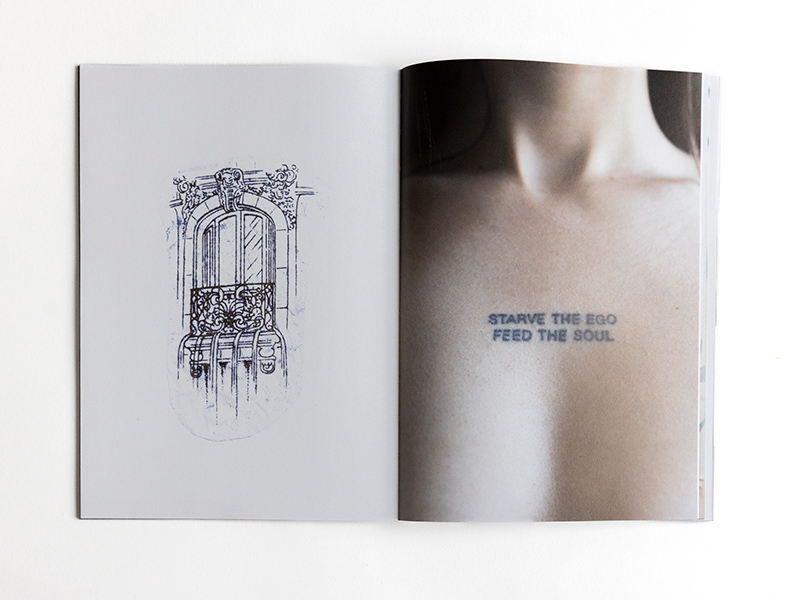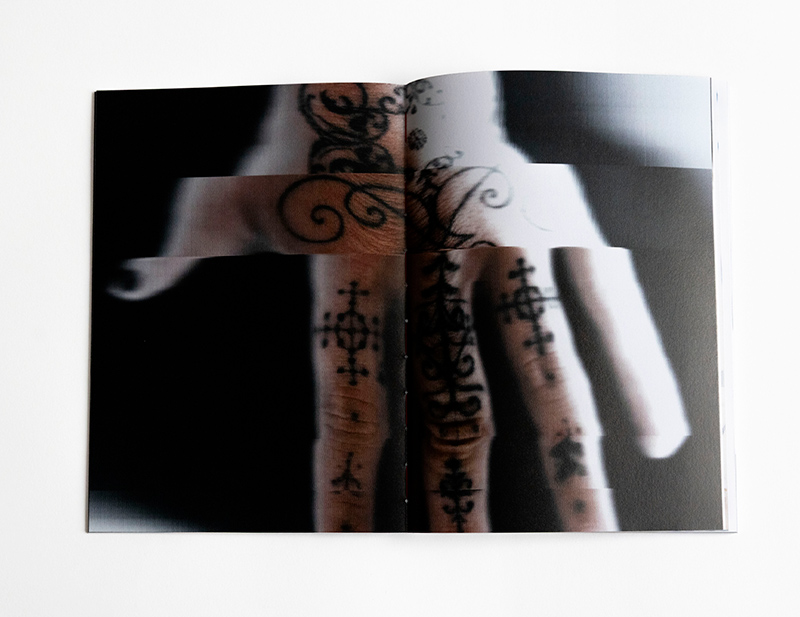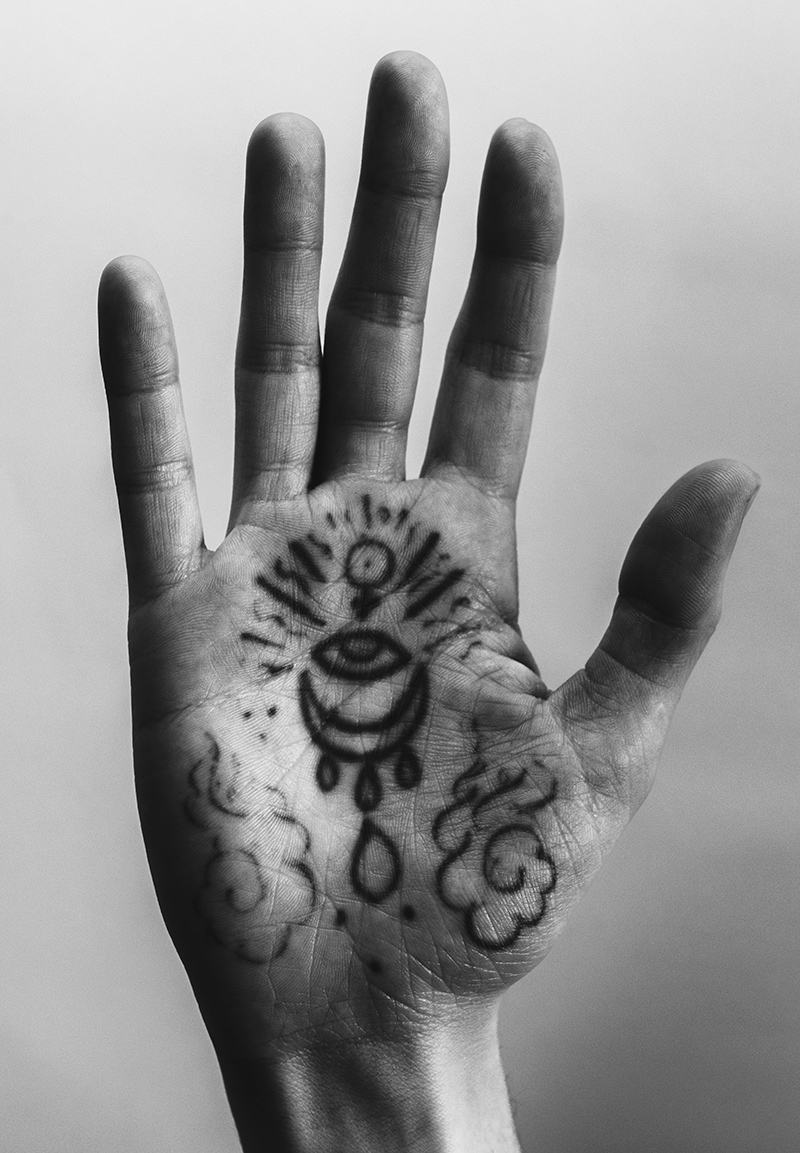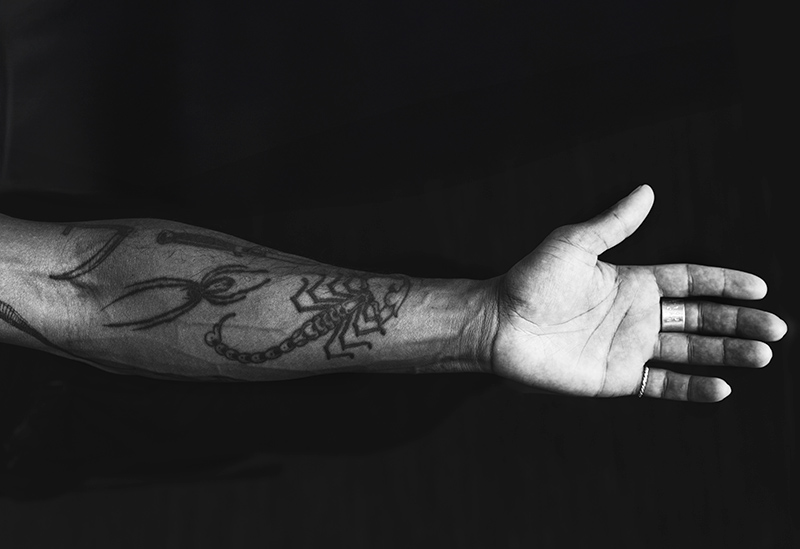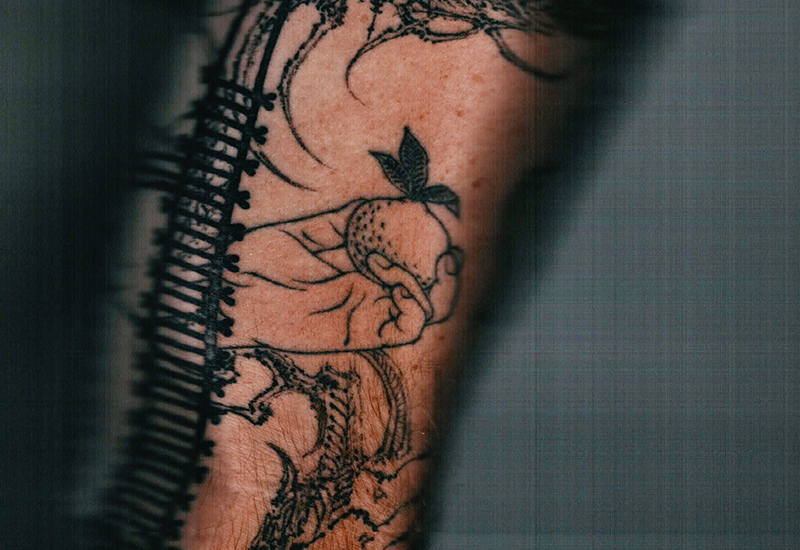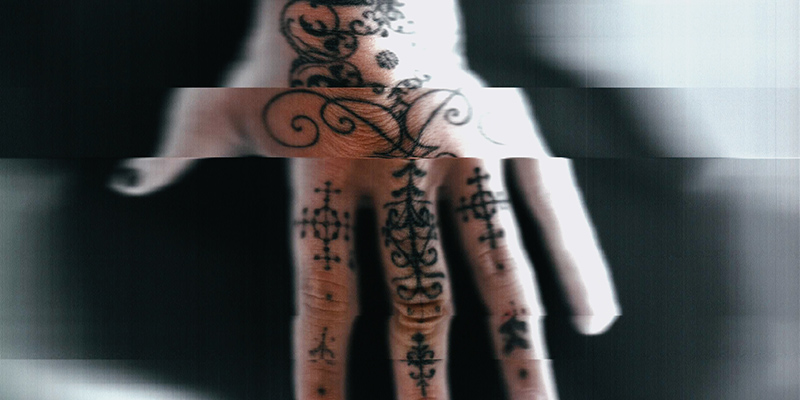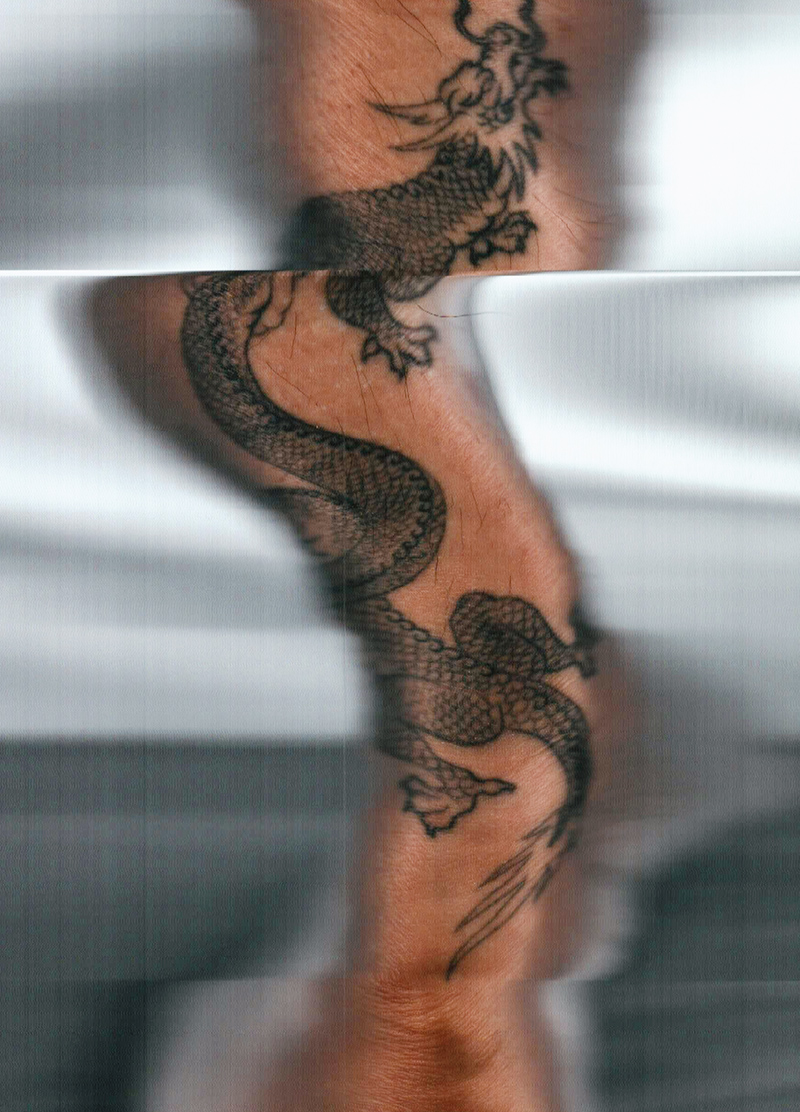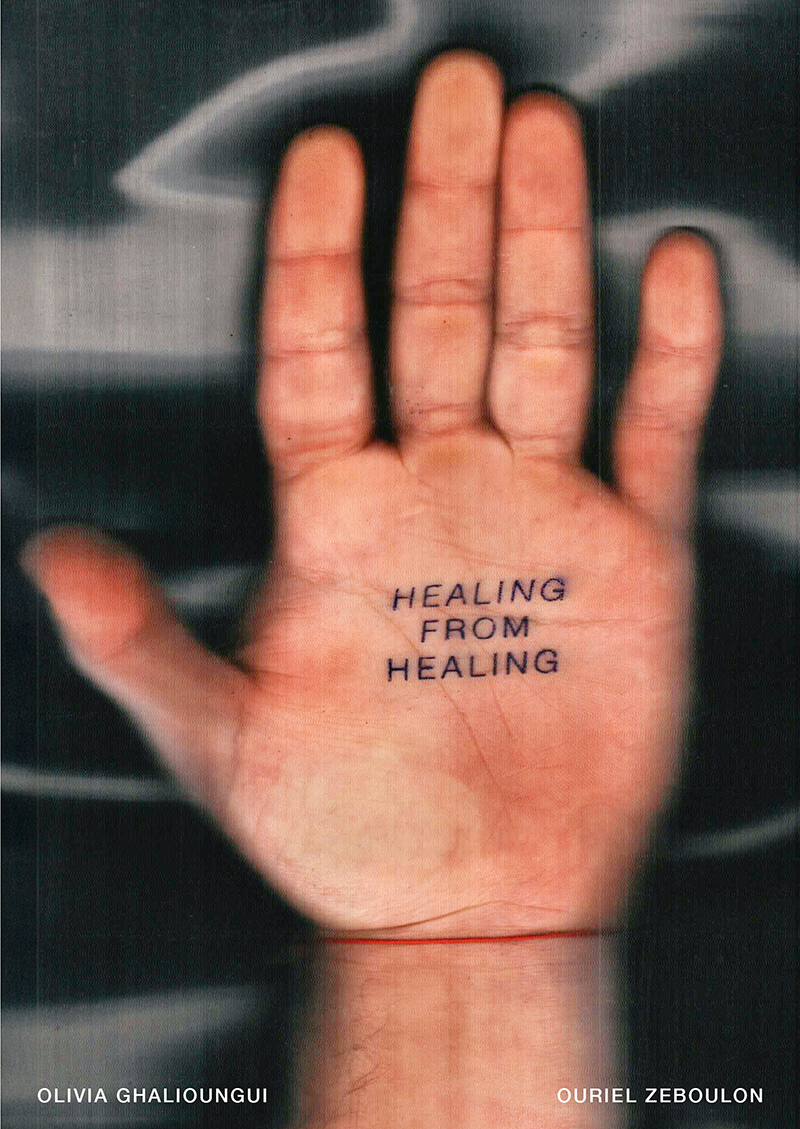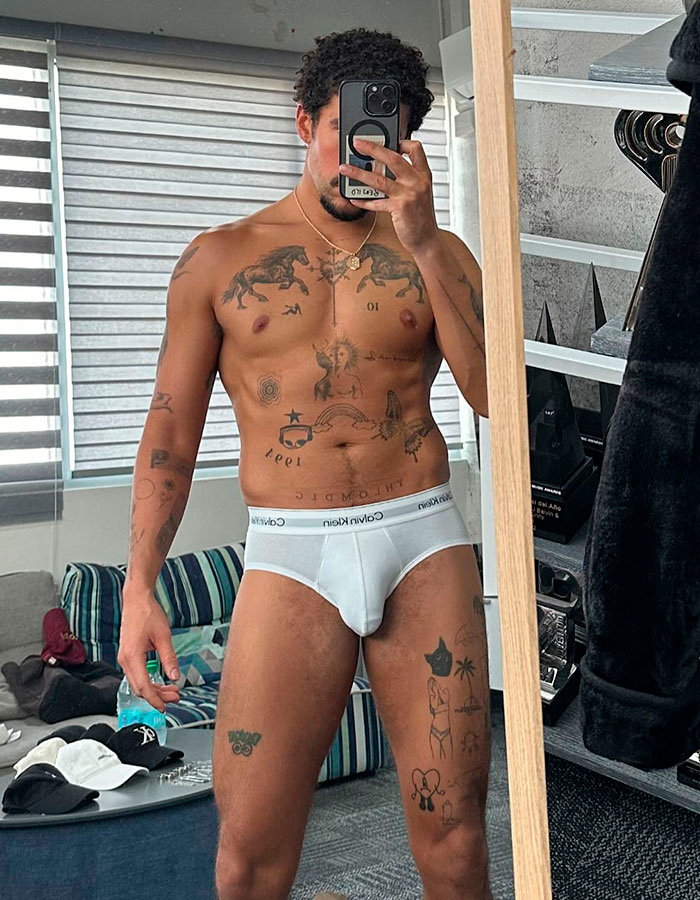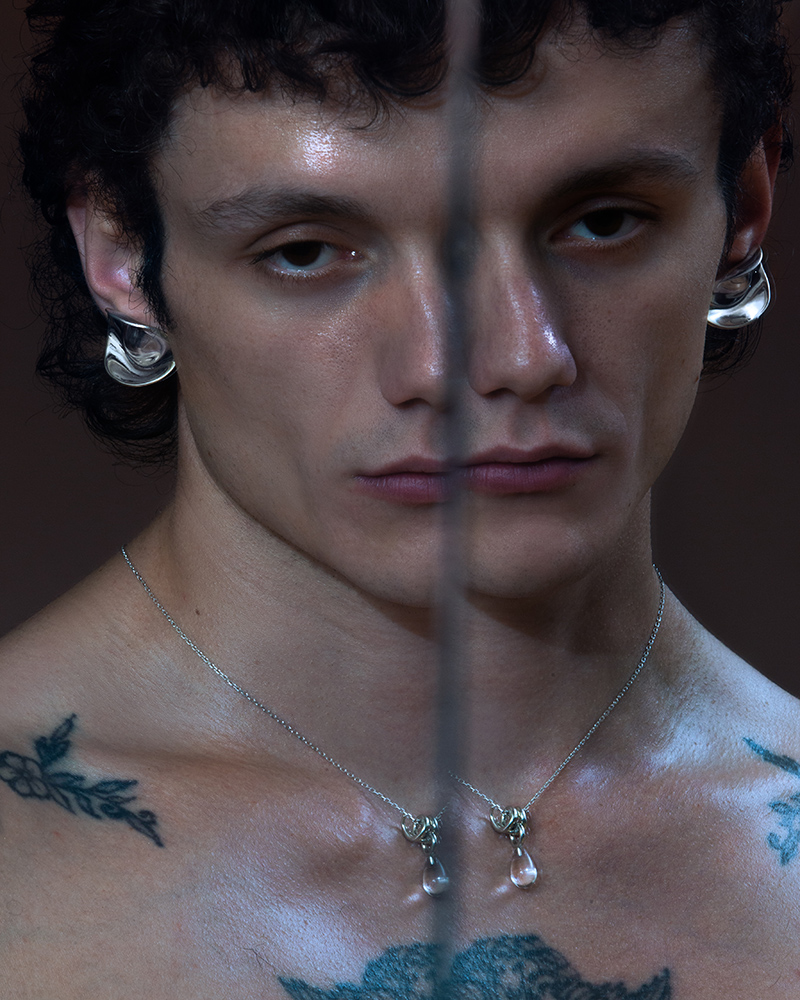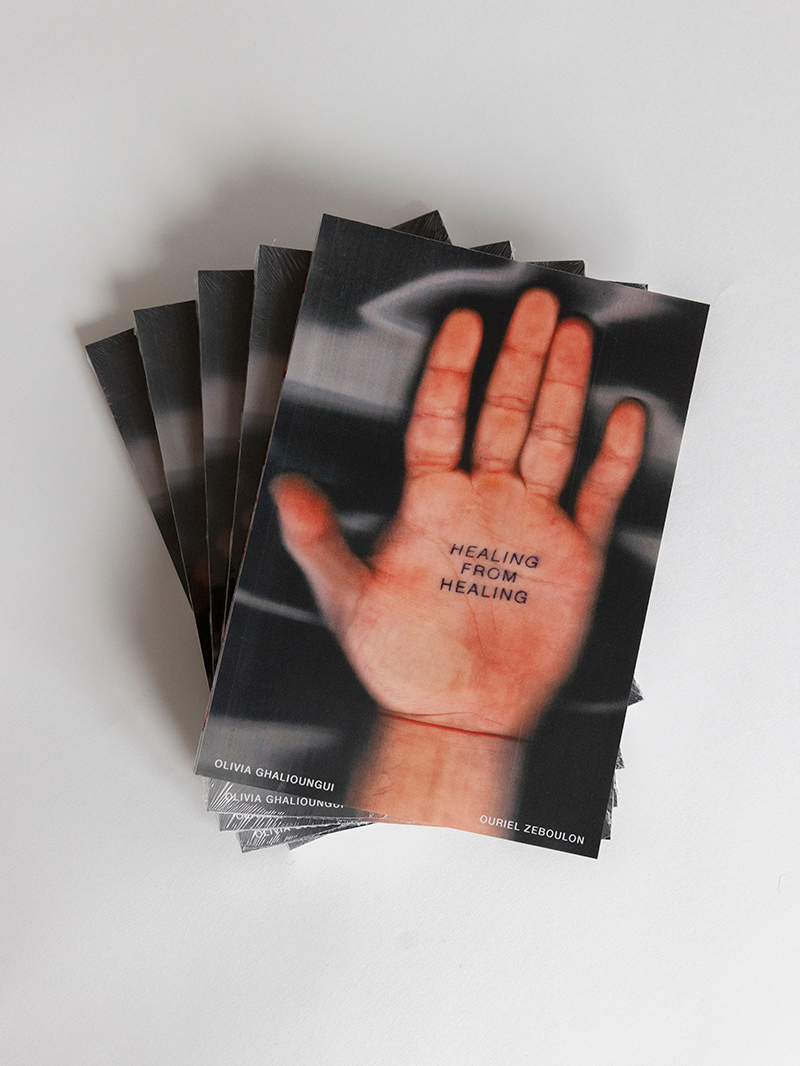
Tattooing is an art form often overlooked since it crossed over into the mainstream. What was once synonymous with spiritual leaders, gangs or alternative cultures is now an integral part of the zeitgeist. Everybody and their mothers are getting tattooed (sometimes together!). But still, no tattoo museum or archive center to tell the stories of these artists and their customers, whom they often share a deep, intimate bond with. What better way to keep that medium alive than to collaborate with a photographer and translate that art form into another? This is exactly what friends and artists Olivia Ghalioungui and Ouriel Zeboulon (she’s a photographer, he is a multi-disciplicinary artist who got his start in the tattoo industry) set out to do with their new book « Healing from healing », available from December 11th. Words are also important for the duo and the project features a foreword by Gaya Goldcymer. Together with Olivia and Ouriel, we met up in Paris to discuss creativity, criticism and the importance for artists to collaborate.
I think the idea of a creative community is so precious because creating can feel so isolating sometimes. What led you guys to collaborate?
Olivia: I think collaboration in the world of photography is so important. Helping and respecting each other… because there’s so much competition. If you don’t have community, you don’t have anything.
Ouriel: We’re not just doing things for ourselves, we’re doing this for everybody.
Also, creating is so intimate. And don’t even get me started on tattoos!
Ouriel: No, but not even tattoos, just putting content out there. The way we collaborated with Olivia was so smooth. When I’m working with people, I can get very OCD. I know what I want and sometimes, visions can clash. What’s insane about this book is that we had coffee earlier this year and Olivia told me “Wouldn’t you want to shoot people you’ve tattooed and make a book together?” It created a space that I didn’t envision before and it was open and I trusted her.
Olivia: We had worked together in the past.
Were you friends or collaborators first?
Olivia: Well, I went and got a tattoo from him first. And then I kept going back and we bonded.
Going back to that idea of intimacy, trusting someone with your body like that… I think it’s such a deep relationship.
Ouriel: I realized recently that I have a lot of regulars. I became friends with quite a few of my clients. No matter what, we share a bond. And I think that’s the only reason why I’m still tattooing today, I love connecting with people.
Olivia: This book is also an ode to your tattoo career. You were saying you wanted to take a step back from that.
Ouriel: I think I’m still going to be tattooing throughout my life but not in the same way. I don’t want to be seen as a tattoo artist but as an artist so I need to explore new mediums. The only way to archive our work as tattoo artists is social media because we don’t have an institution or a system that deals with that. Doing a book now felt so perfect.
I know you do music. Is that going to be a bigger part of your creative life?
Ouriel: I love visual arts in general and also music. I would love to do installations, contemporary art… I want to be more open.
Olivia, what was your relationship with tattoos before this project?
Olivia: I got my first tattoo as soon as I turned 18. I went to Johnny Gloom and I got this big ass rose tattooed on the side of my ribs, which is arguably one of the most painful spots. I don’t regret it at all but I don’t know why I did that.
Do you think it was a way to gain agency over your body at the time?
Olivia: I think so. Essentially, I had just started a new life here in Paris and a lot of my friends had a bunch of tattoos. I had never seen anything like that before and was super intrigued. I was taking control of my life for the first time. It was pretty intimidating but it felt like I conquered a part of a certain scene that no one else that I knew from my past life had. I was able to say “This is who I am, this is my individuality”. And then I got so many tattoos, I have like 23 now. I got them in the span of three or four years.
You’re catching up with me! How long did you guys work on the book?
Olivia: We started in February.
Ouriel: And it’s people I’ve tattooed for the past nine years. The first person I ever tattooed is in the book. I also feel like the past nine years of my life have been driven rather unconsciously and now, it feels like… I don’t know, maybe my frontal lobe is fully developed now. I feel like a newborn again. I don’t know how it was for you guys but I feel like my teenage angst was my drive. Now, I’m more chill and I feel like I can decide.
Wait, I was actually talking to a friend of mine last week about this. We were talking about where I am creatively which is… not very good right now, I have to say! I feel very dried up. I was thinking, maybe I should just stop. Then it led to “Why am I doing it?” To relate to what you’re saying, when it’s been your whole life… You’re so in it, you’re always like “What’s the next project?”, “How can I advance my career?”… You’re not even thinking about the reason. Do I love it, or is it something that I’m doing to compensate? I was bullied when I was younger and I think a huge chunk of my ambition was fueled by that. “I’m gonna show them!”
Olivia: Kinda the same for me when I was a teenager. I felt like I wasn’t heard most of the time, I was kinda lonerish. When I came here and was surrounded by all these artists, I wanted to create as much as possible to prove to myself and to other people that I could do it, you know? I also feel like in the past year, a lot of creatives have been going through an artistic identity crisis at some point.
I’m so happy that you get it. When you’re in a creative rut, how do you get into the right mindset again?
Olivia: I just stop creating. I don’t even look at anything creatively. I just want to regulate my nervous system and then come back to it. With my most recent crisis, I realized that I need to think about what I want to create and why – to put intention behind it. I genuinely think this book helped me too.
And this is your second book in six months! Why do you think this was a time in your life when you needed this kind of project?
Olivia: I think I was in that headspace. I remember at the end of 2024 saying jokingly: “2025 will be the year of print.” I wanted to make that for myself.
I know you guys have a launch party planned. Ouriel, are you gonna play music there?
Ouriel: I don’t like merging my creative activities, it feels like two different parts of my brain. I feel like what I do visually now is more refined than the music. I don’t want to submerge people with too many things at once. I like to focus my energy in one direction at a time.
Criticism is such an important part of our lives now. I think with social media, we see a lot more criticism but a lot of it is less constructive. I don’t know how you both feel about that?
Ouriel: I would say that when I started, the old school guys in the tattoo industry were super harsh. They’d say “Your tattoos are not finished” because they felt they needed to be filled in or have color. I remember one tattoo artist way older than me sent me a message on Facebook and told me “You’re talented but your work is shit” – I ended up feeling very valued by this because if this guy who was fifteen years older than me was sending me this, he was feeling threatened and I was on the right path. If you’re fulfilled in your own life, you should either offer constructive criticism or encouragement.
You should be a mentor.
Ouriel: Exactly! It was tough at that point. Now, I don’t care. I can lack confidence in other areas of my life, but I’m very confident in my work and my creativity.
What about you, girl? Do you have something to share with the group?
Olivia: I think in my creative career, the most people I have gotten criticism from are either people who were supposed to mentor me or myself.
Interesting. Would you say you’re your biggest critic?
Olivia: I think so, honestly. I think we all have our own self-criticism, but when I get it from other people, I don’t listen to it. But with my inner voice, I can spiral.
I feel like when you’re really critical of yourself and your work, it can almost be a protection thing. Because if you’re really harsh on yourself, you don’t care about other people…
Ouriel: I’ve said worse to myself!
Olivia: Maybe it’s like a defense mechanism. Because the first people I started to experiment in front of and showed my work to, they were completely unsupportive.
Would you say that now, you have mentors?
Olivia: No… I have my friends that I trust, like you and you. Like my peers. I’m looking for the opinions of people I respect.