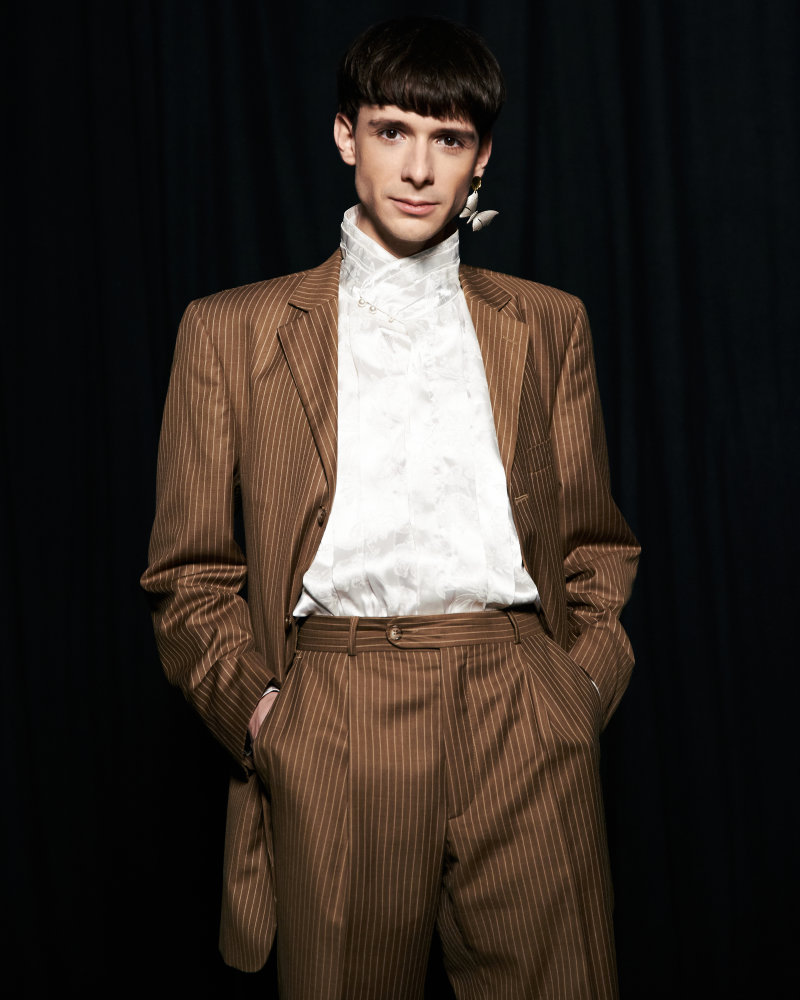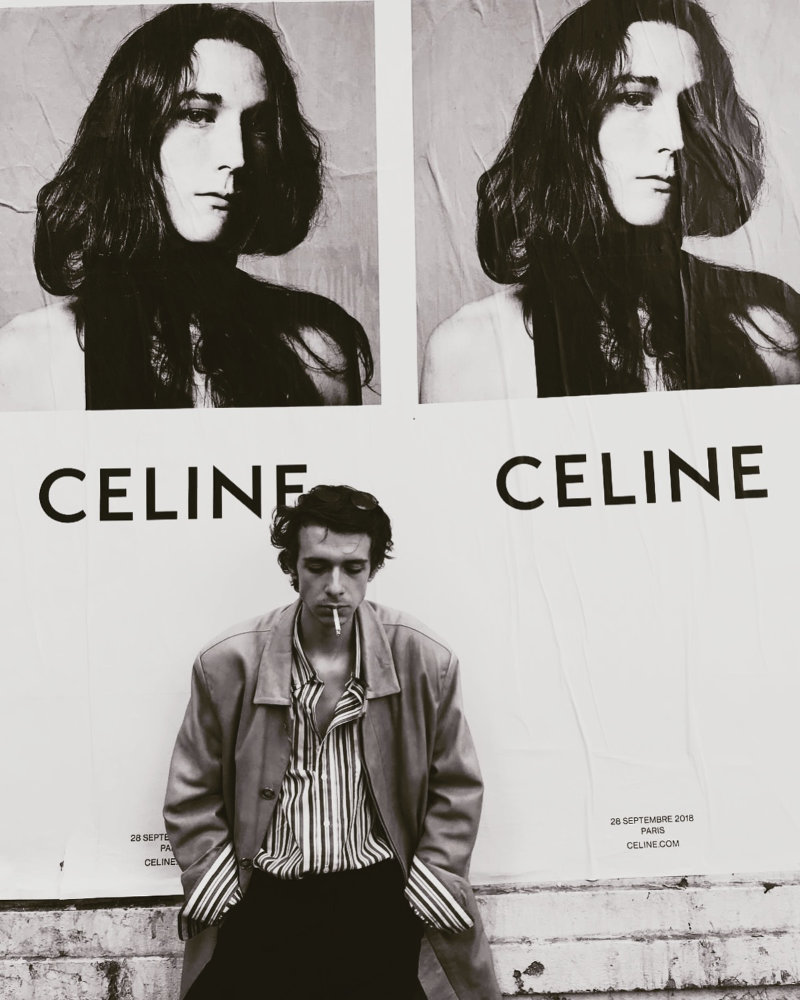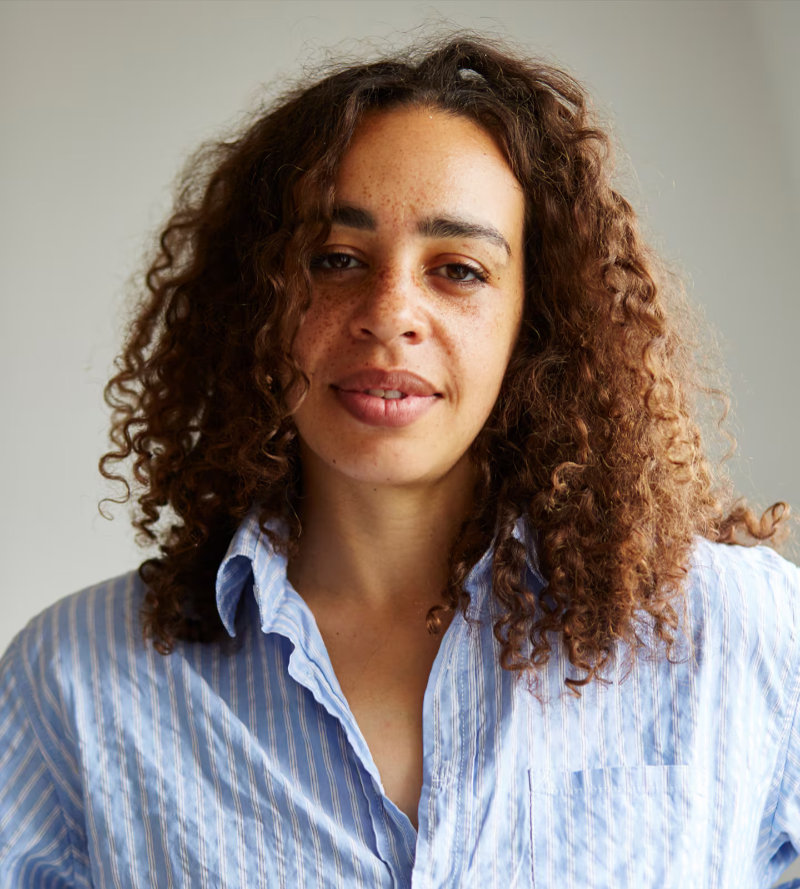
Invited to attend Mercedes-Benz Bucharest Fashion Week for the first time, I was happy to see Sebastian Felix Țopescu, someone I’ve known for a while now, working with the fashion week. Part of what made MBBFW SS’27 succeed, and part of what I liked most about it, in my opinion, is thanks to the work he’s doing with them.
Joining the week across both the Art Pillar and the Main Stage, Sebastian was brought on as creative director by Mario Antico, owner and CEO of MBBFW, as part of his vision for the new season, a trust Sebastian is grateful for. The creative director, writer, stylist, and curator approaches the runway as something closer to a temporary reality than a conventional presentation. It’s a philosophy that runs through everything he does: question the rules, then play with them. Kill a few of your darlings. Leave room for the unexpected.
Between fashion shows and coffee breaks, I had the chance to ask him some questions about this new adventure. We talked about the tension between experimentation and engagement, why emerging designers shouldn’t be treated as opening acts, and what it means to work in Bucharest, a city where the story hasn’t been completely written yet. We also got into heritage as a resource rather than a dress code, the difference between identifying problems as a journalist and solving them as a creative director, and the bunny-like curiosity that connects his many disciplines.
You’re joining MBBFW SS’27 across both the Art Pillar and the Main Stage, two very different platforms. How do you see these two roles speaking to each other, and what does each one allow you to do that the other
I see them as two different ways of testing the same ideas. The Art Pillar gives me room to experiment with the format itself, while the Main Stage allows me to engage more directly with fashion and its audience. One questions the rules; the other plays with them. Ideally, neither behaves too well.
You’ve described approaching the runway as “a temporary reality” rather than a presentation. Practically speaking, what does that mean for how you’re building the show, and what has to be sacrificed or let go of when you work that way?
I want people to enter a world, not just watch clothes go by. That means thinking about atmosphere, rhythm, sound, bodies, and space as parts of the same story. It also means knowing what to leave out. Not everything needs explaining, and not every good idea needs to make the final cut. Sometimes the best thing you can do for a concept is to “kill a few of its children”.
You talk about dialogue between established and emerging voices. In a context like Bucharest, how do you balance giving emerging designers real visibility without turning them into a supporting act for bigger names?
Emerging designers shouldn’t be the opening act for established names. They should be part of the conversation on equal terms. The challenge is to create a context where different voices amplify one another without losing their individuality. Visibility is easy to promise, meaningful visibility takes a little more work.
Your stated vision spans fashion, performance, image, sound and space. Which of those elements do you find hardest to get right on a runway, and why?
Space. It dictates how everything else is perceived, yet people often treat it as an empty container. Sound can be incredible, clothes can be beautiful, casting can be perfect, and the whole thing can still fall flat. The trick is making every element feel necessary, I think.
As a creative director, writer, stylist and curator, you move between disciplines constantly. Do you experience those as separate languages, or is there one underlying method that runs through all of them?
I’ve always had this bunny-like curiosity about everything. I think that’s what connects all the different things I do. For me, it always comes back to storytelling tho.
What does your actual process look like when you begin a project? Does it start with an image, a concept, a piece of clothing, a conversation?
I usually start with the aforementioned curiosity rather than a fully formed concept. I collect references, follow associations, and look for the hidden questions that usually arise from conversations. The concept comes later. If you know the answer before you start, what’s the point of the project?
Your practice centres on a dialogue between contemporary fashion, emerging voices and cultural heritage. In the Romanian and Eastern European context, what does heritage actually offer young designers, and where can it become a trap?
Heritage is a resource, not a dress code. Romania and Eastern Europe have rich cultural histories, but young designers shouldn’t be expected to represent their geography through embroidery and nostalgia. Heritage becomes interesting when it’s questioned, transformed or even rejected. The past is worth engaging with, but it shouldn’t get final approval on the future.
Having written for several publications, you’ve analyzed the industry from the outside as a journalist and now work inside it as a creative director. What did you see clearly as a writer that’s harder to act on in practice?
As a writer, you can identify the problem beautifully and leave someone else to deal with it. As a creative director, you’re the someone else. You suddenly meet budgets, deadlines, logistics and the occasional inconvenient reality. Journalism taught me to question the system; practice teaches me how difficult, and necessary, it is to work within it without becoming too comfortable.
You work across Europe and internationally. What does Bucharest allow you to do that Paris, Milan or London wouldn’t, and vice versa?
Bucharest offers the freedom of a story that hasn’t been completely written yet. There’s room to question established formats and build something more specific to the local context. Paris, Milan and London offer extraordinary infrastructures and international reach, but also well-established expectations. I like the possibility of working in Bucharest without having to pretend the rules were written elsewhere for a reason.
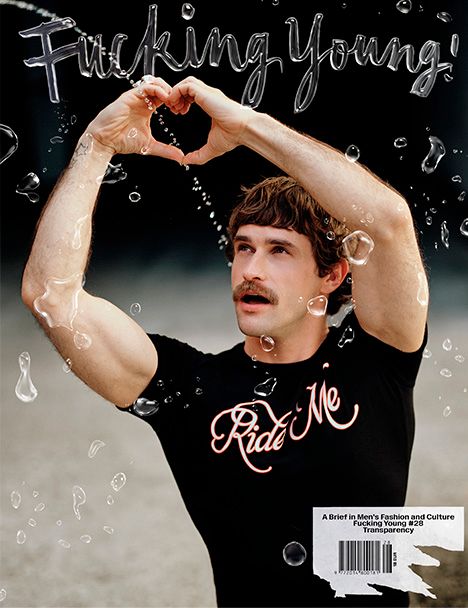
What does being Fucking Young mean to you?
Treating every project, person, or experience like it’s the one. A pattern I’m aware of, but have no intention of correcting.