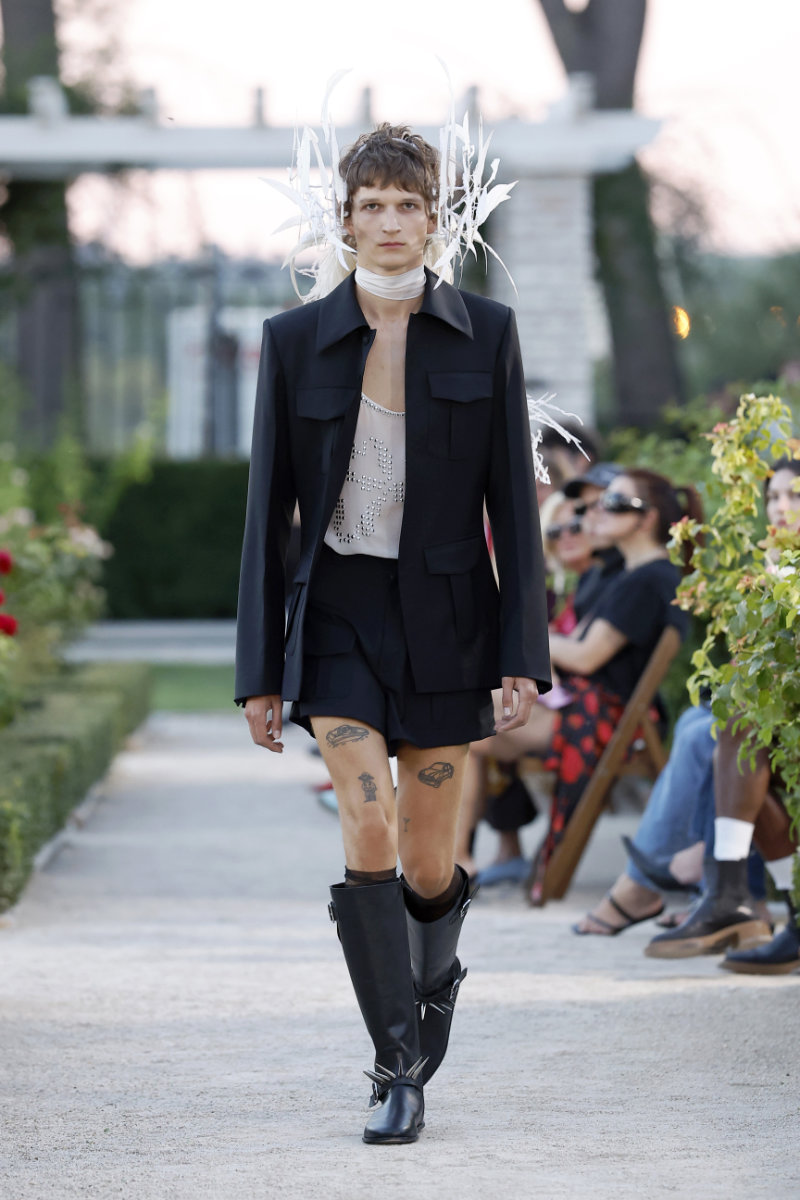
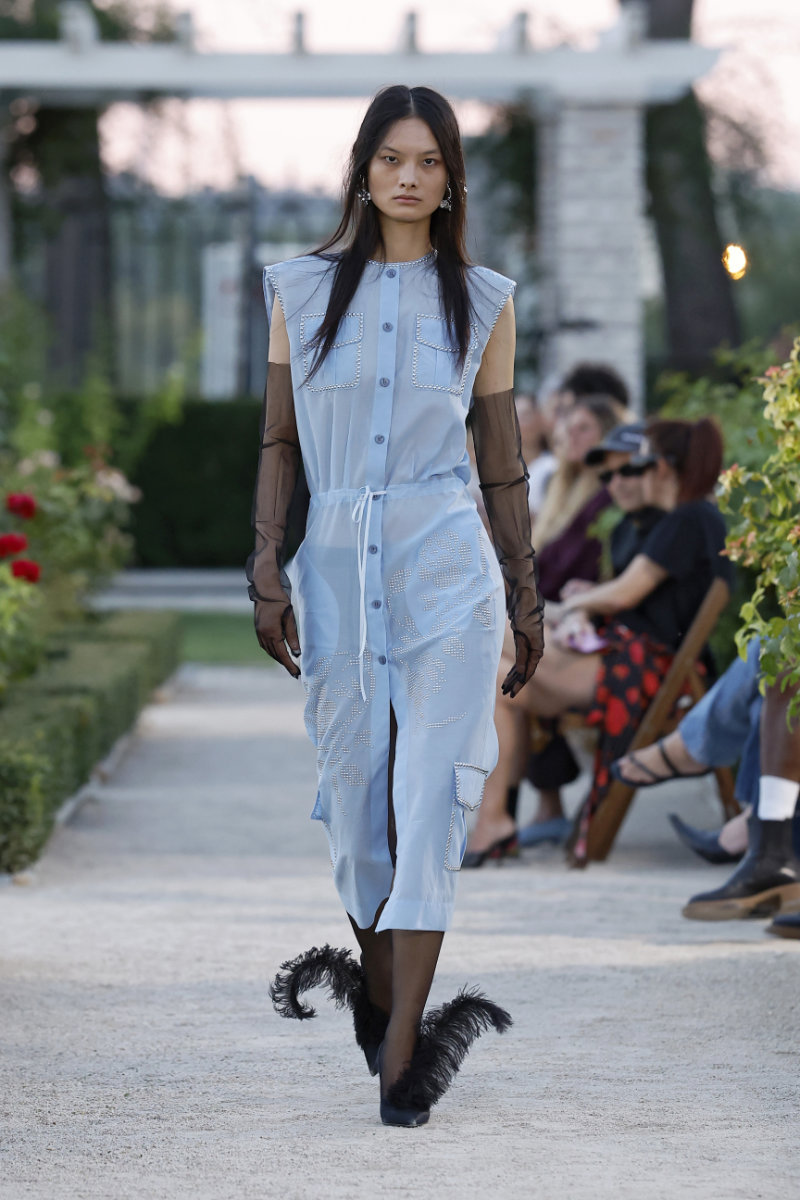
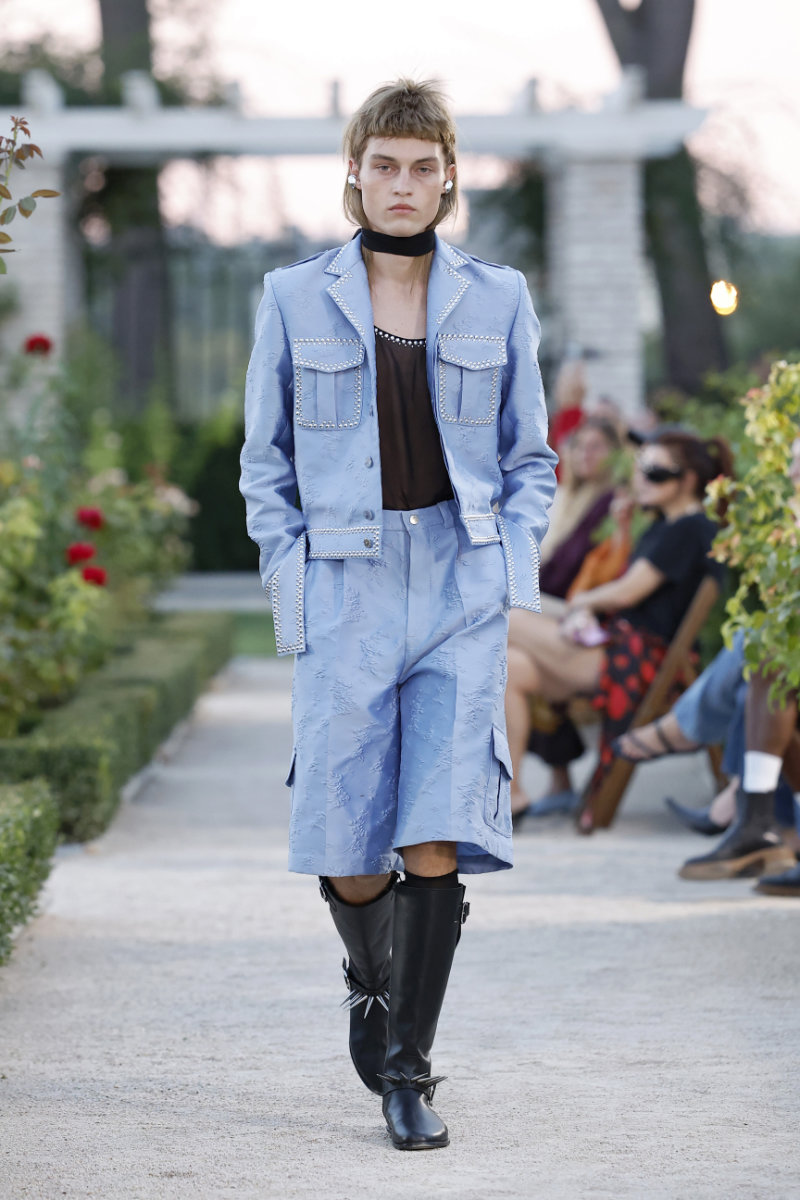
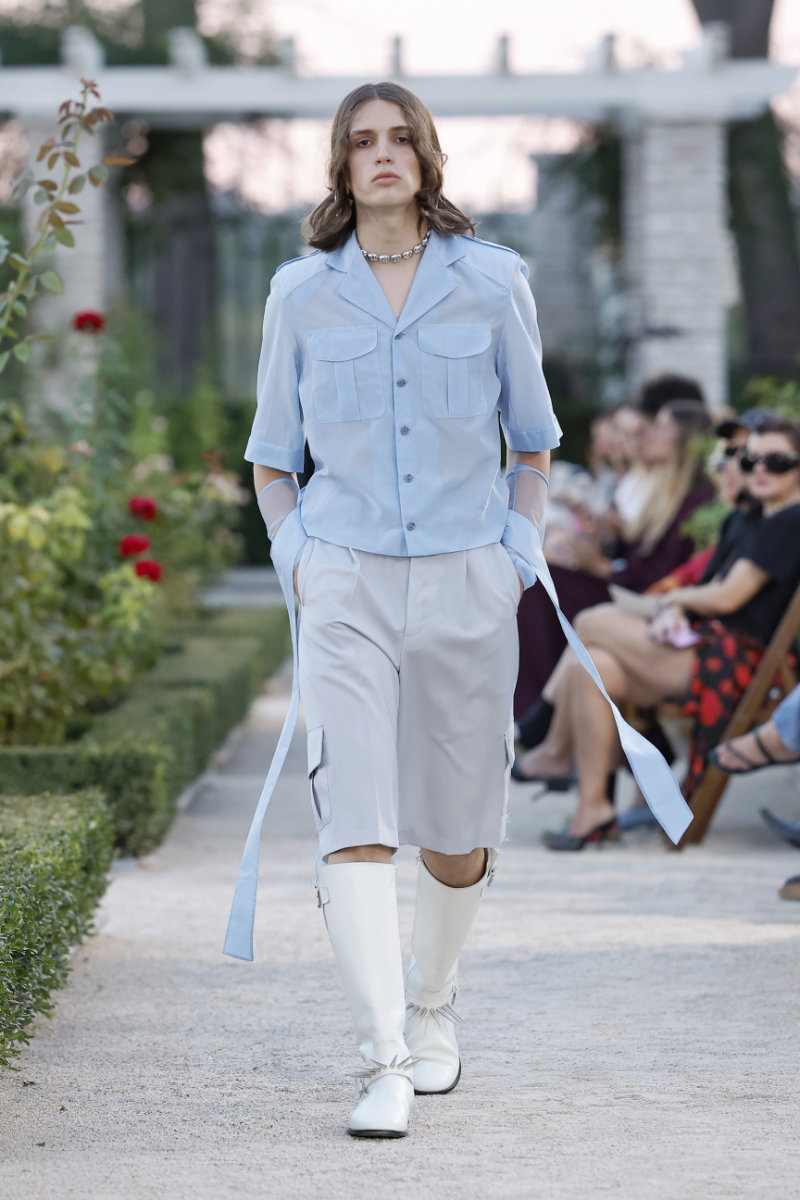
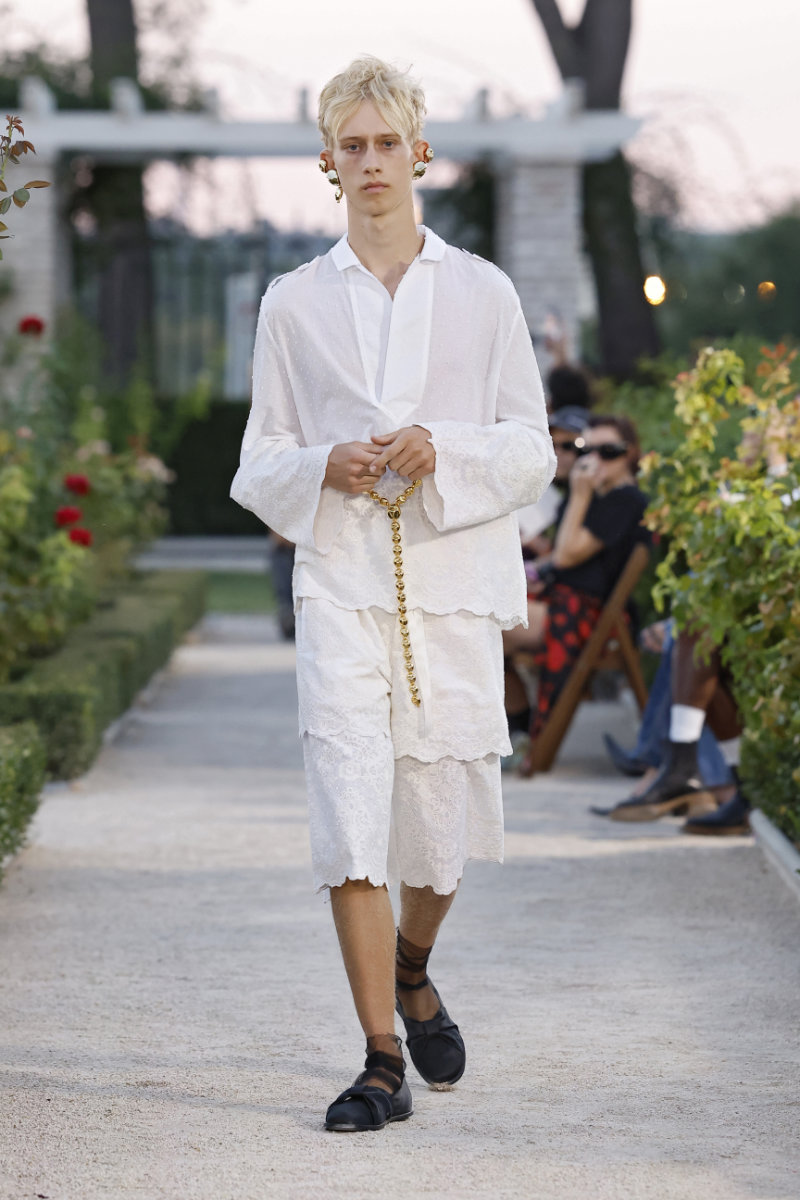
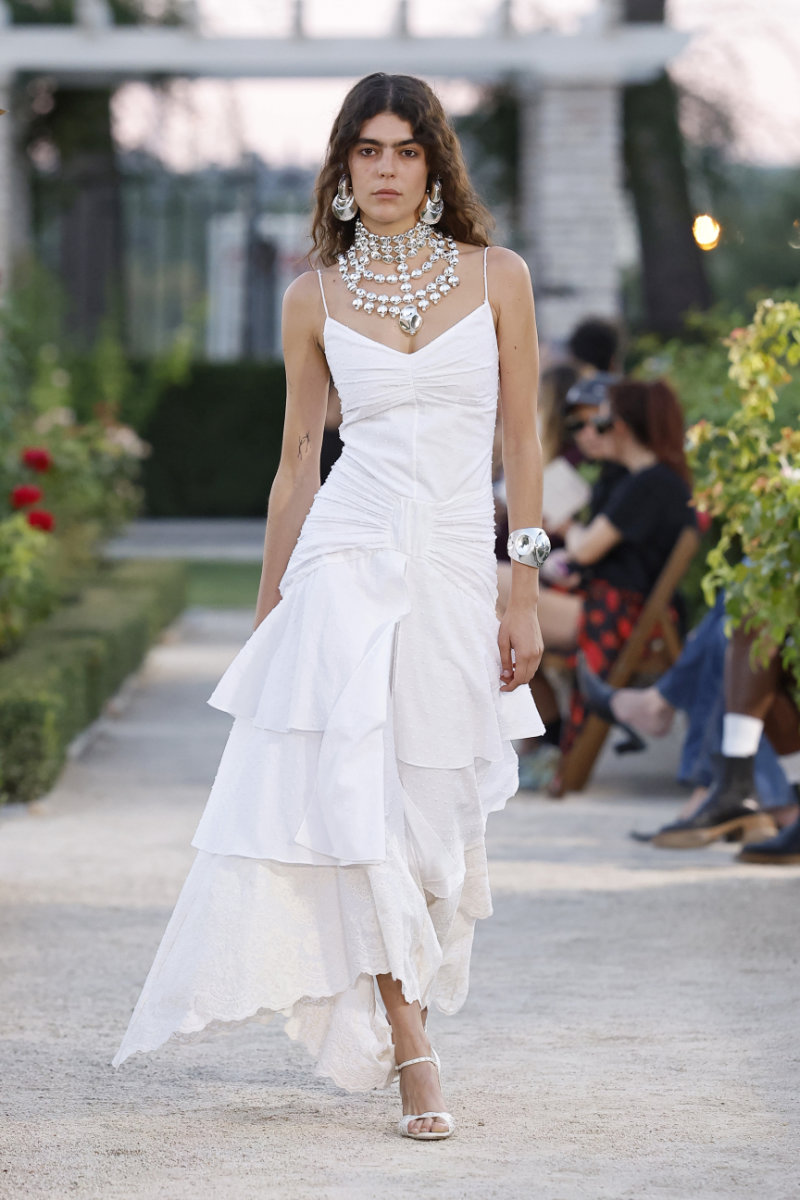
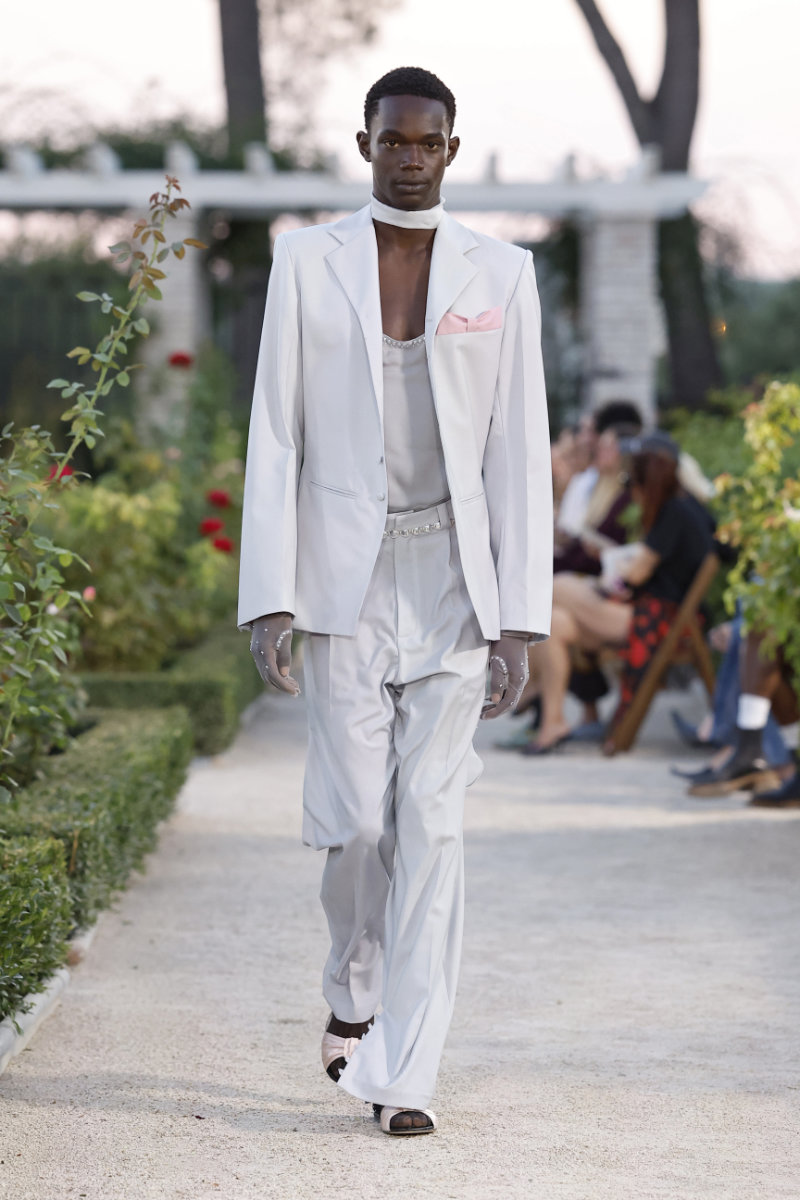
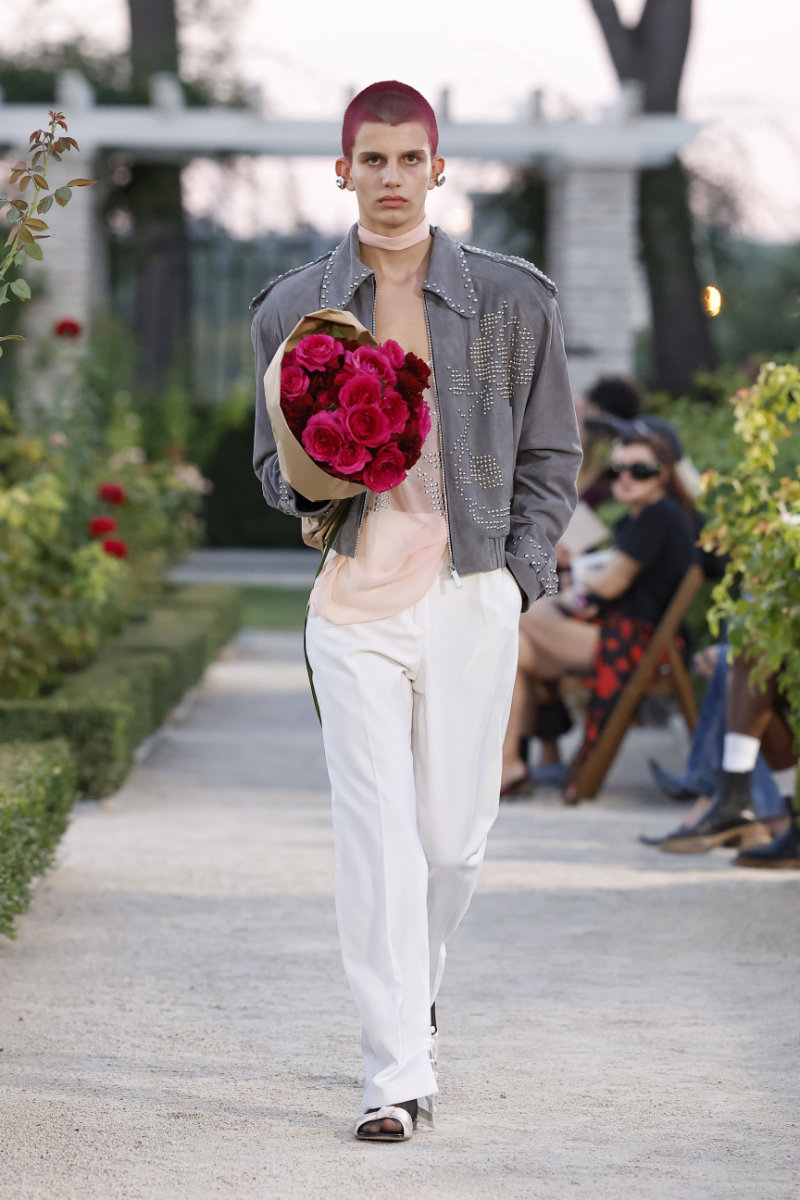
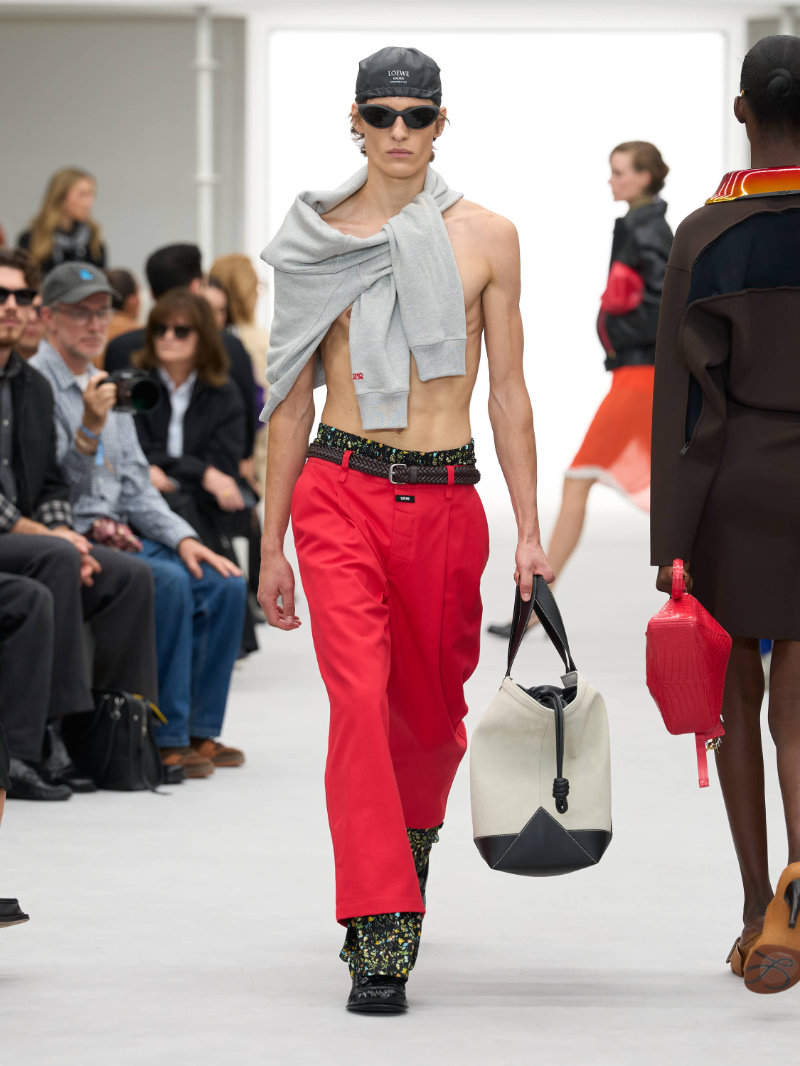
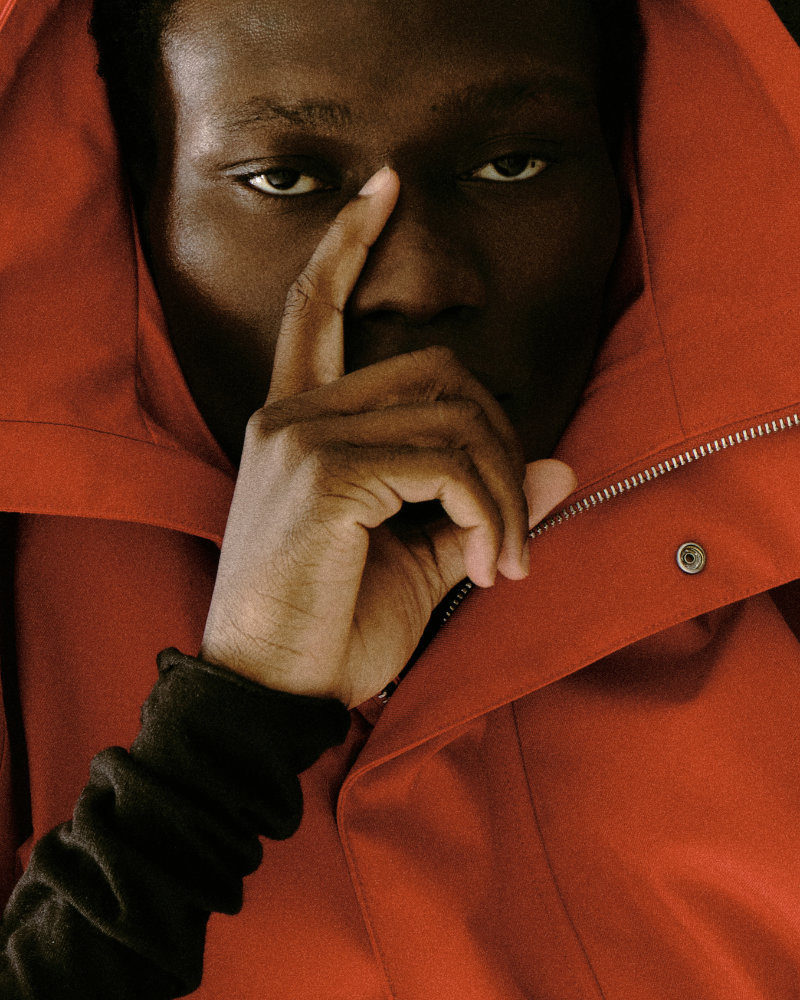
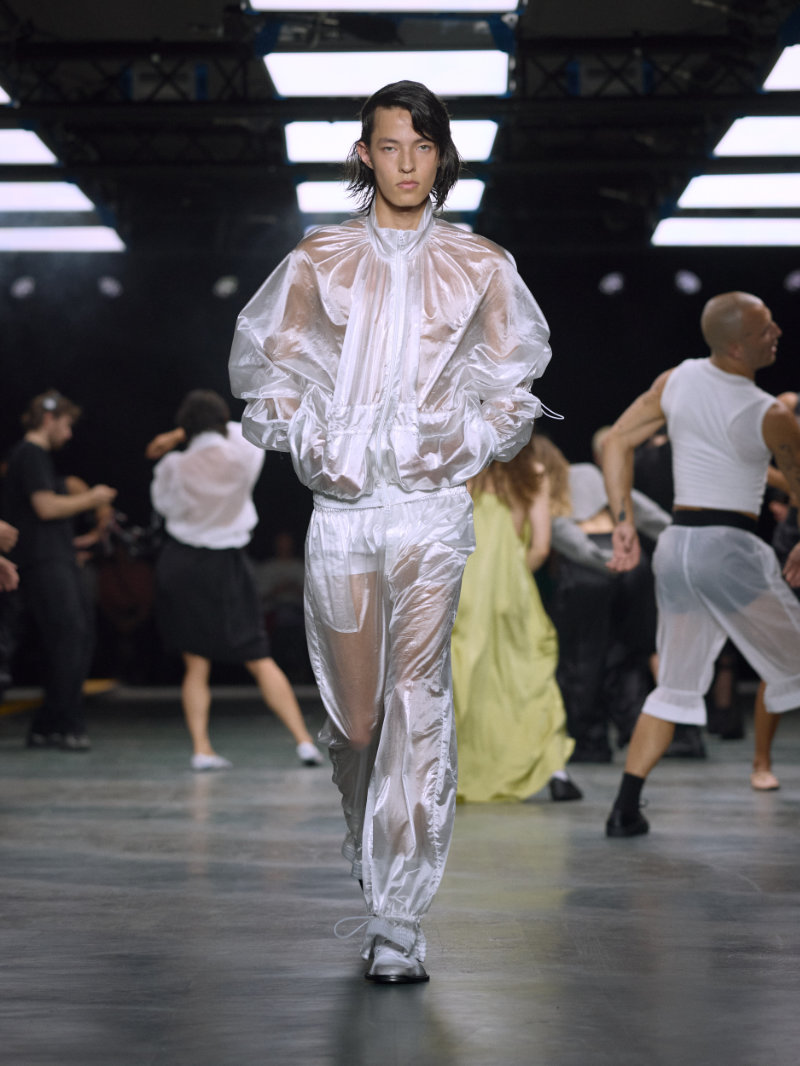
PALOMO turned ten in the most Palomo way possible: by building an Arcadia of its own in the middle of Madrid. Founded and creatively directed by Alejandro Gómez Palomo, the house brought Et in Arcadia Ego, its Spring/Summer 2027 collection, to the Rosaleda del Parque del Oeste as part of the official Mercedes-Benz Fashion Week Madrid calendar. By now, a Palomo show is one of the most anticipated appointments of Madrid’s fashion week, a position that speaks to the international presence the designer has built over the past decade. Pedro Almodóvar was among those gathered to witness the occasion, against a backdrop of roses, fading afternoon light and the city beyond. Yet despite the anniversary, this did not feel like a retrospective. If anything, it felt like a house taking a moment to consider what comes next.
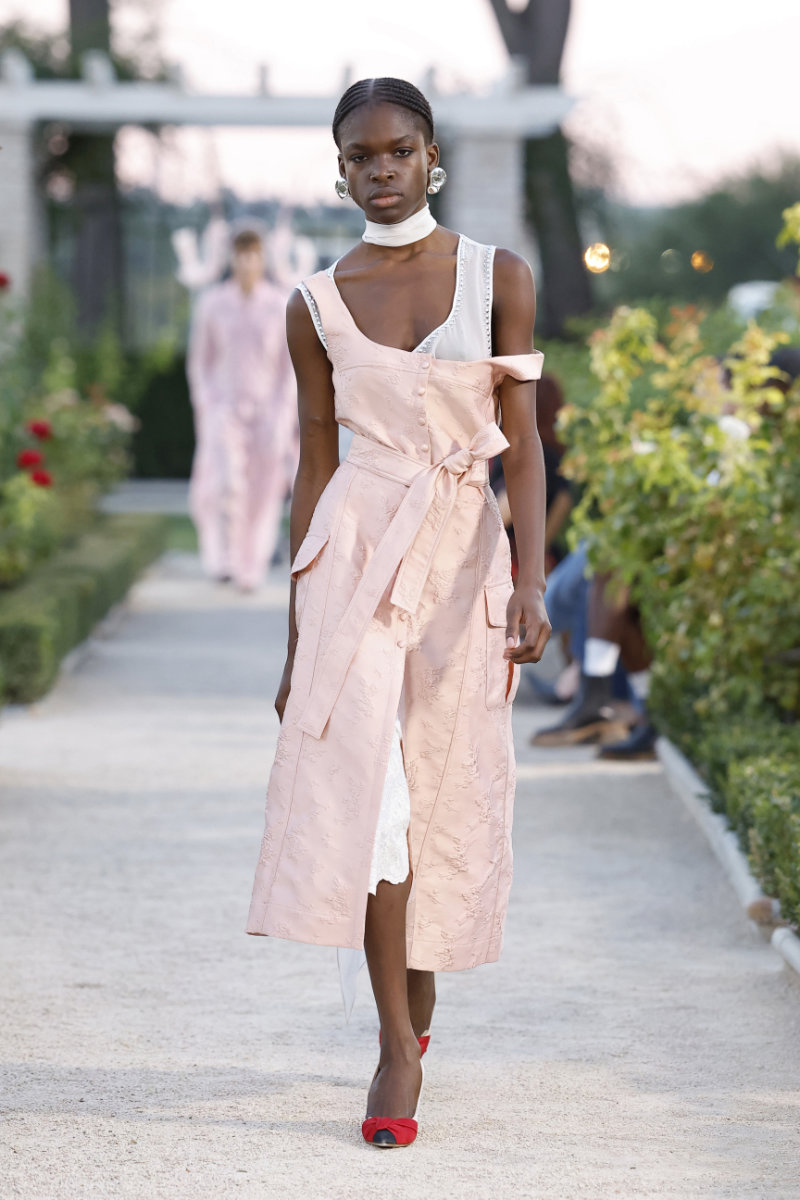
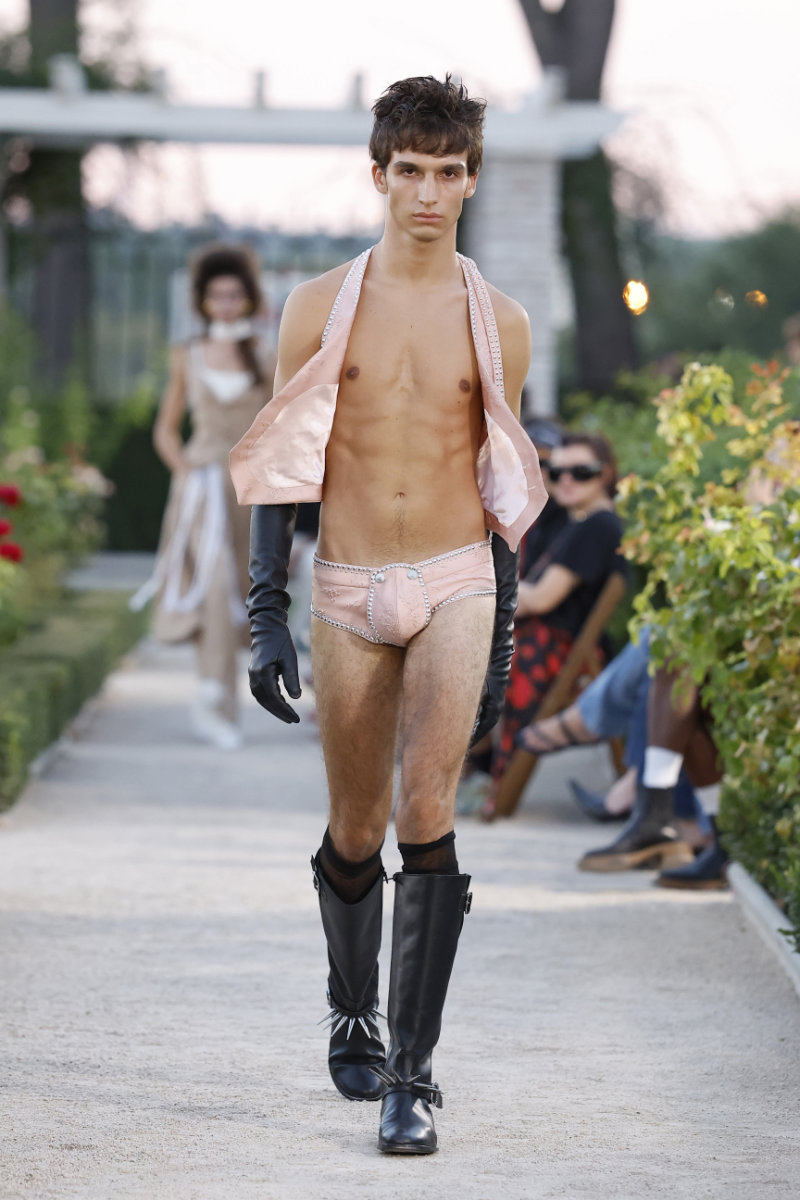
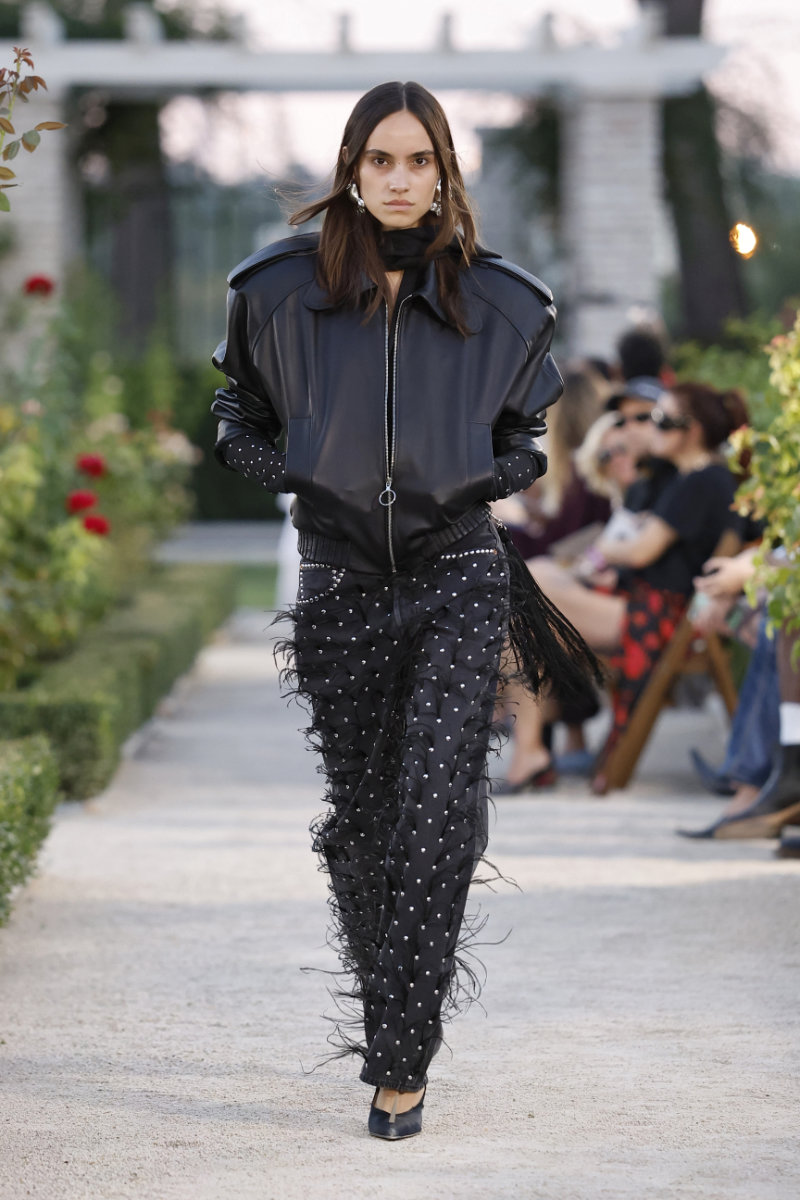
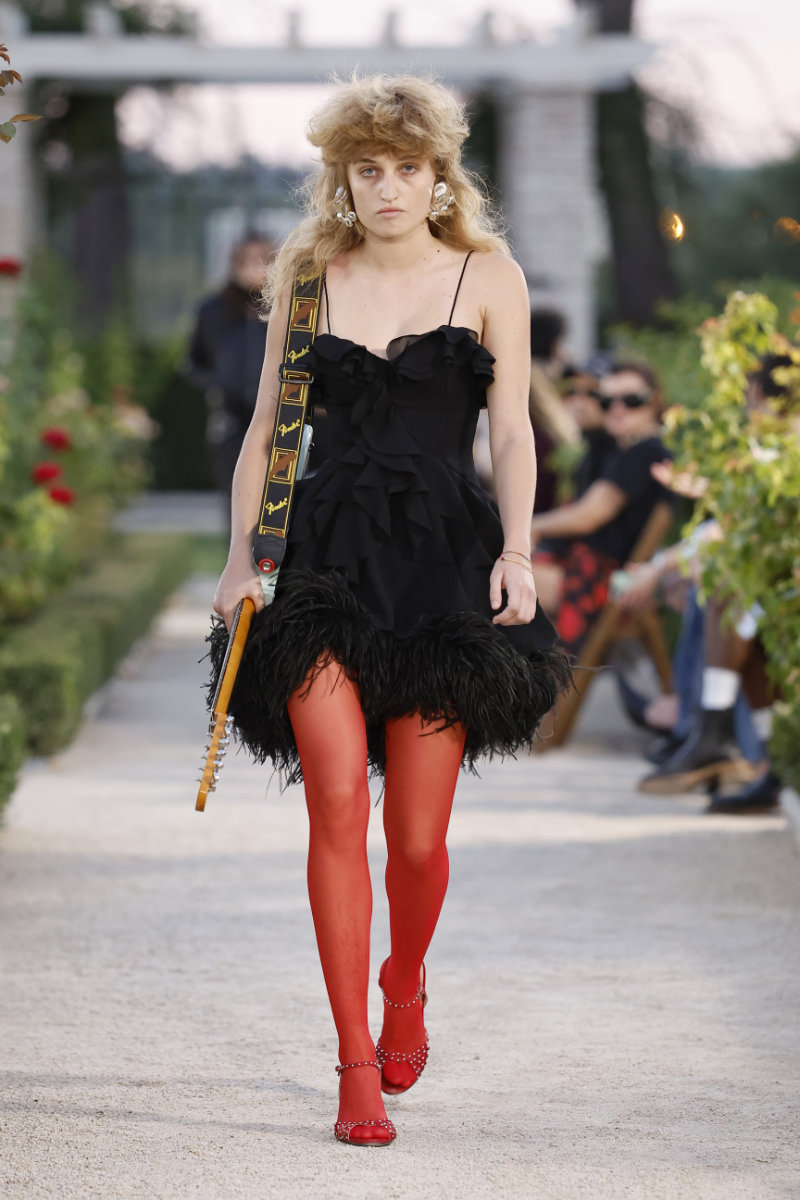
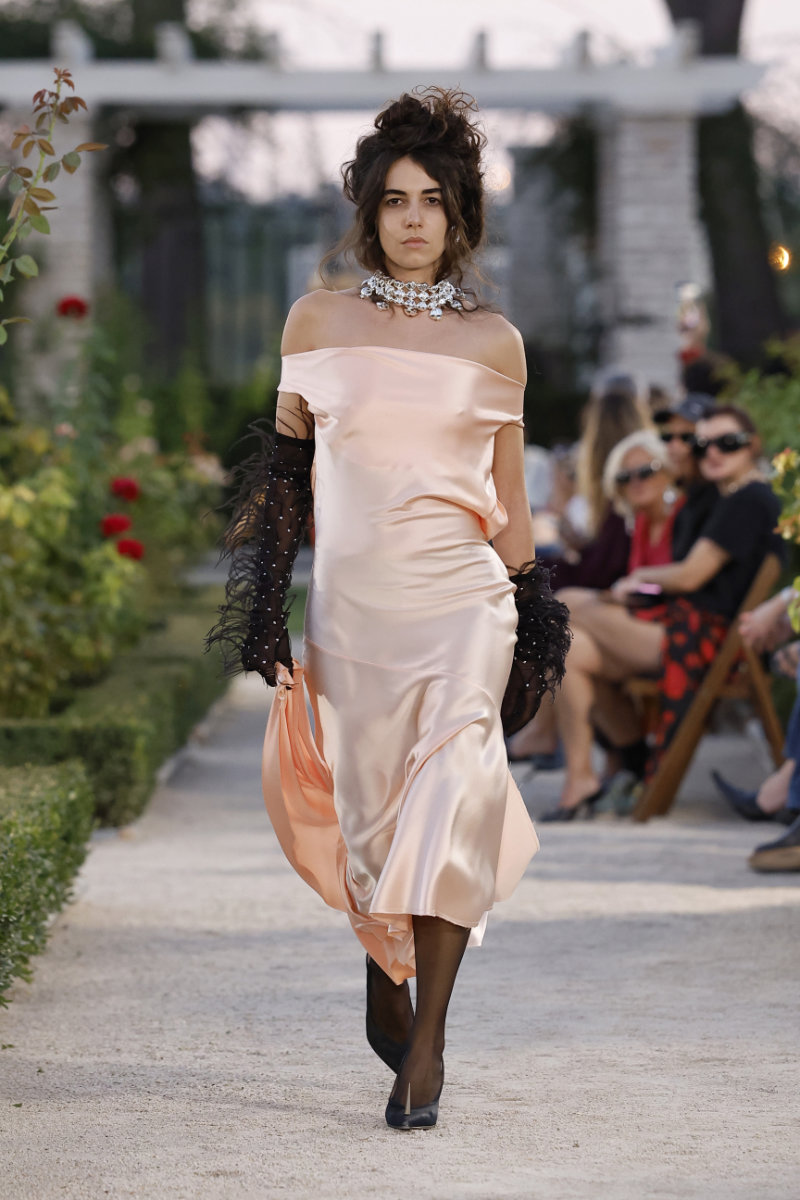
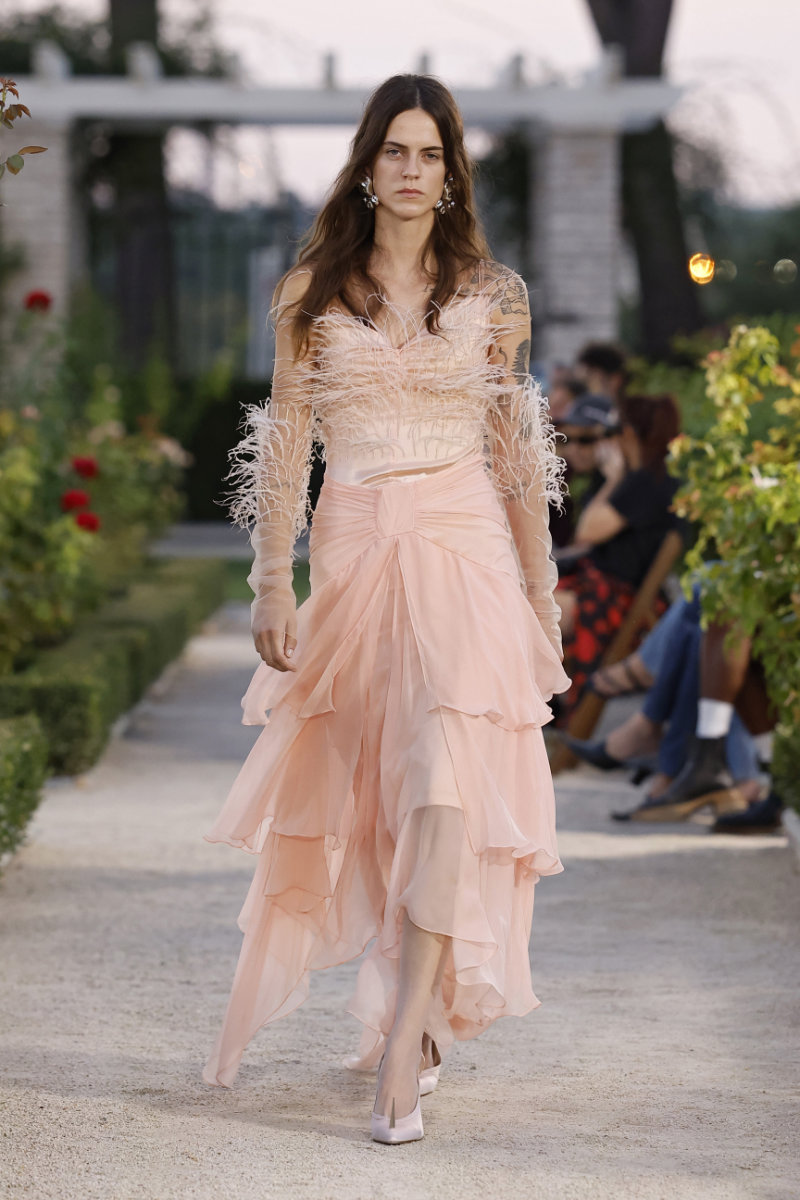
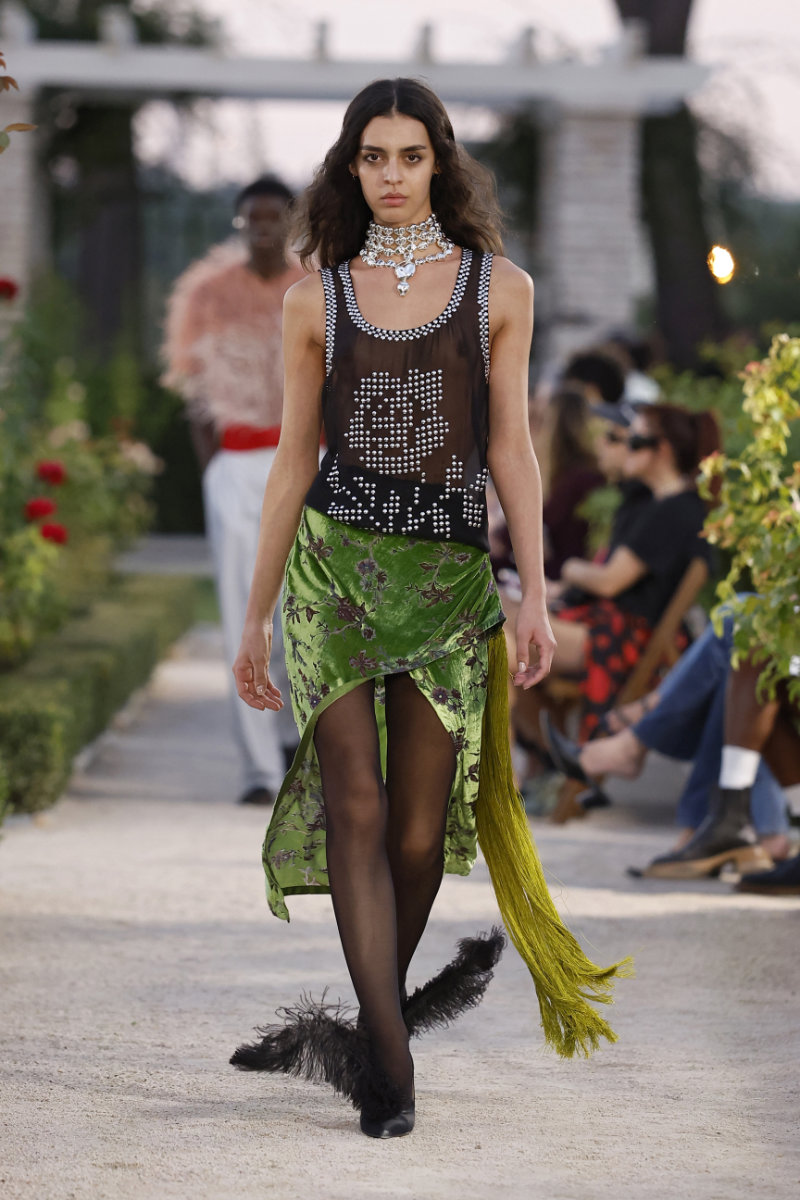
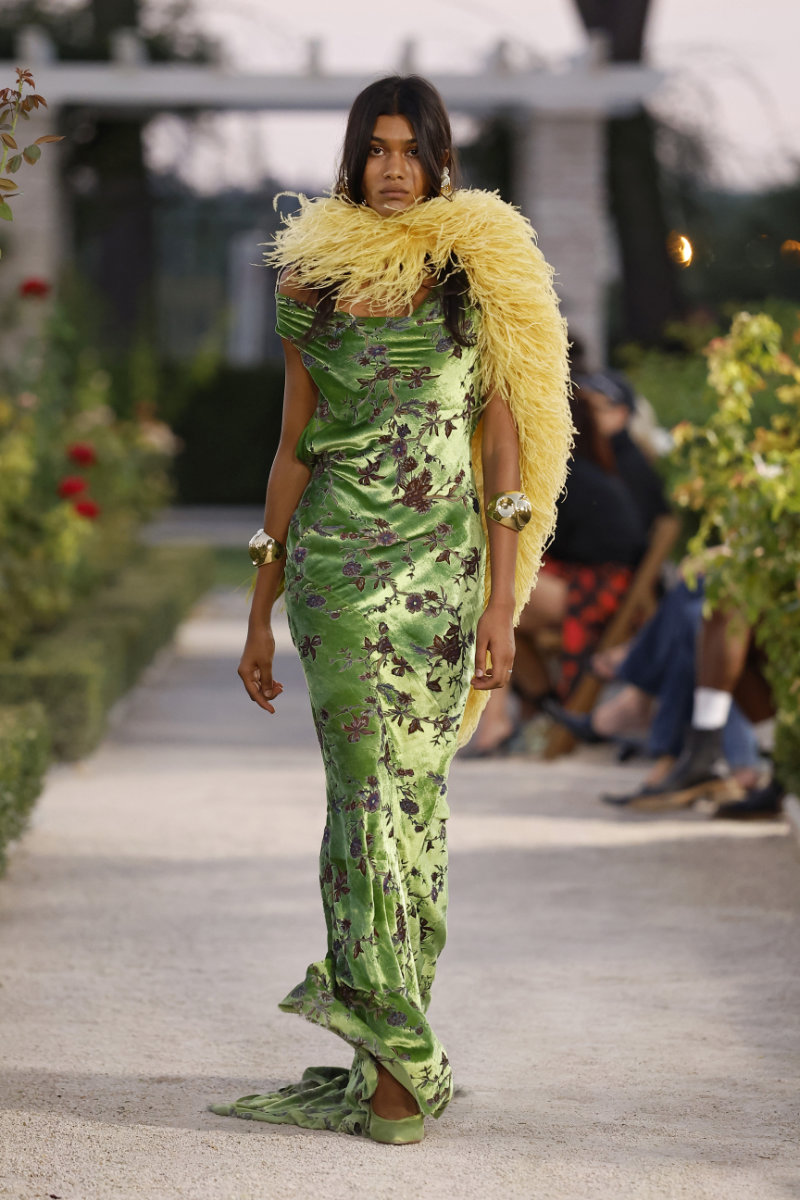
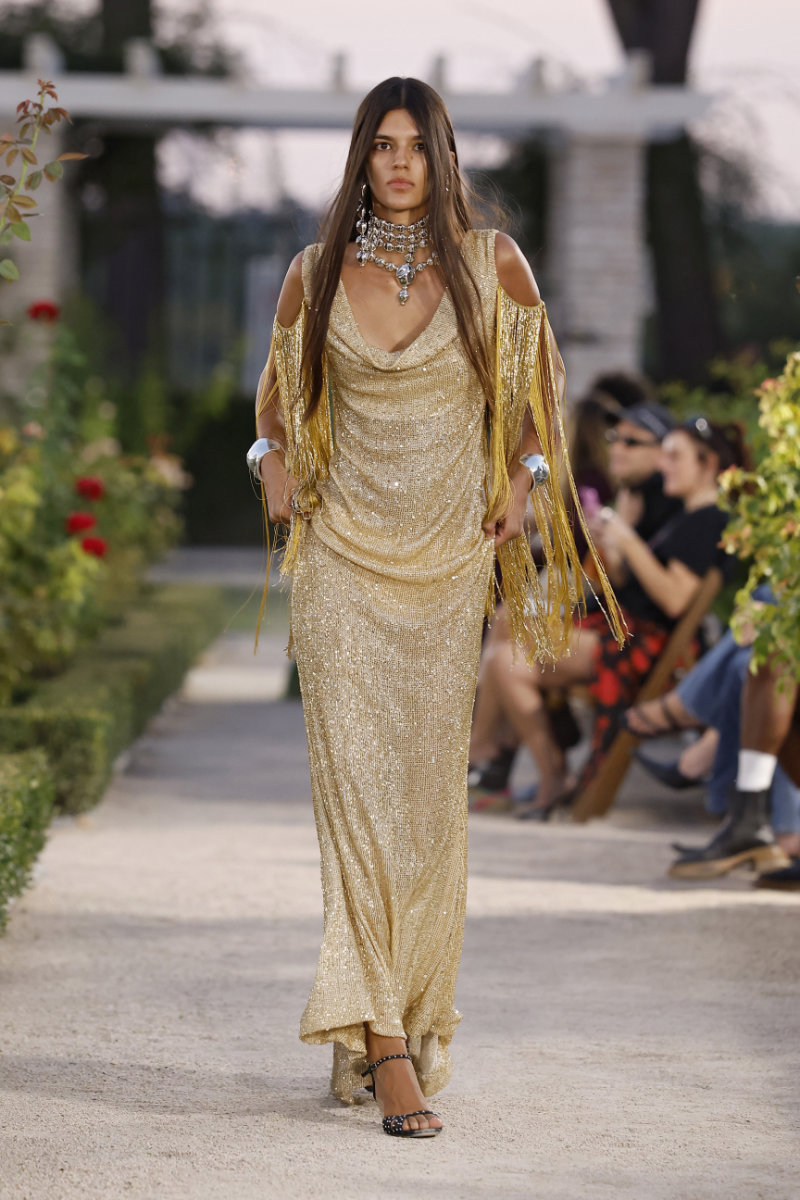
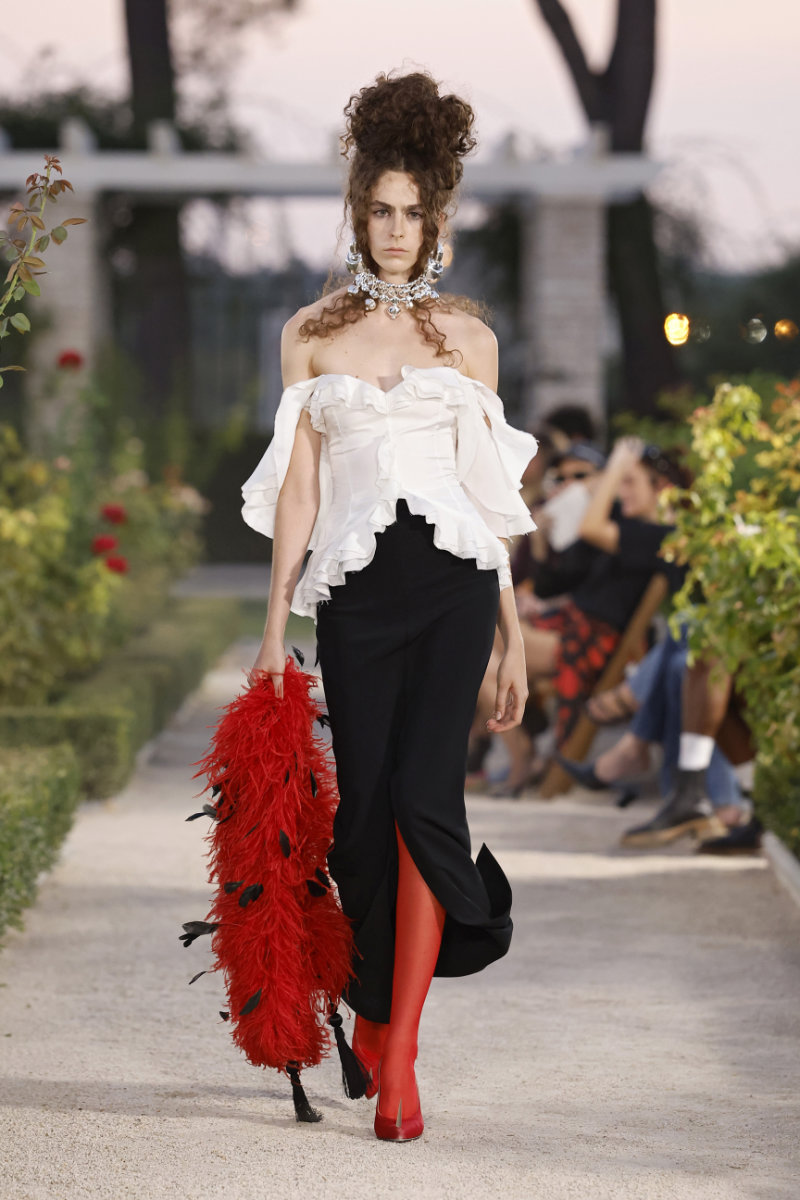
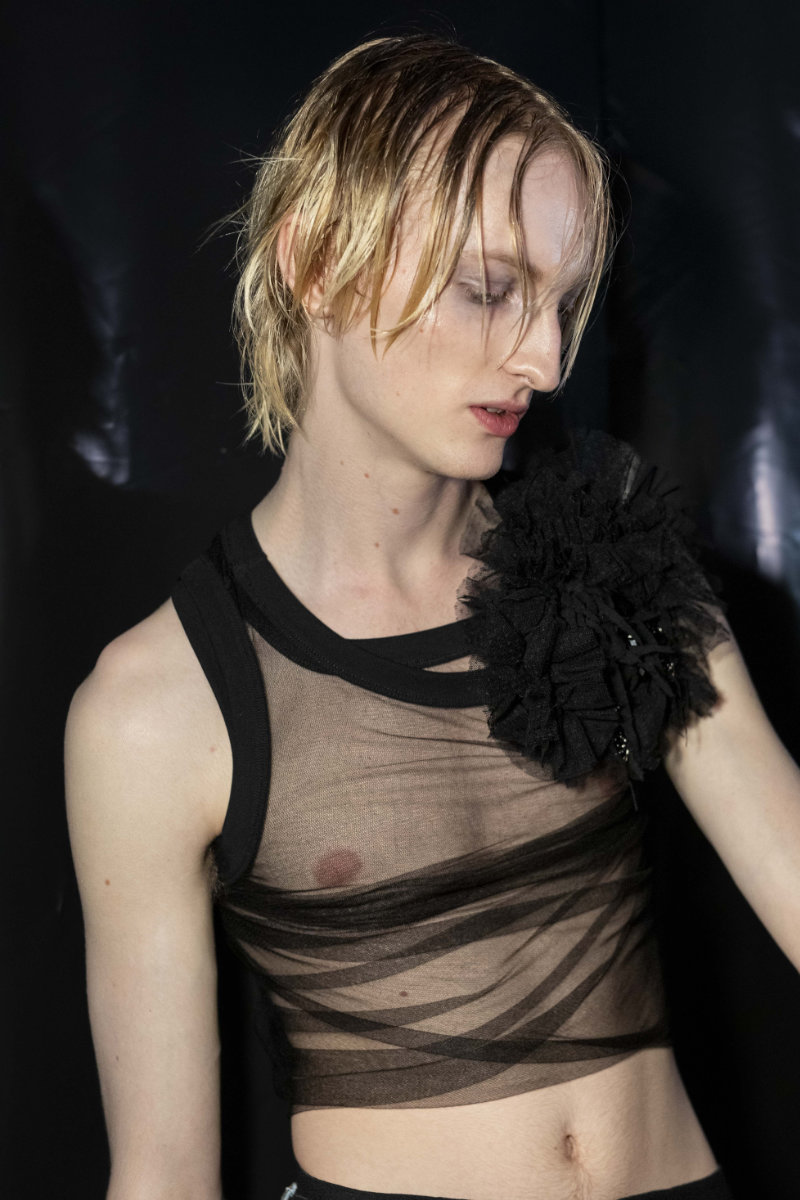
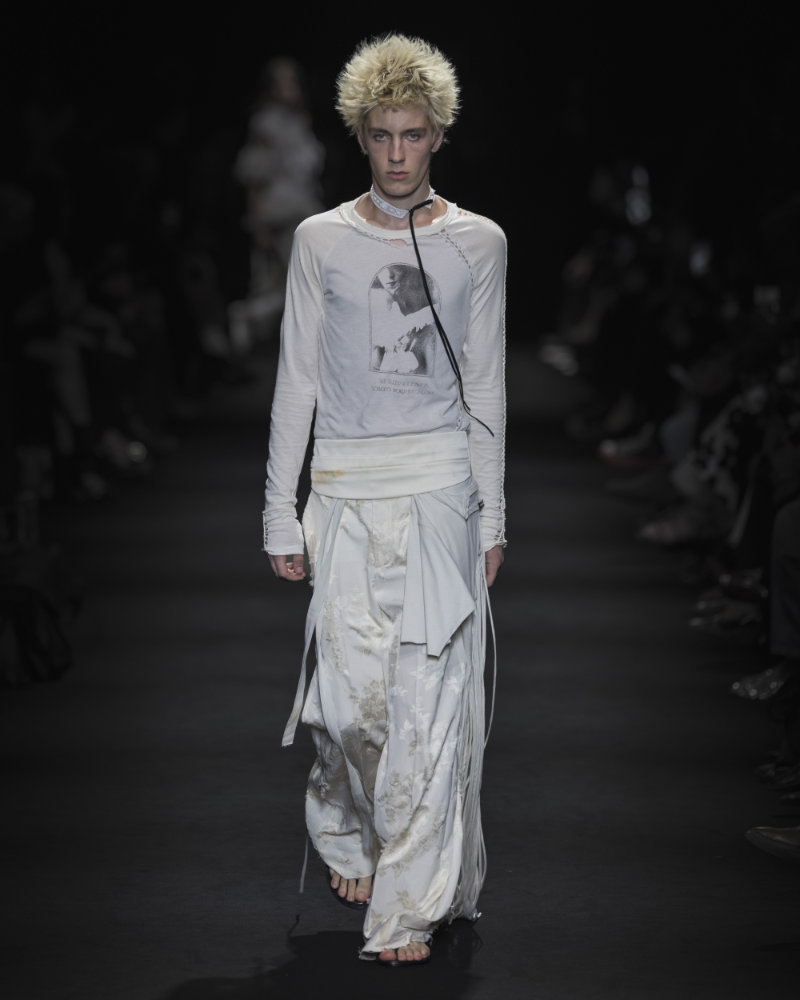
Set against a garden that could have been lifted from a Baroque painting, the collection drew from the pastoral imagination, Spanish gardens and the kind of romantic fantasy that can become slightly dangerous when left unchecked. Flowers, foliage and fading light became part of its chromatic language, with soft pastel tones melting into the roses and the Madrid sky to create something delicate and almost painterly. But Palomo has never been particularly interested in innocence without a little trouble. Footwear developed in collaboration with MAGRIT, punctuated with spikes, metallic studs and satin bows, cut through the sweetness while lending the looks a distinctive and unexpected edge. Silhouettes, meanwhile, left considerably less to the imagination. The contrast was deliberate: delicate and provocative, romantic and rebellious, naive and knowingly sensual.
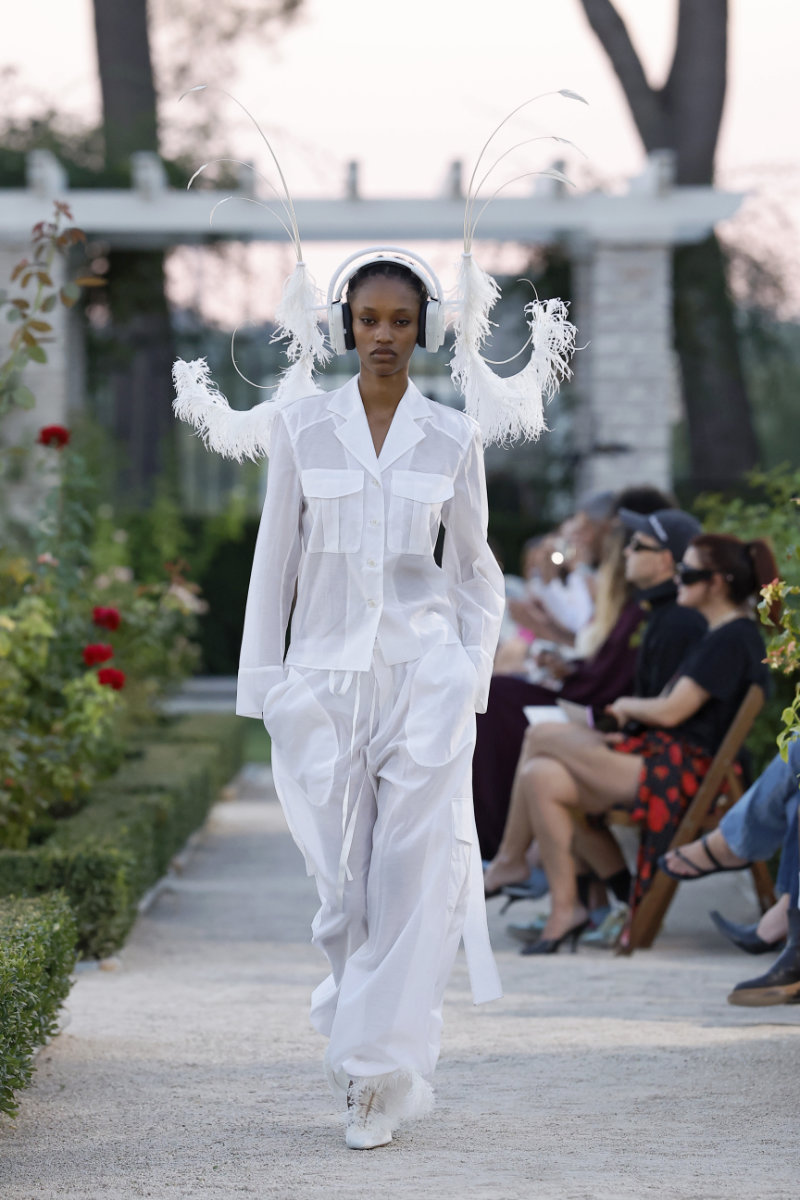
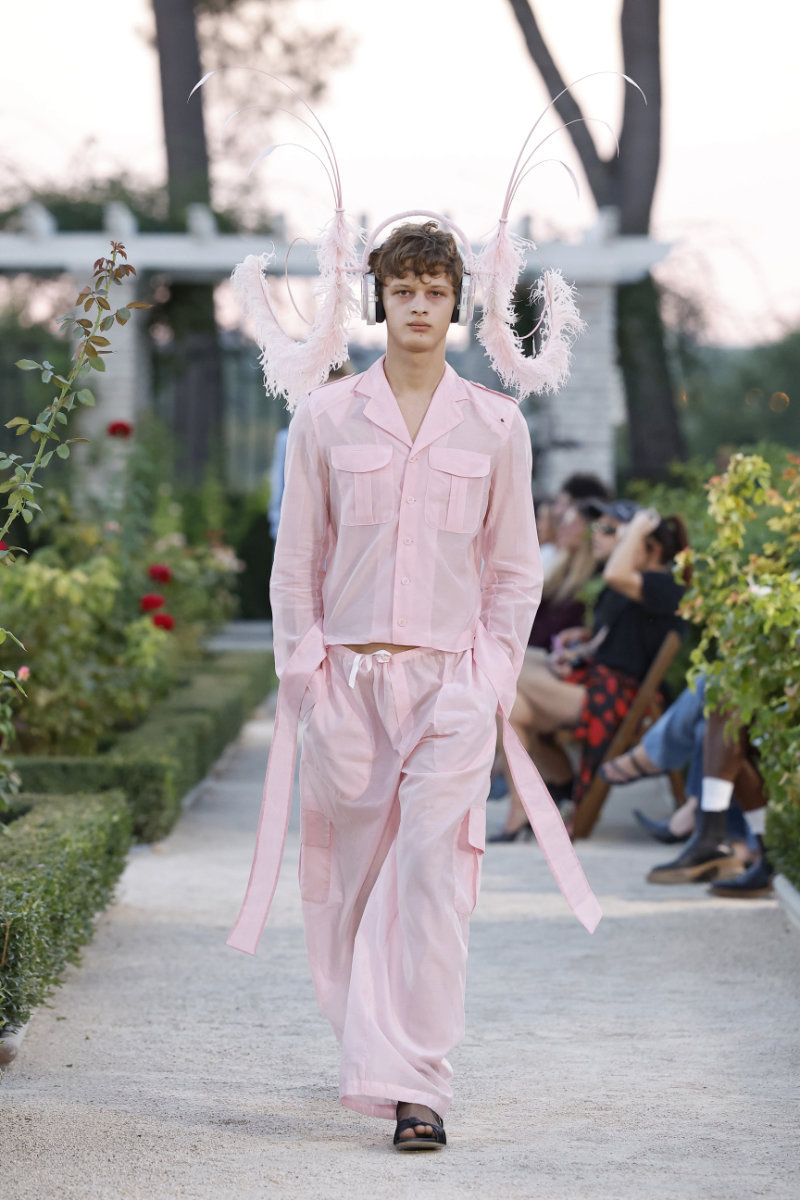
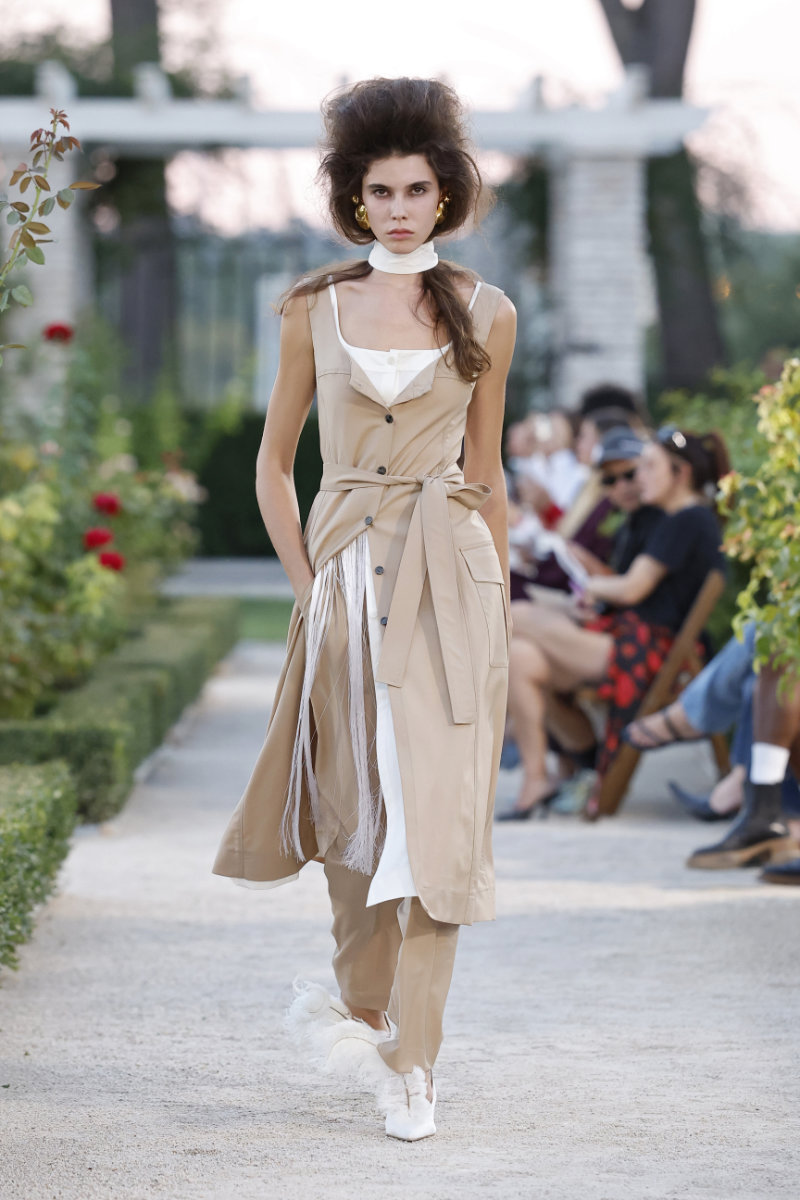
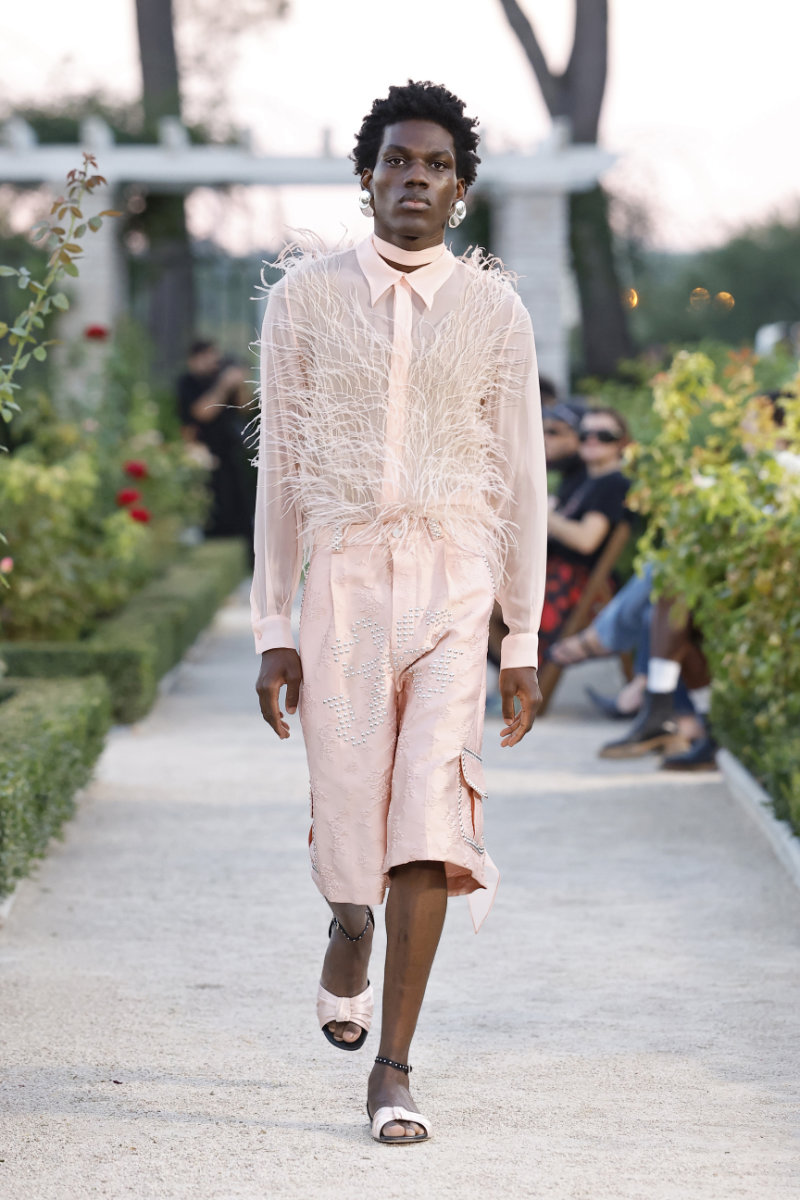
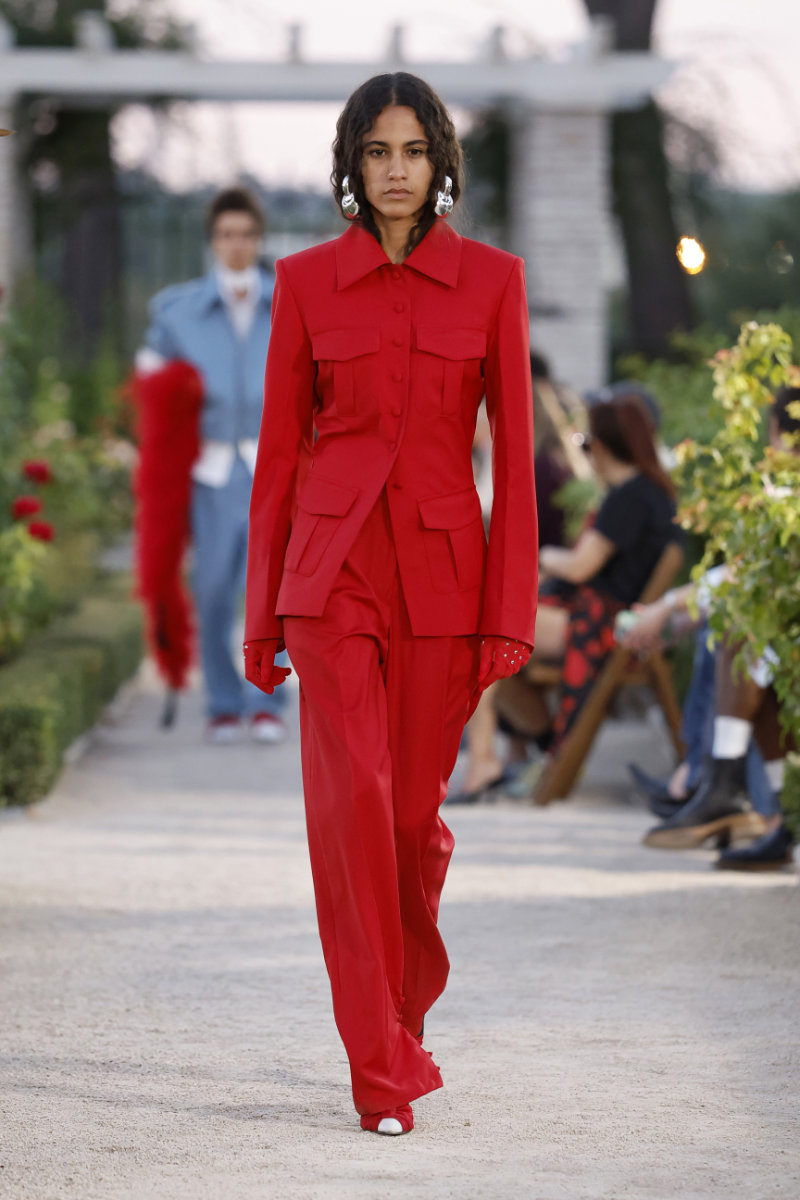
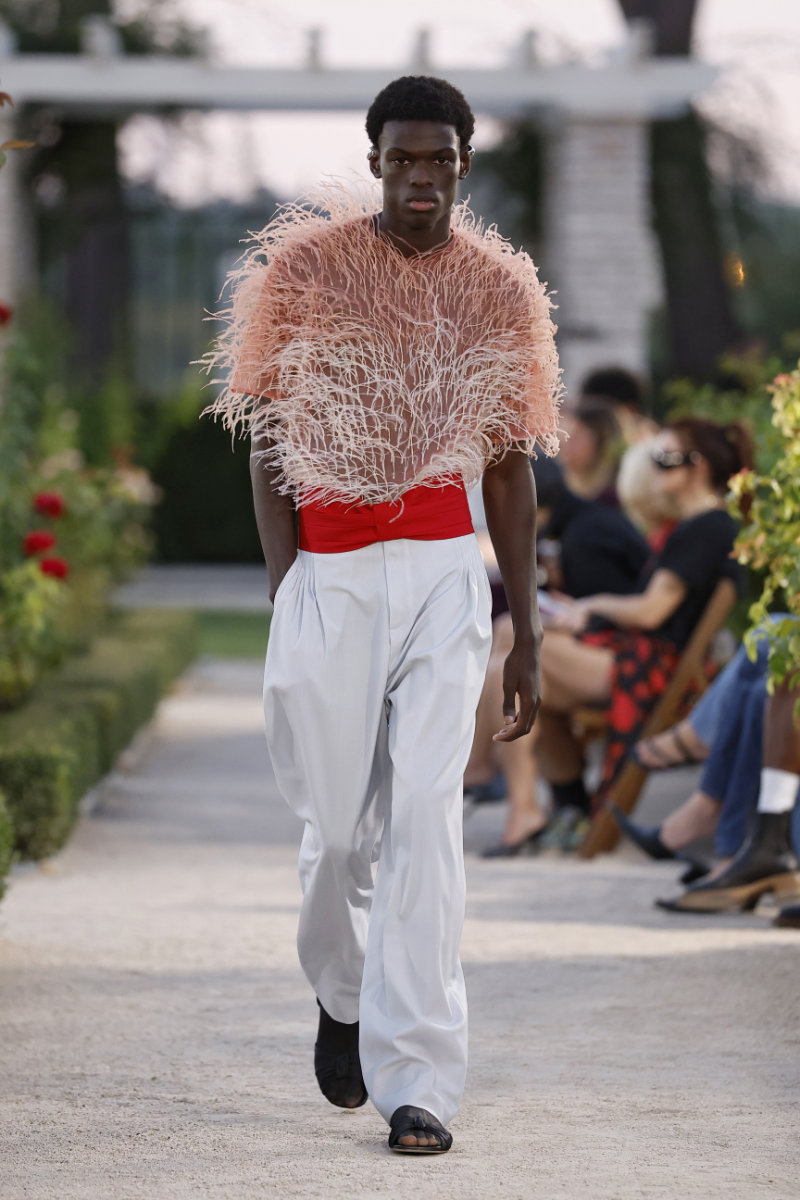
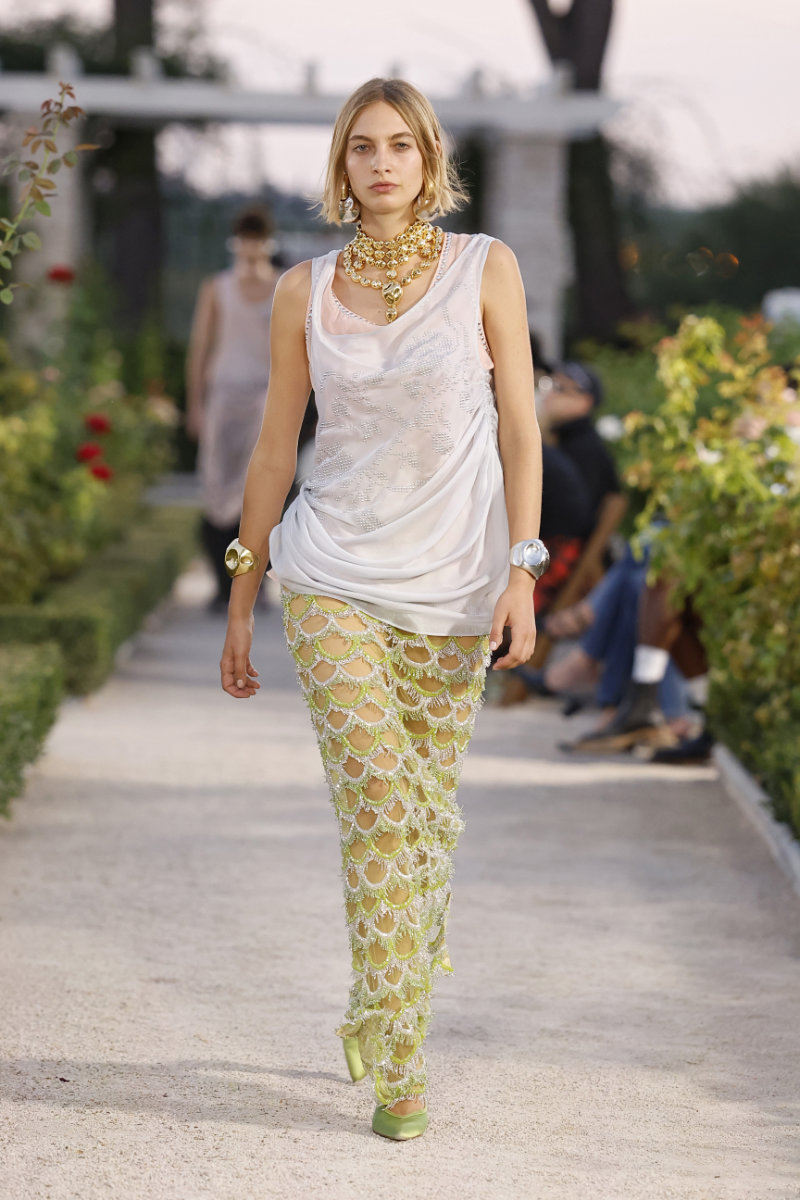
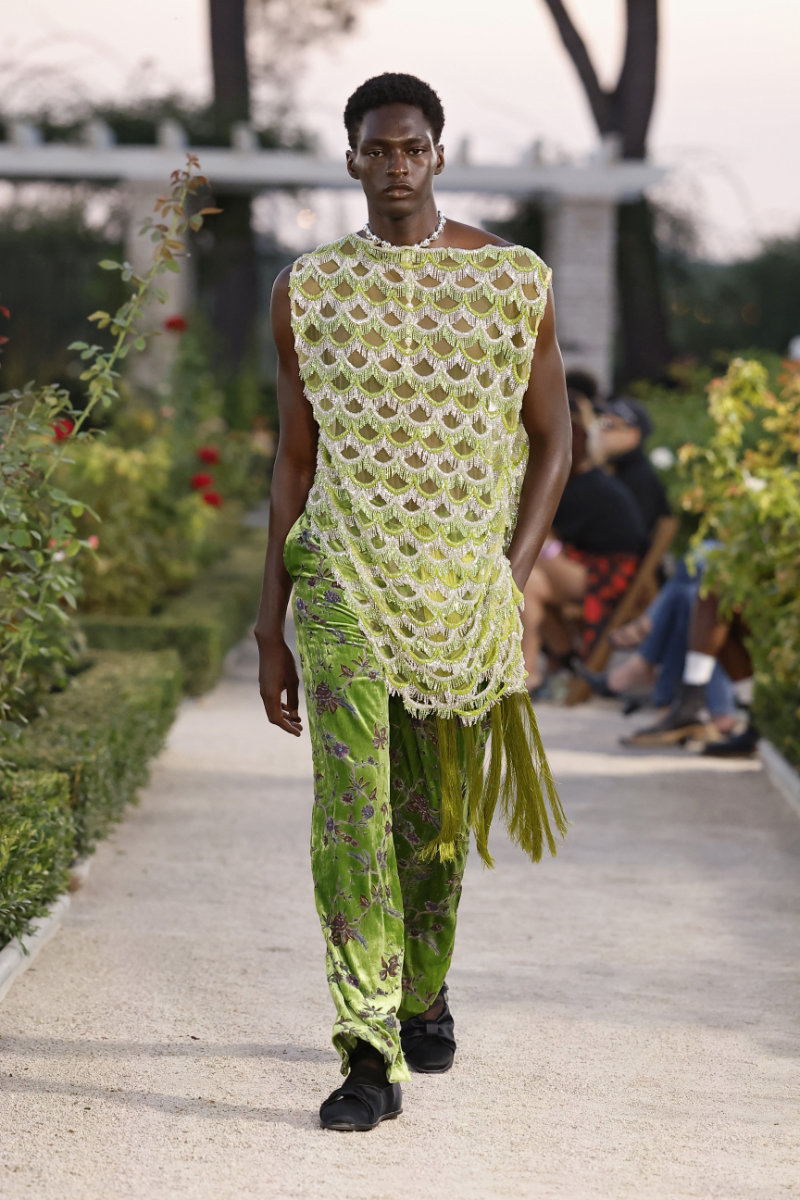
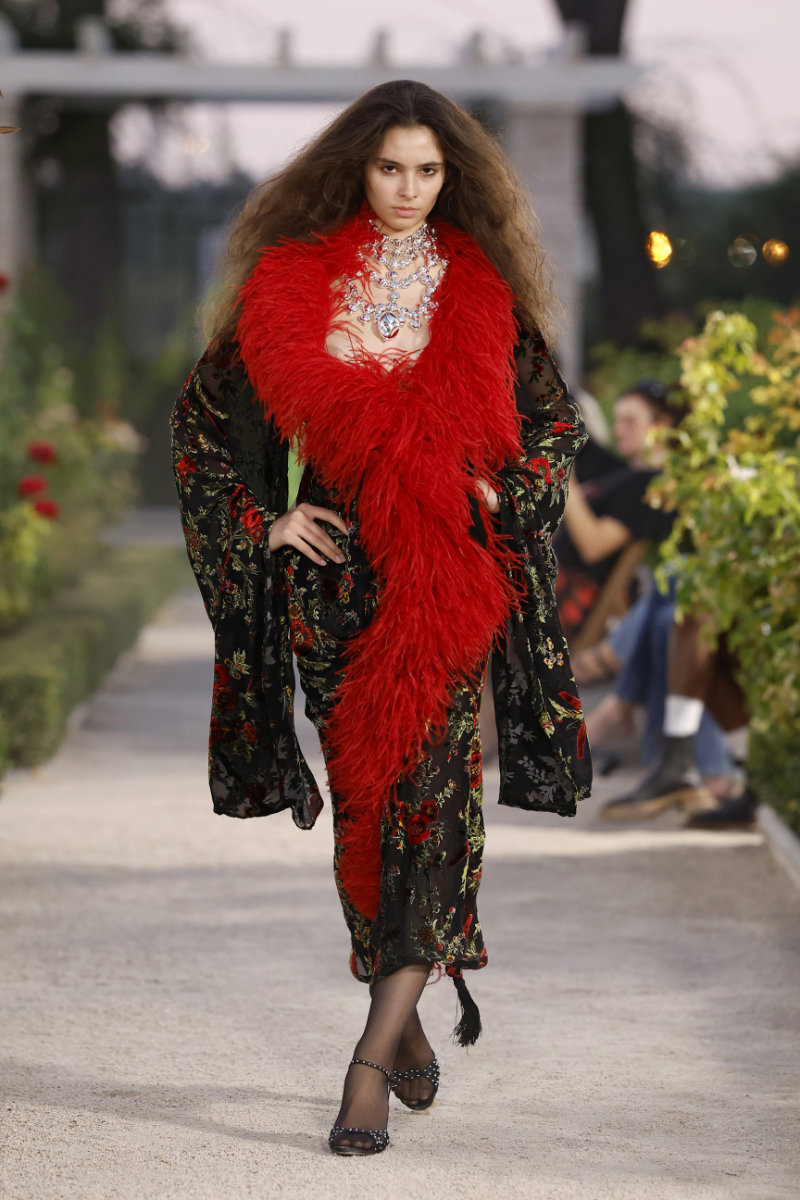
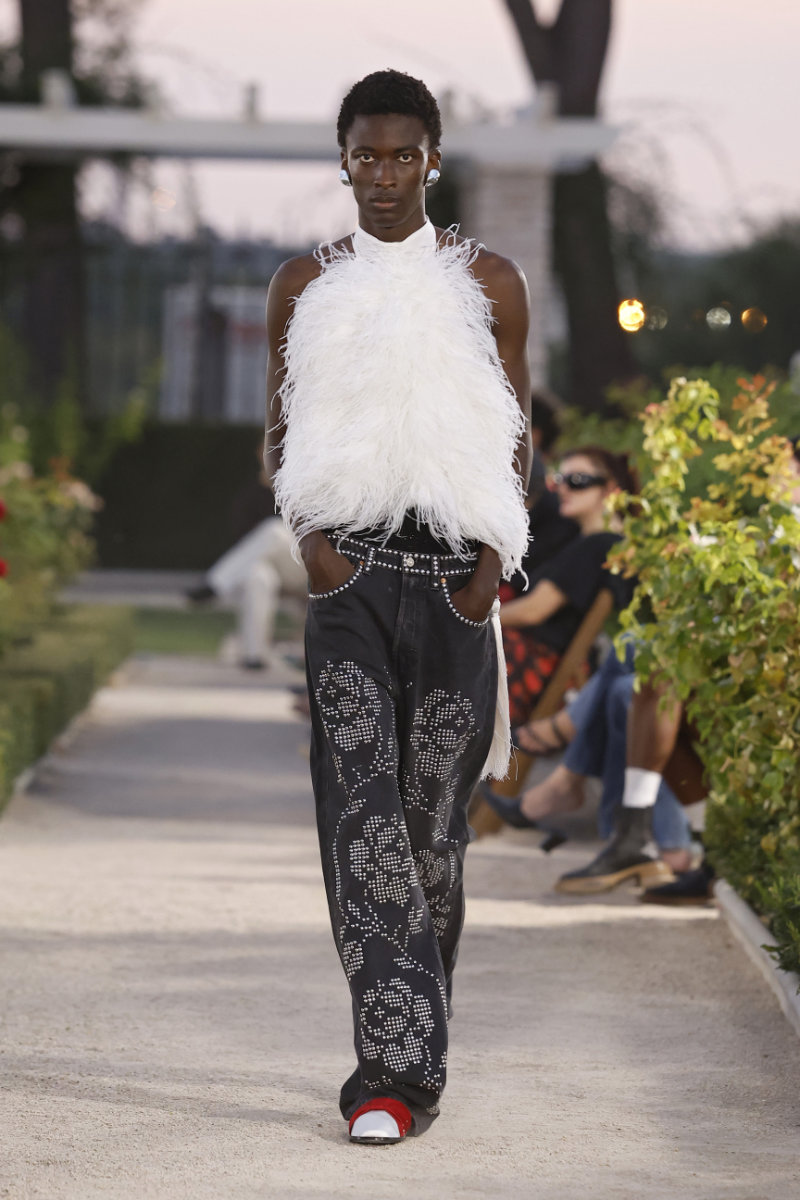
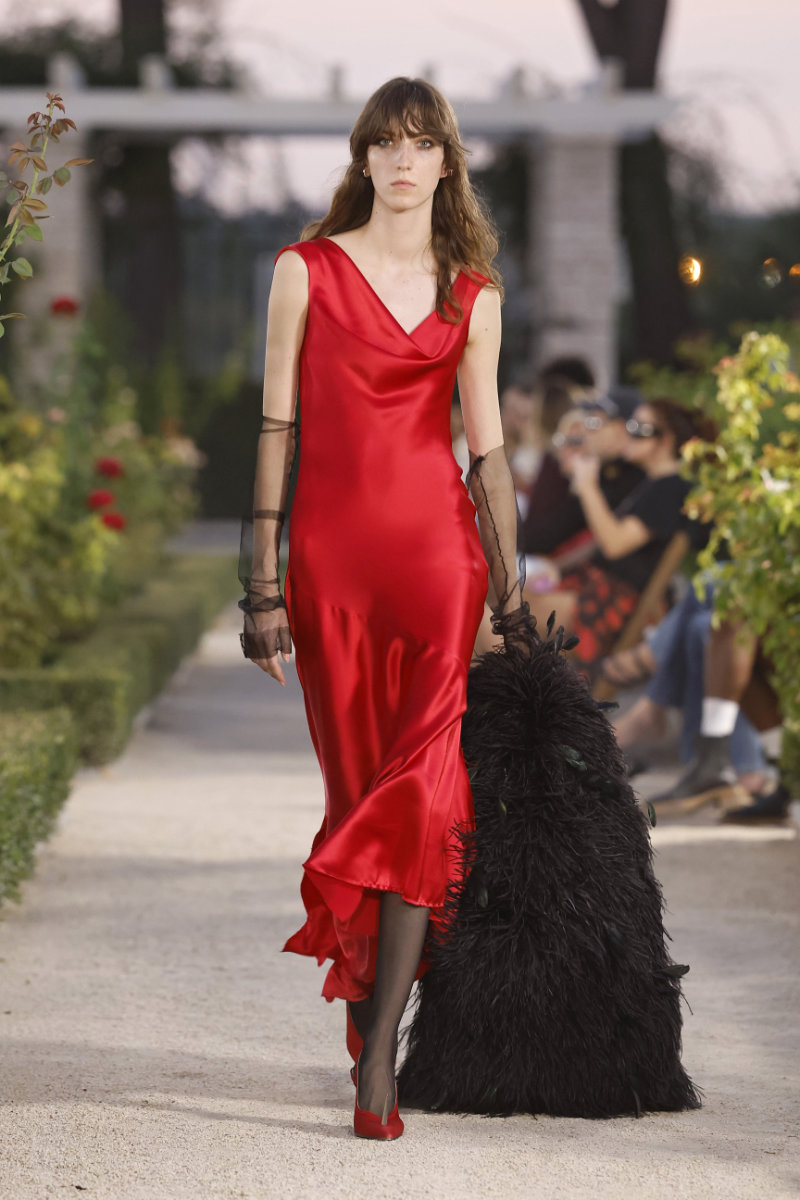
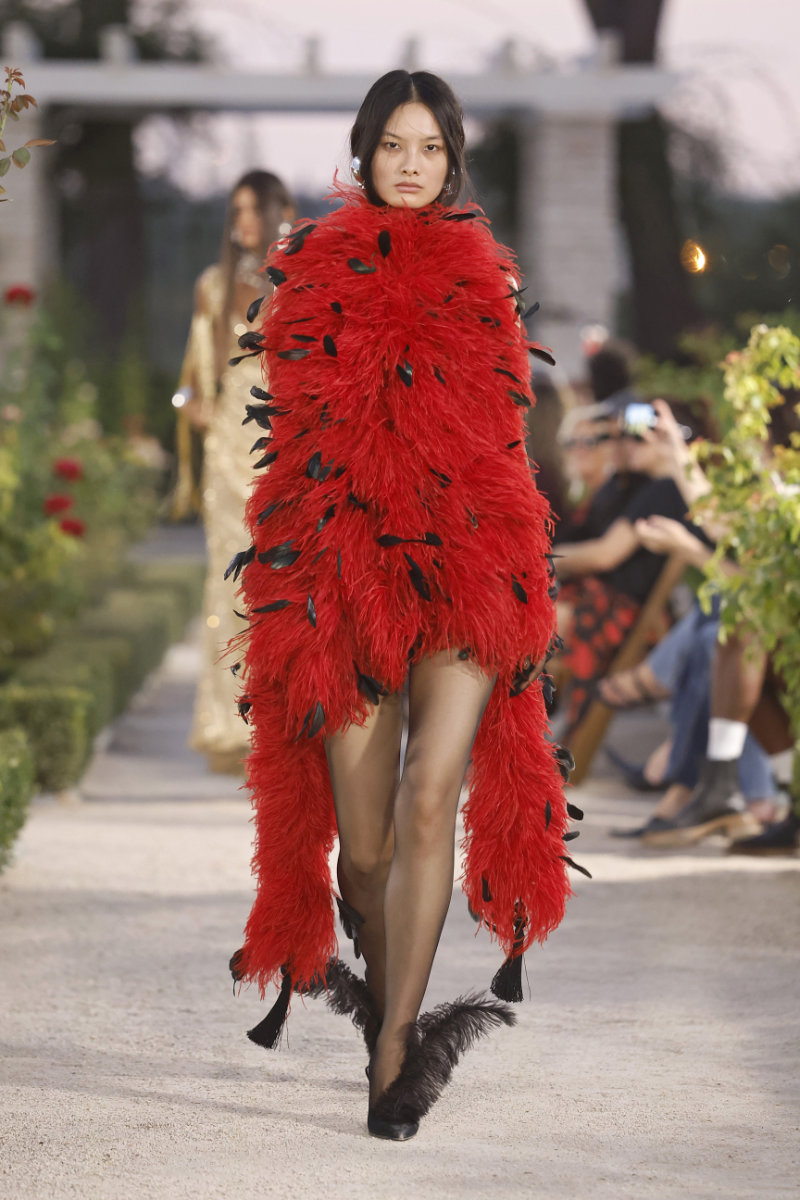
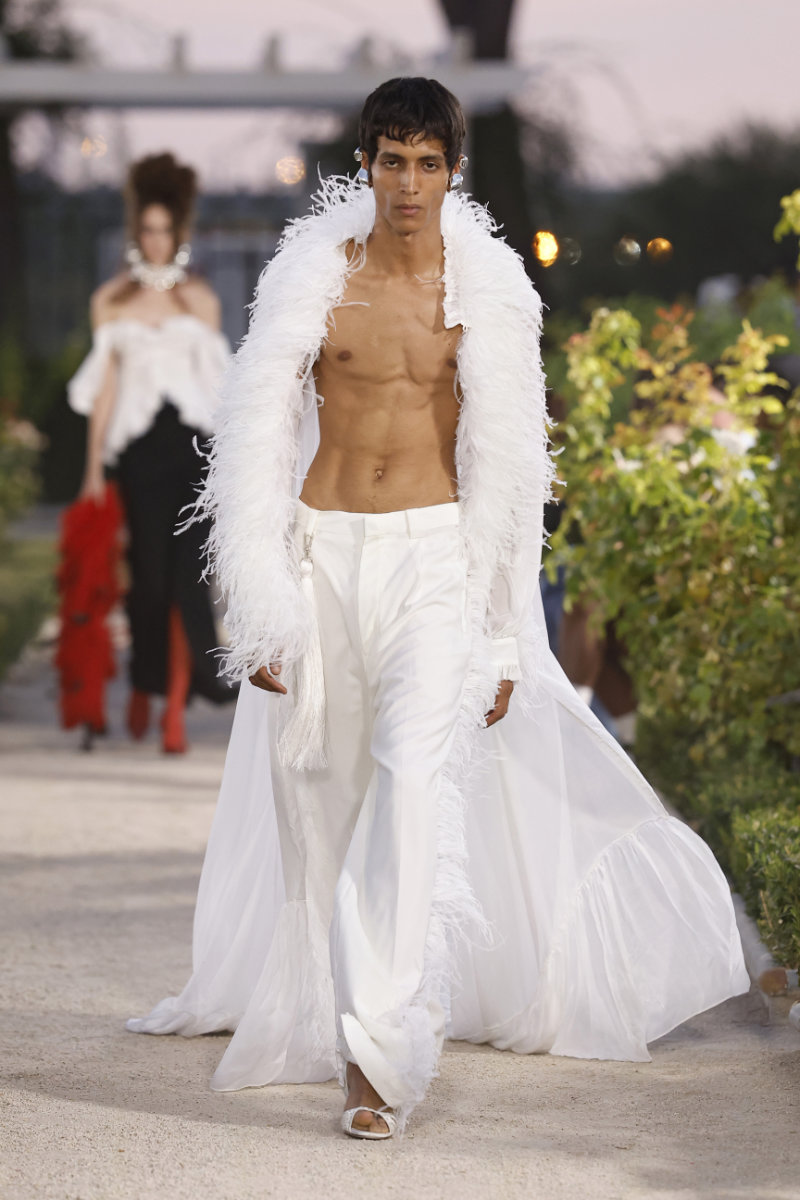
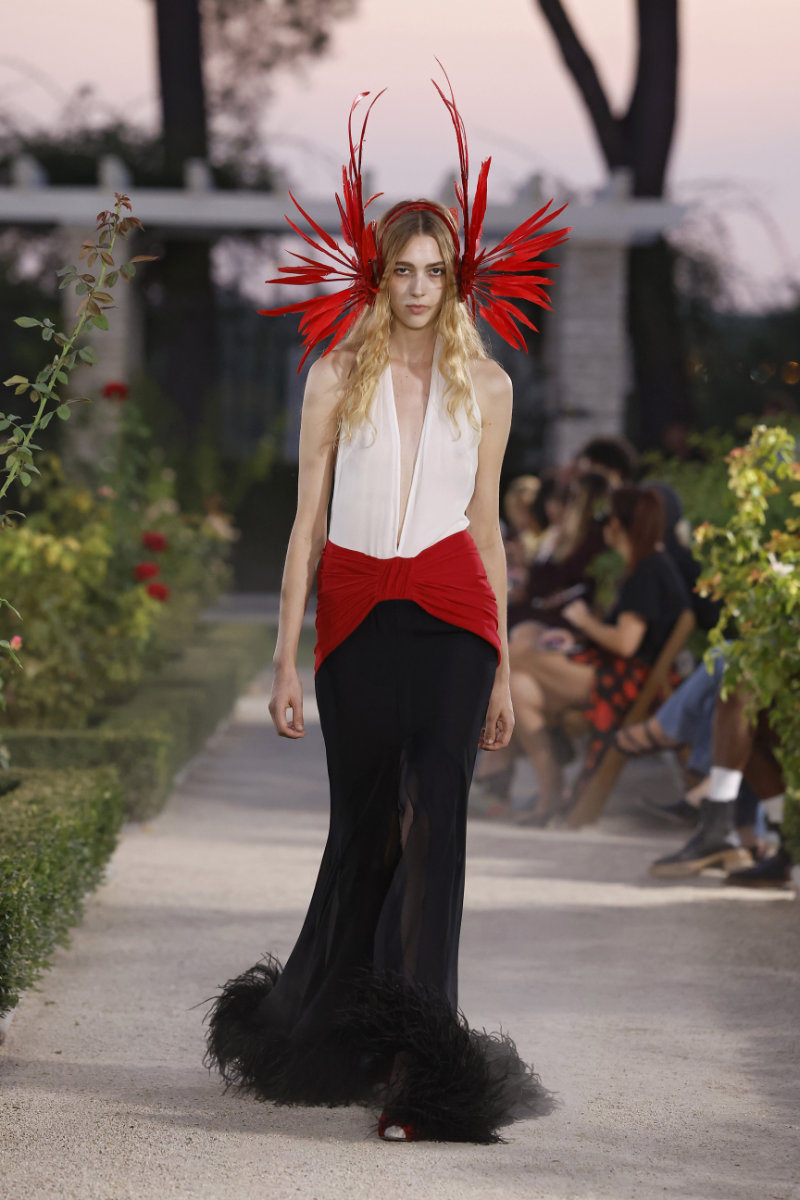
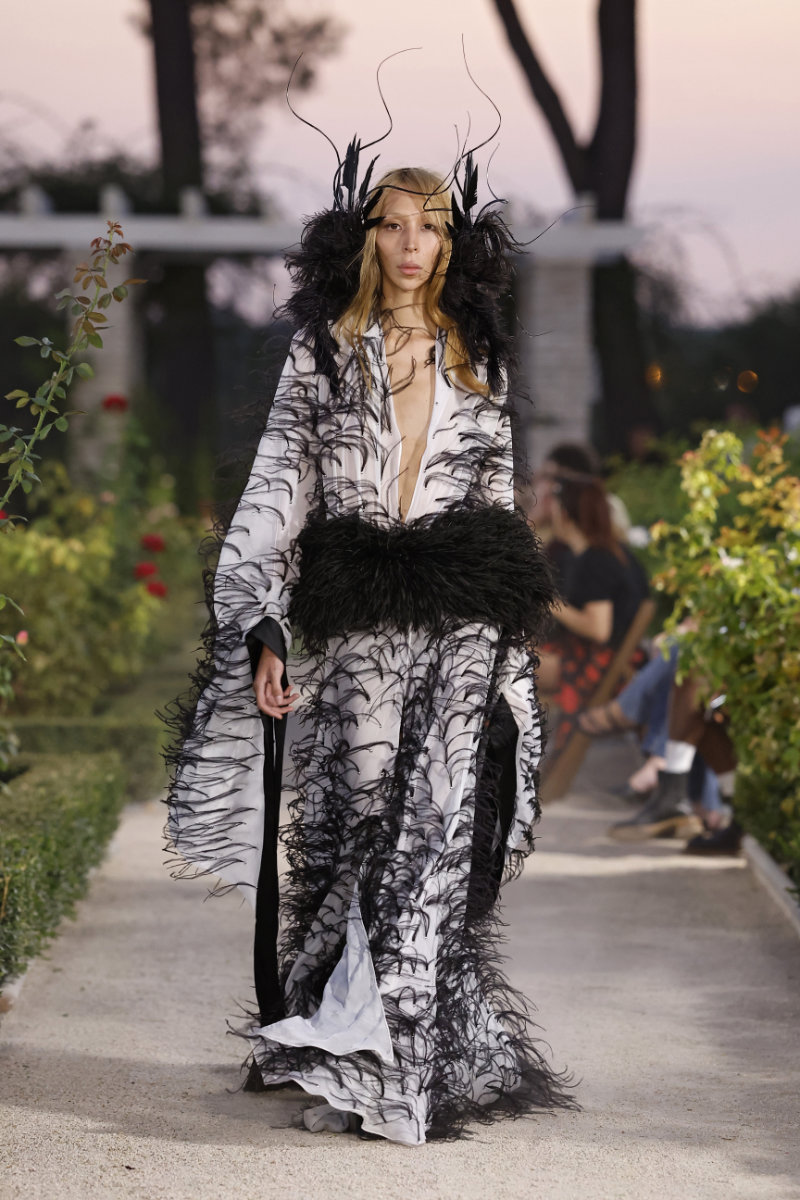
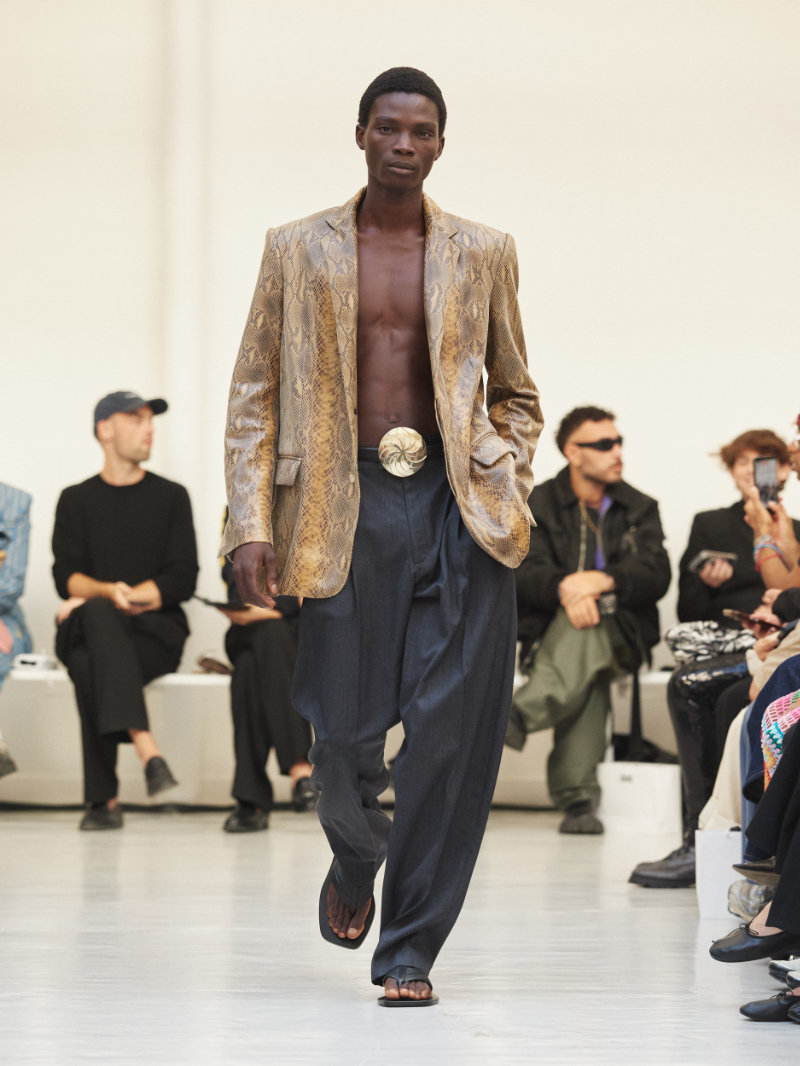
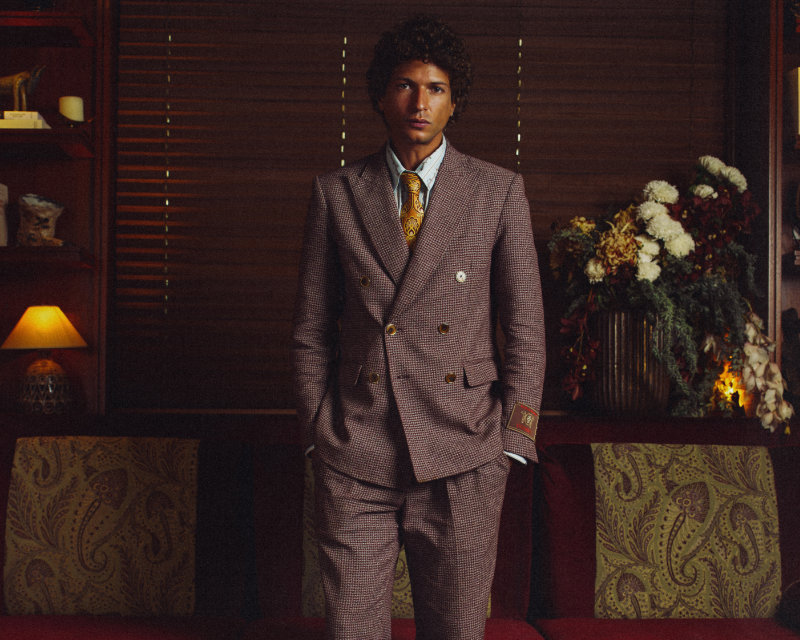
What stood out, look by look, was how much the house has matured without becoming restrained. Craftsmanship carried considerable weight, particularly in the hand embroidery and the intricate treatment of the garments. Italian tailoring met floral brocades, embroidered cottons, velvet, silk and elaborate ornamentation, while ostrich feathers—by now one of the house’s signatures—brought movement and theatricality. Bows, fringing and decorative details introduced another layer of sensuality without overpowering the construction of the clothes. There is fantasy here, certainly, but also technique, discipline and a clear understanding of proportion.
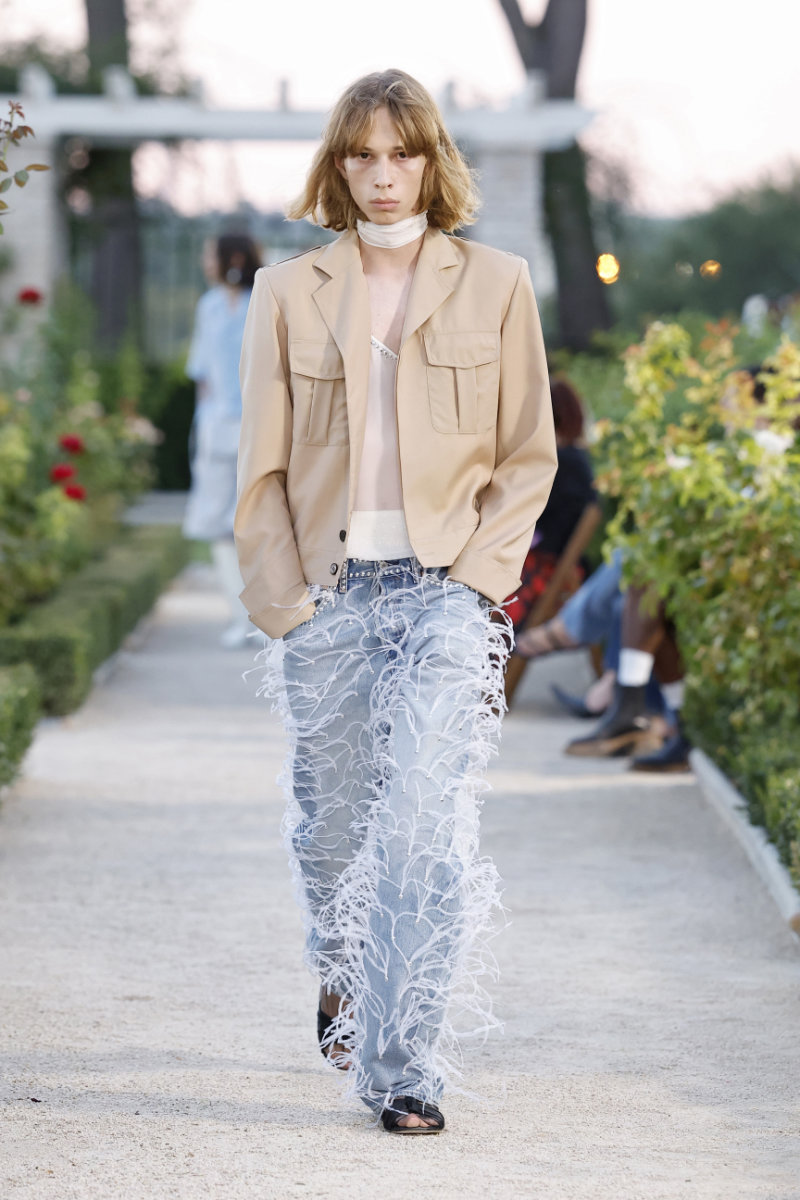
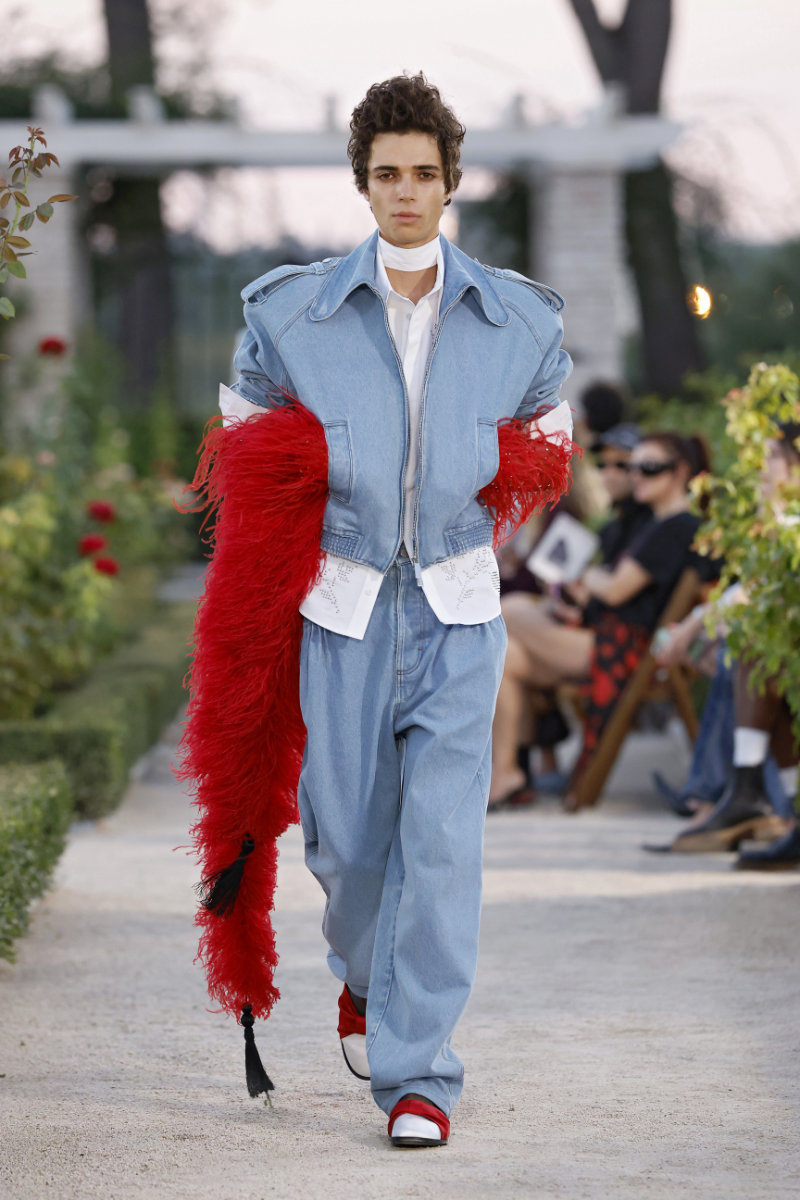
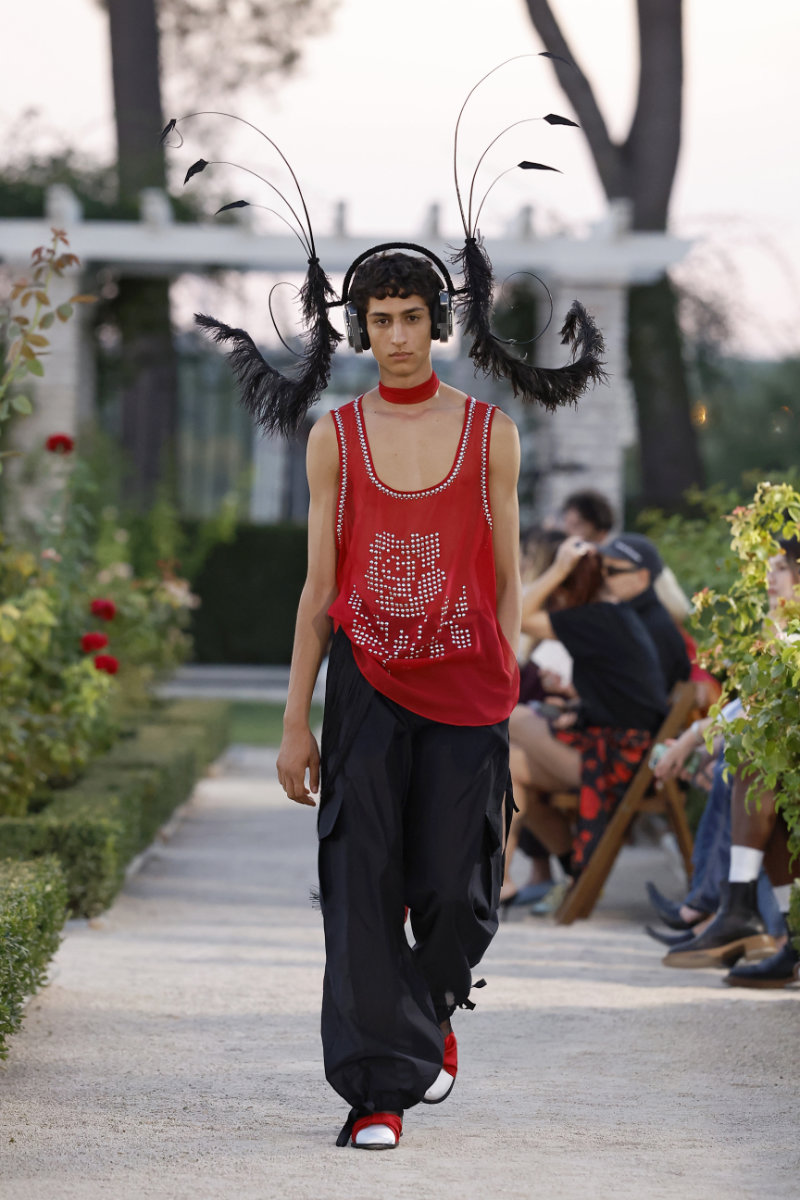
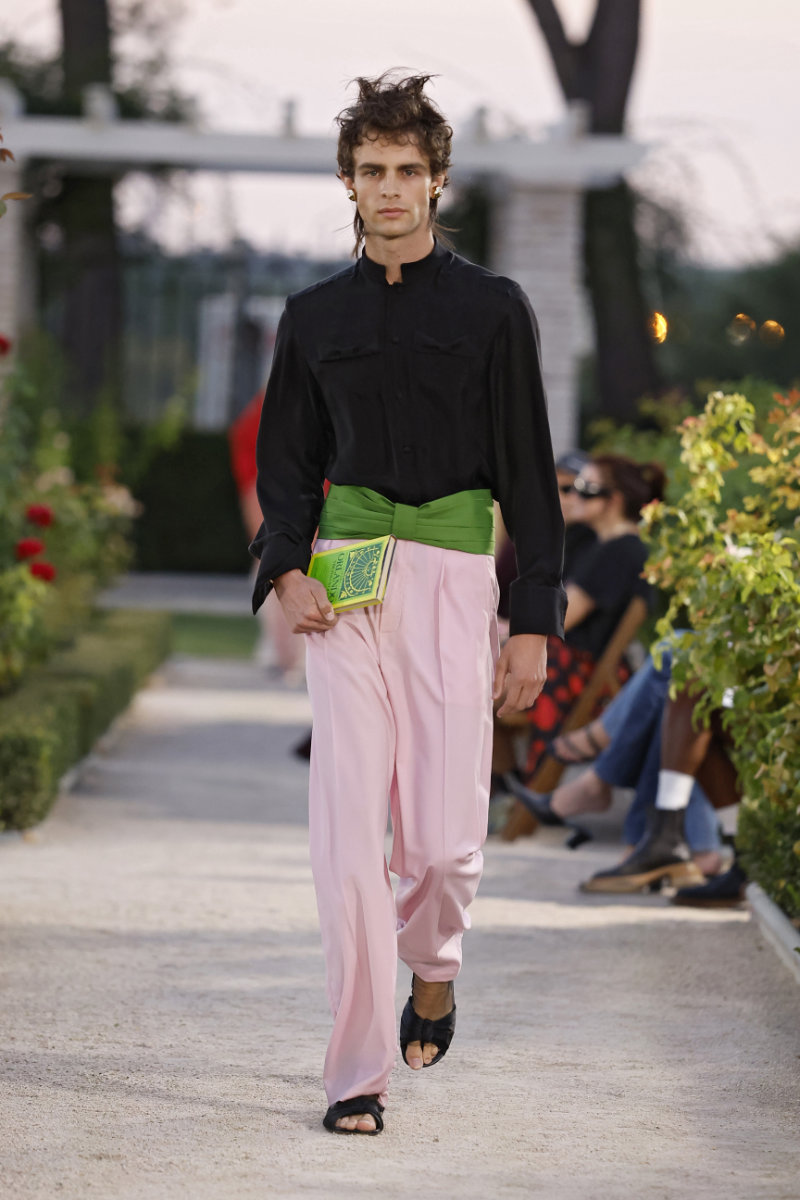
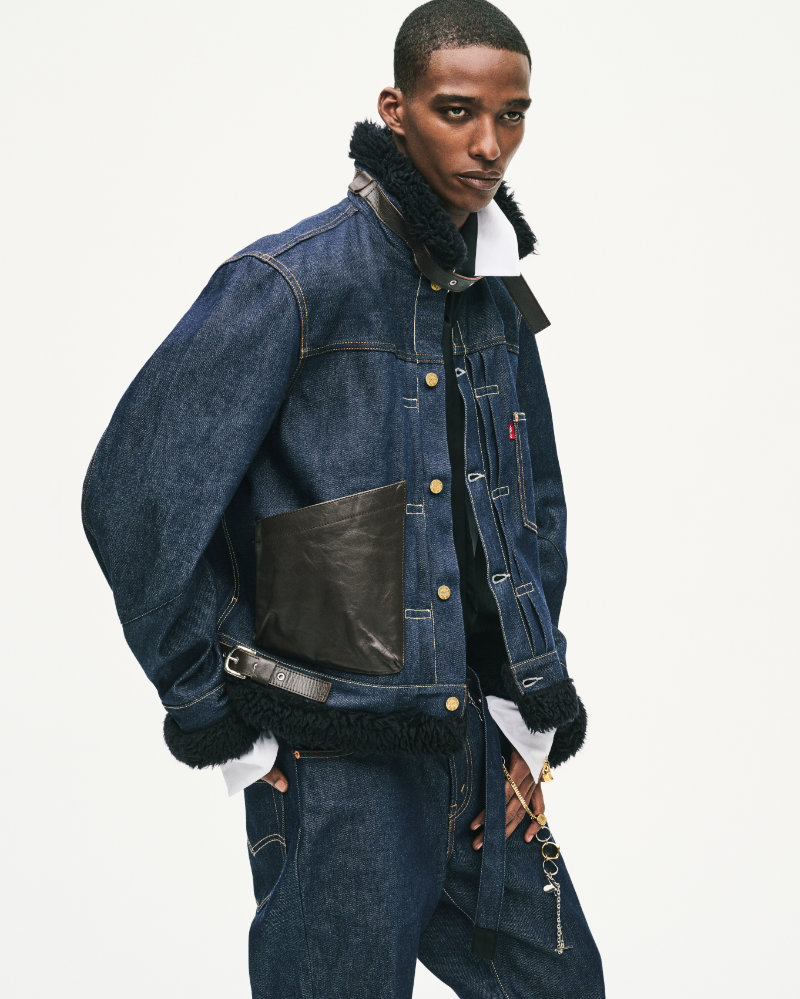
Rather than presenting masculine and feminine as opposing territories, Palomo continues to treat them as interchangeable vocabularies. A bow can sit as naturally alongside tailoring as a military reference; exposed skin can coexist with formal construction; a romantic silhouette can acquire a distinctly masculine attitude through the way it is cut and worn. The collaboration with Levi’s made this collision particularly clear, with two masculine interpretations of the 501 Loose: one transformed through floral motifs made from metallic studs, another through ostrich feathers. A familiar piece of American denim suddenly belonged to a very different world, becoming something new without entirely surrendering the character that made it recognisable in the first place.
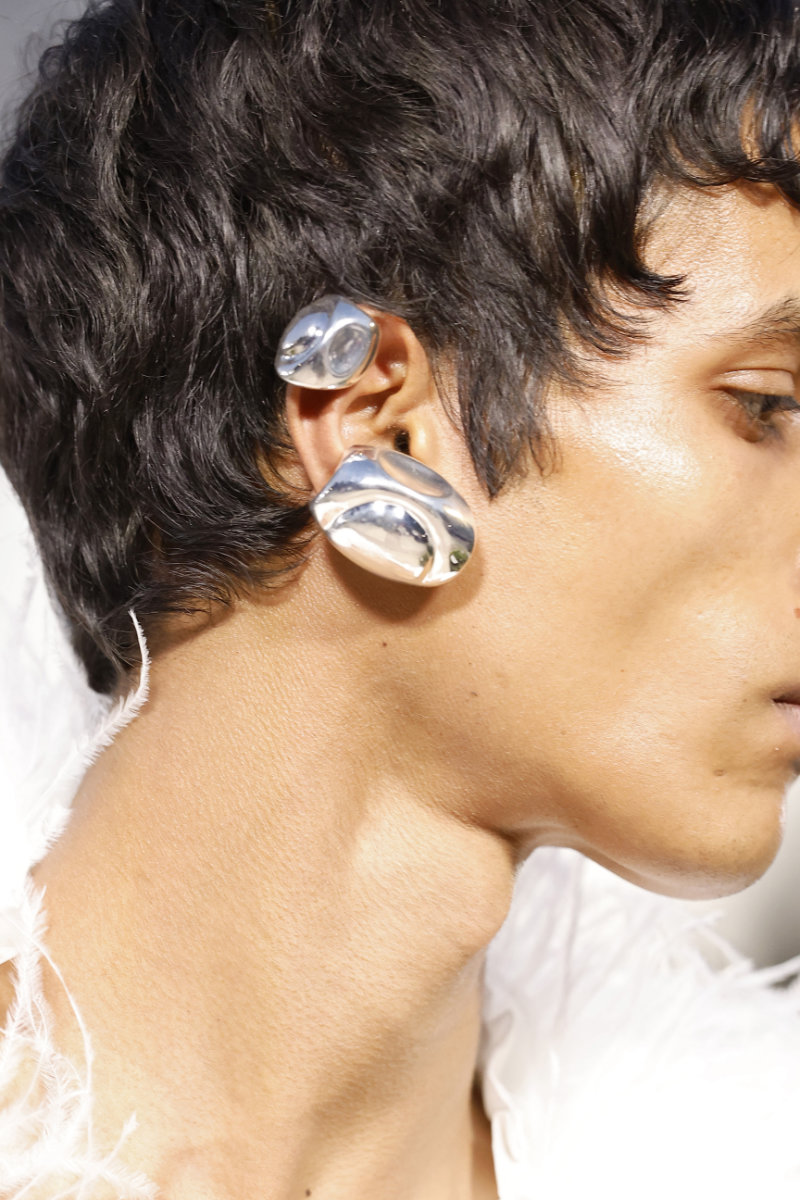
Beyond the clothes, the accessories extended the collection’s language of ornament and craft. Sculptural jewellery created with Mónica Sordo and elaborate headpieces by VIVASCARRION added volume and visual punctuation, while Nothing headphones customised with feathers and decorative elements were integrated into the looks with surprising ease. The collaborations felt entirely at home within Palomo’s universe, which has always occupied a space somewhere between fashion, art and performance.
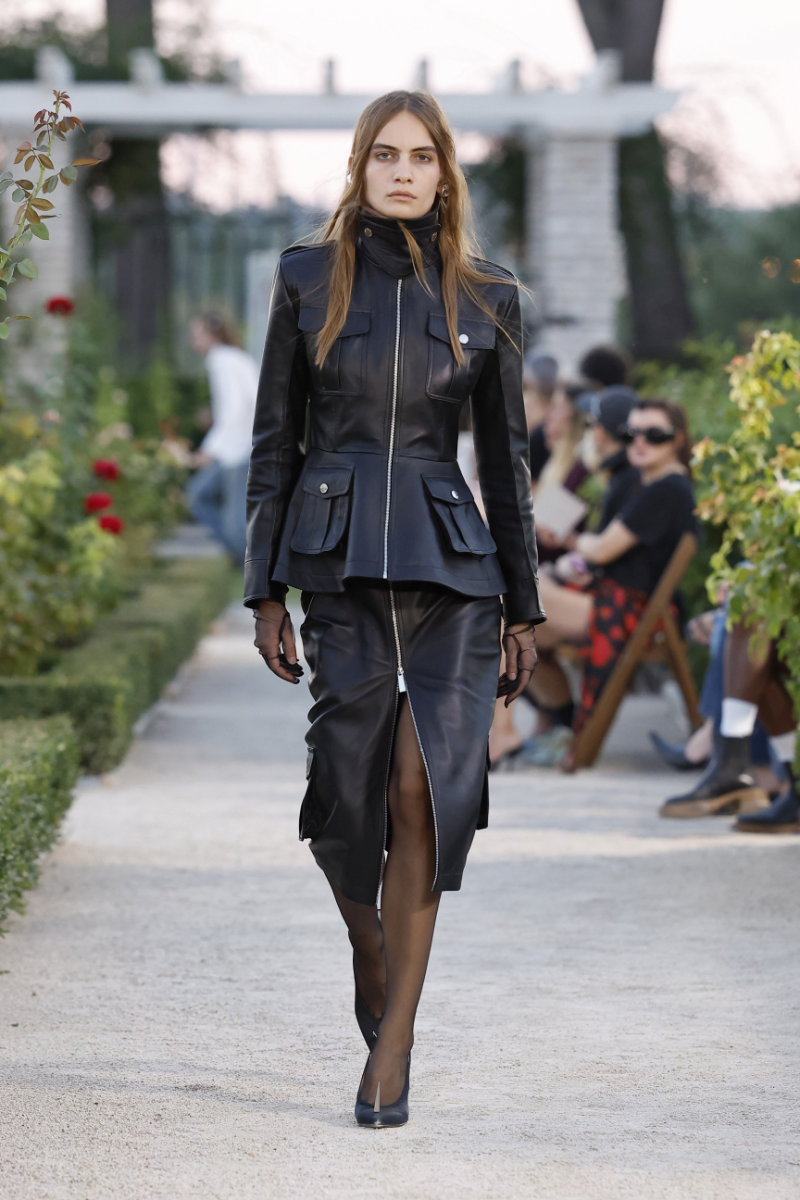
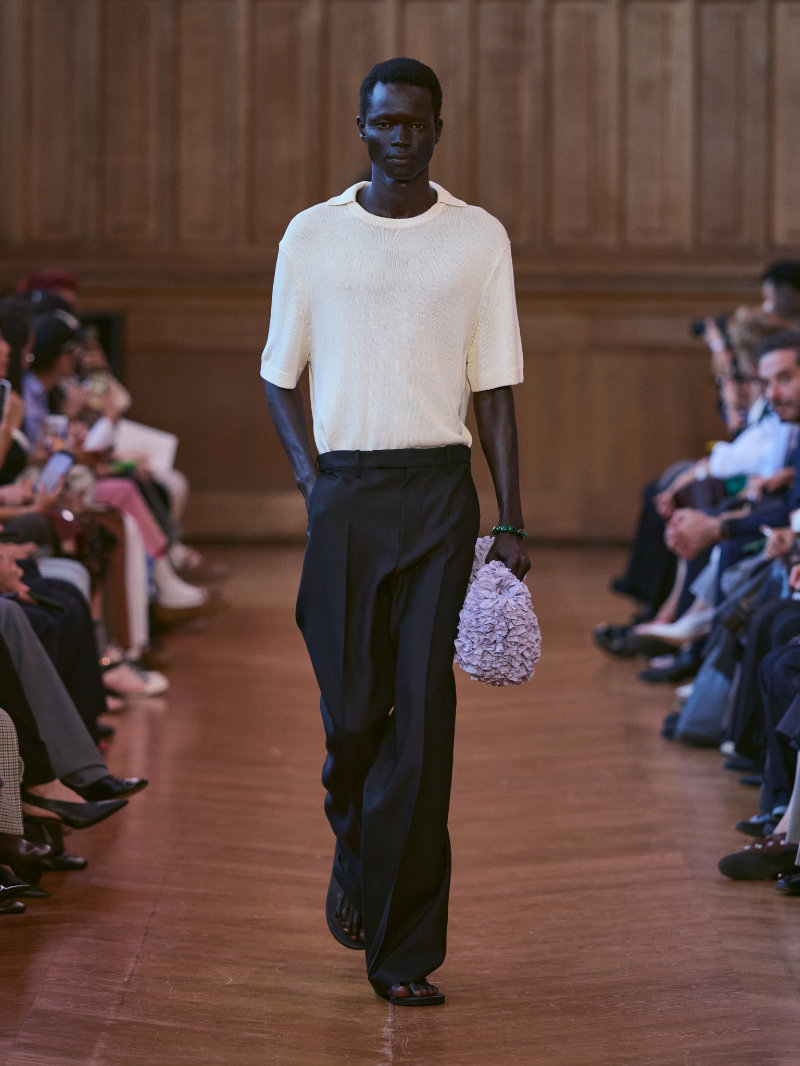
Crucially, the theatricality was balanced by clothes capable of existing beyond the runway. Alongside the more elaborate looks were pieces of tailoring, denim and everyday wardrobe staples with a more urban edge, narrowing the distance between fantasy and the real wardrobe. The collection no longer felt destined solely for a gala, a special evening or an extraordinary occasion. Instead, it suggested a broader Palomo wardrobe—one in which the house’s more extravagant sensibility could find its way into everyday life without being diluted.
Meanwhile, Palomo’s approach to menswear remains deliberately difficult to place within conventional categories. The past decade has seen him question what masculine dress is supposed to look like, but Et in Arcadia Ego felt less concerned with making a statement about gender than with treating its codes as something fluid. Tailoring could be soft, decoration unapologetically elaborate and the body revealed without sacrificing sophistication. Rather than announcing a rebellion against the rules, Palomo simply seems increasingly uninterested in giving them too much importance.
As the final look disappeared into the roses, what remained was the sense that Et in Arcadia Ego had achieved something more interesting than an anniversary celebration. Ten years after its foundation, PALOMO appeared more mature and more precise without losing the instinct that made the house distinctive in the first place. Romance, craftsmanship and spectacle remain central, but they now sit alongside something more immediate: a desire to take that world beyond extraordinary occasions and into the everyday. In the Rosaleda, surrounded by flowers and Madrid light, Palomo celebrated its first decade not by looking back, but by making the case for whatever comes next.
Have a look at the PALOMO Spring/Summer 2027 collection below: