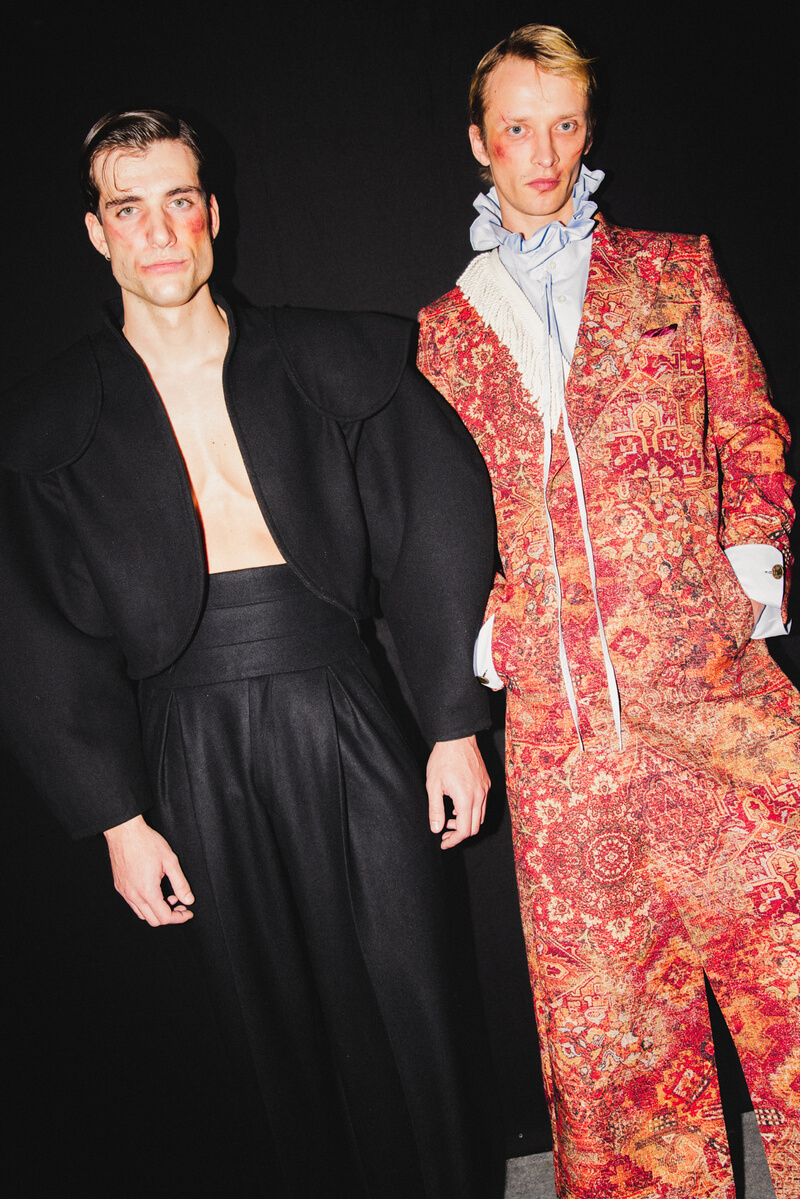
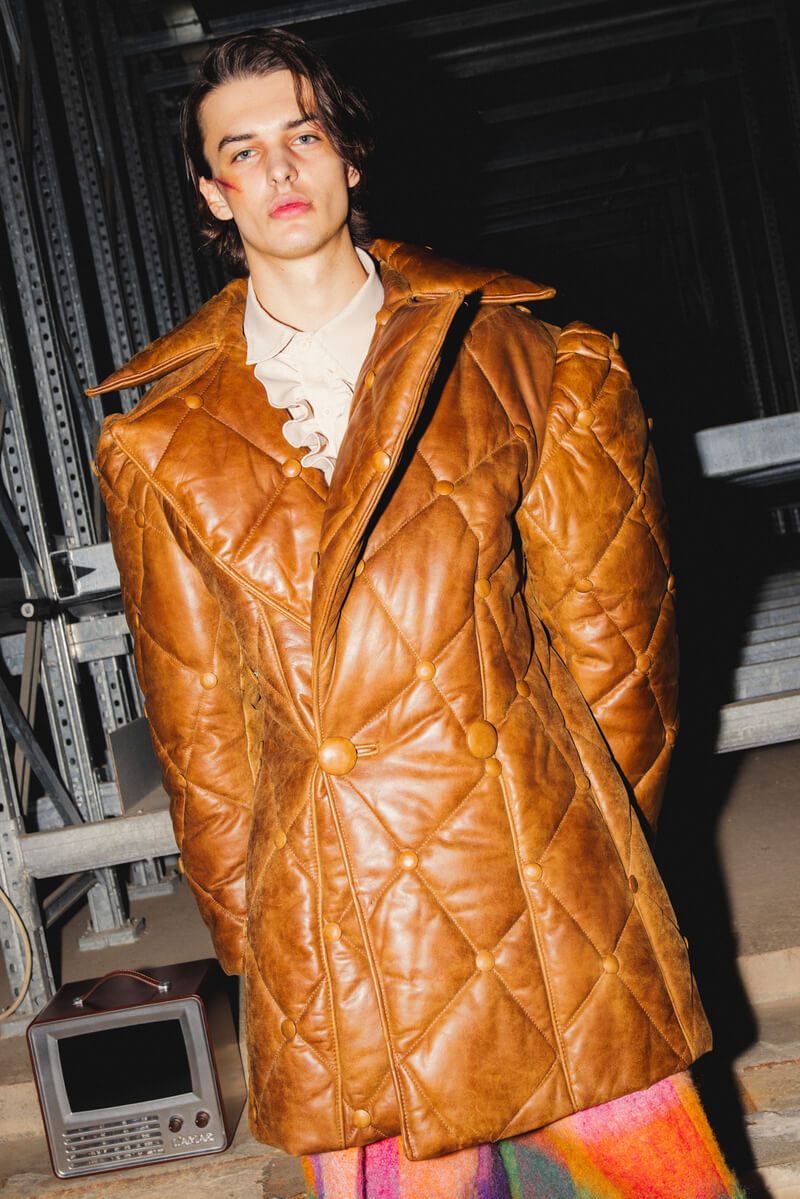
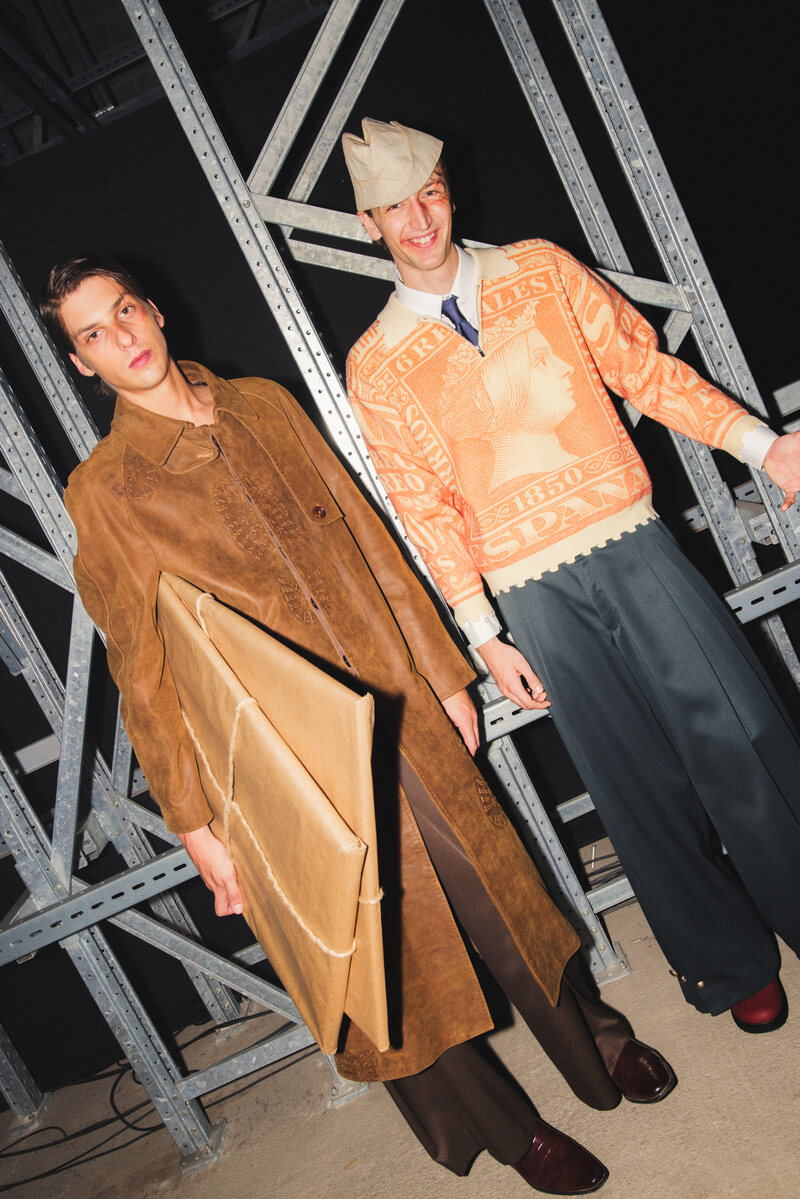
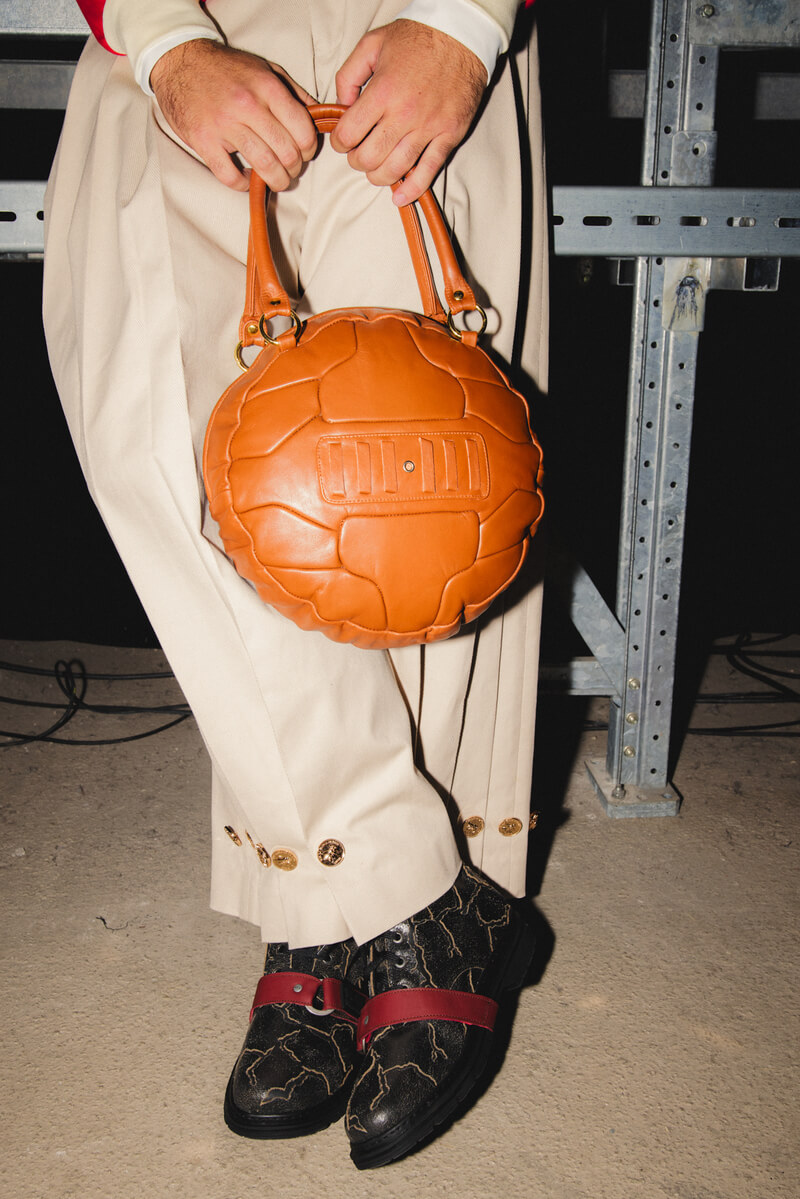
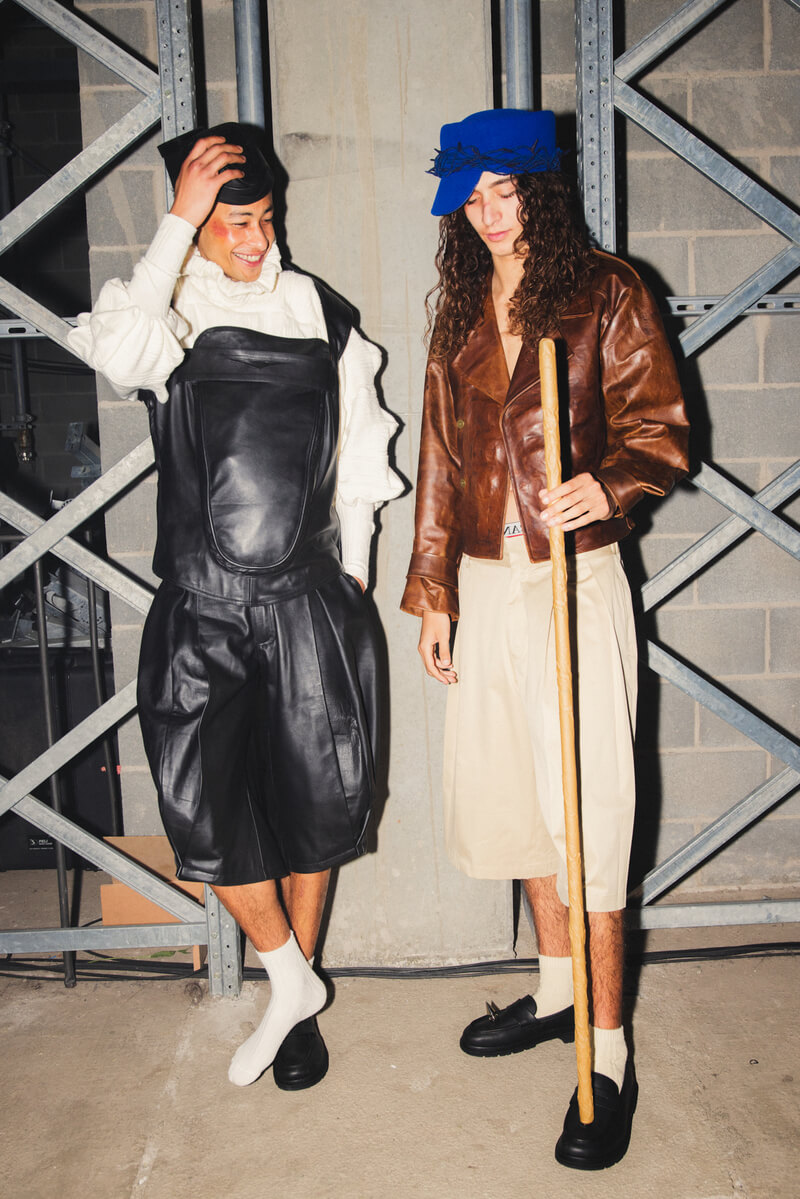
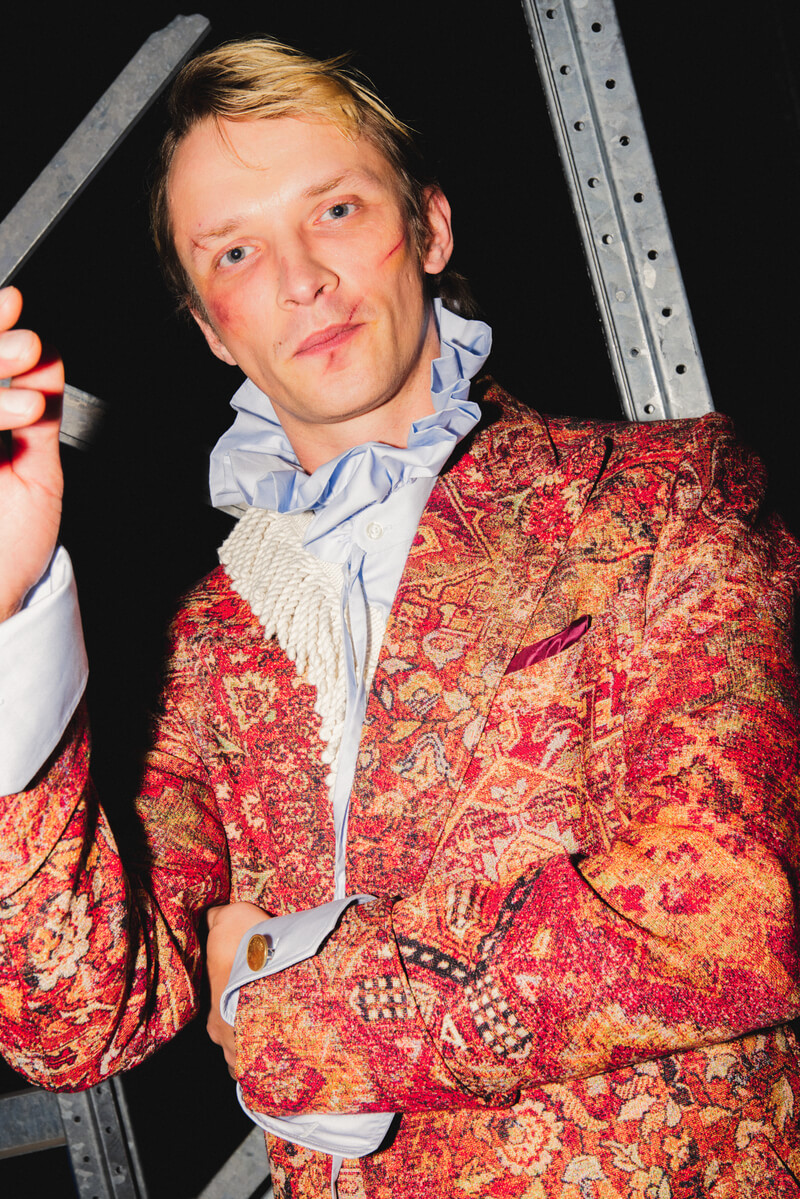
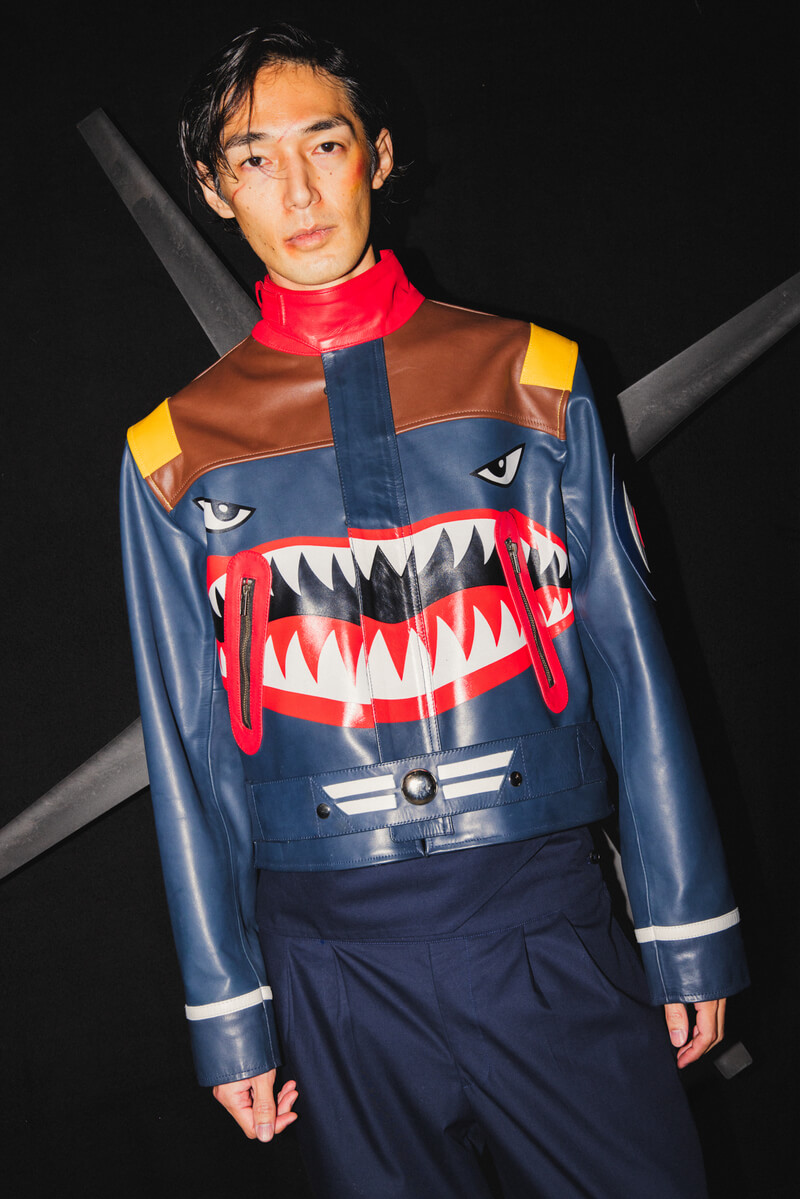
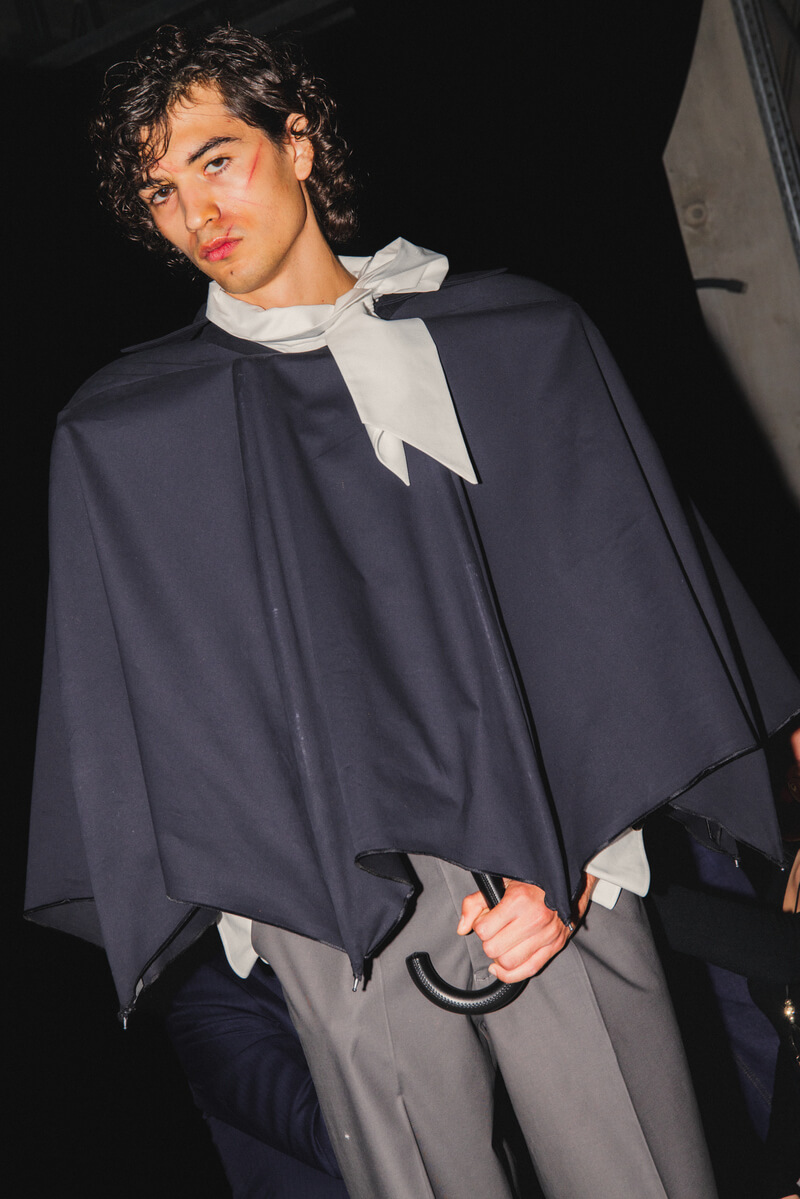
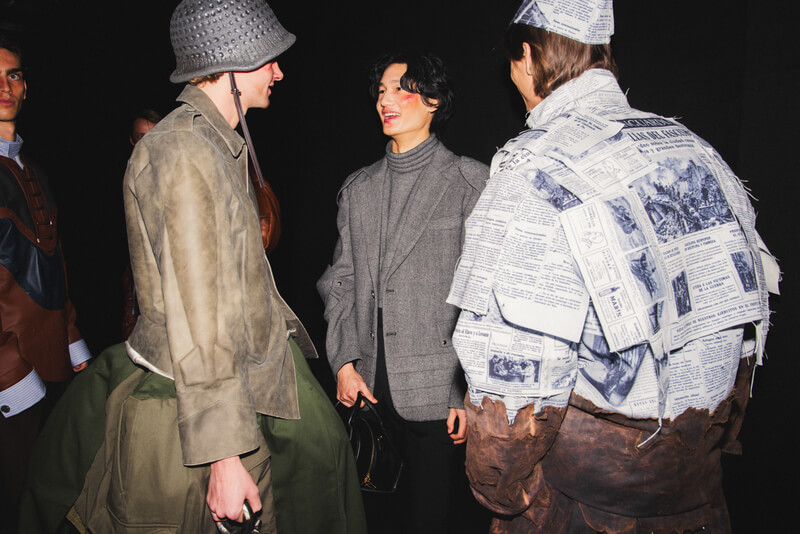
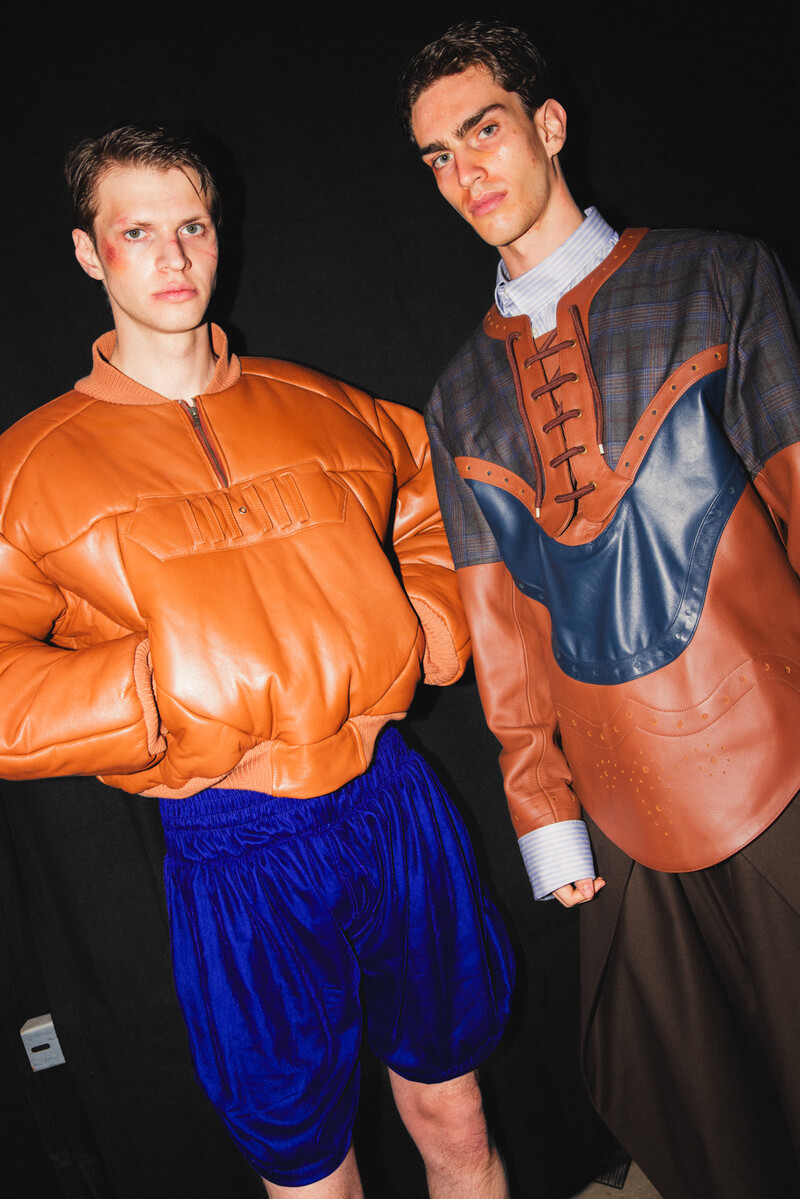
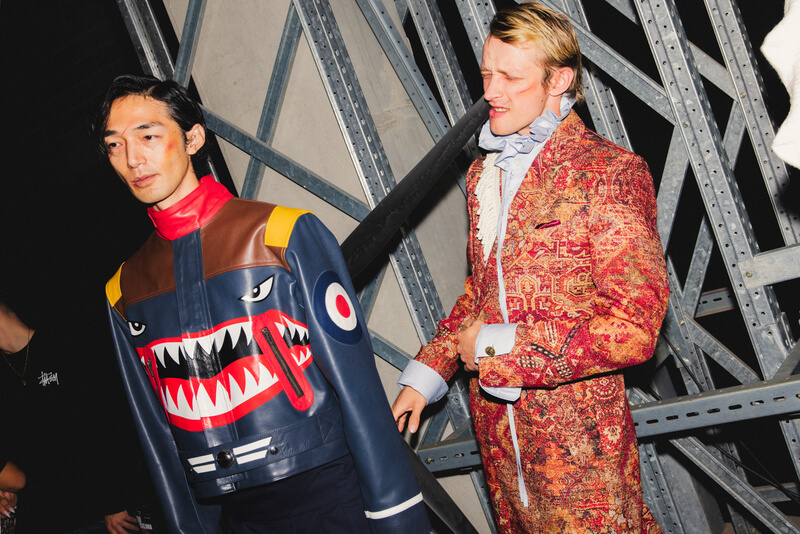
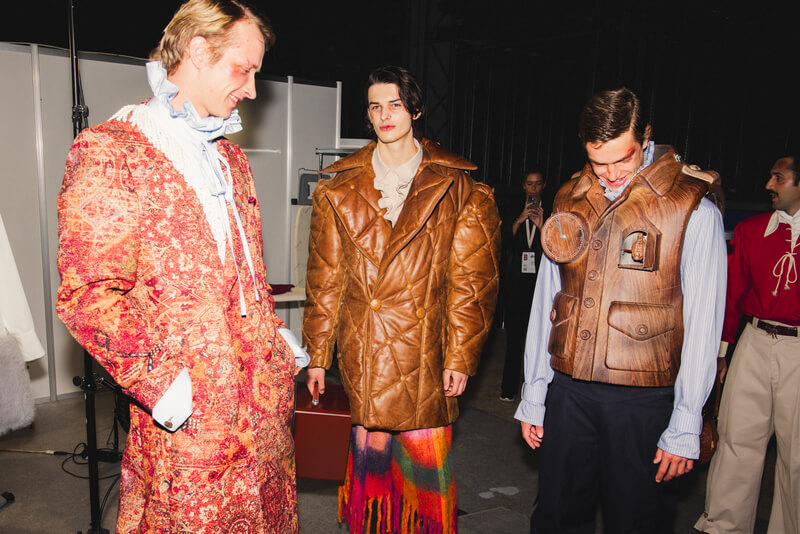
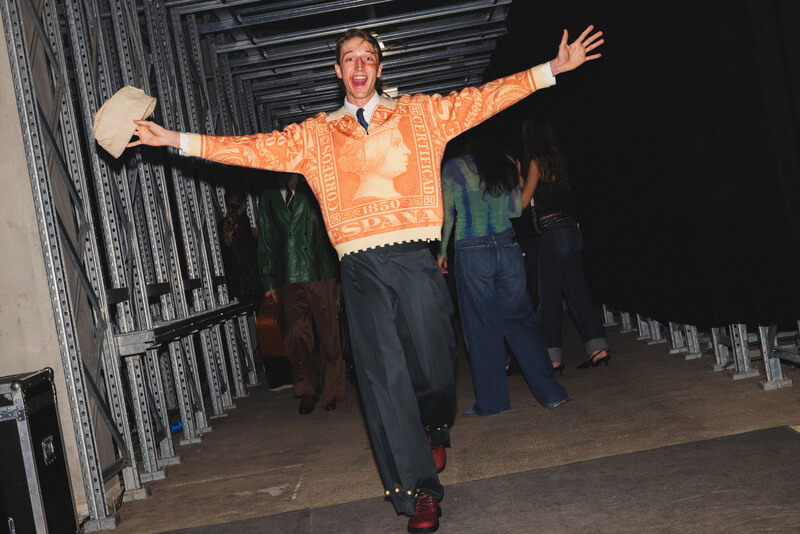
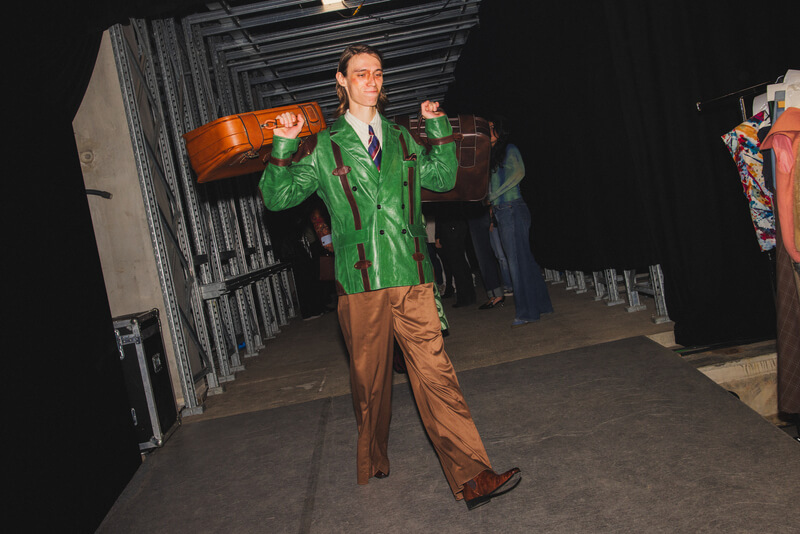
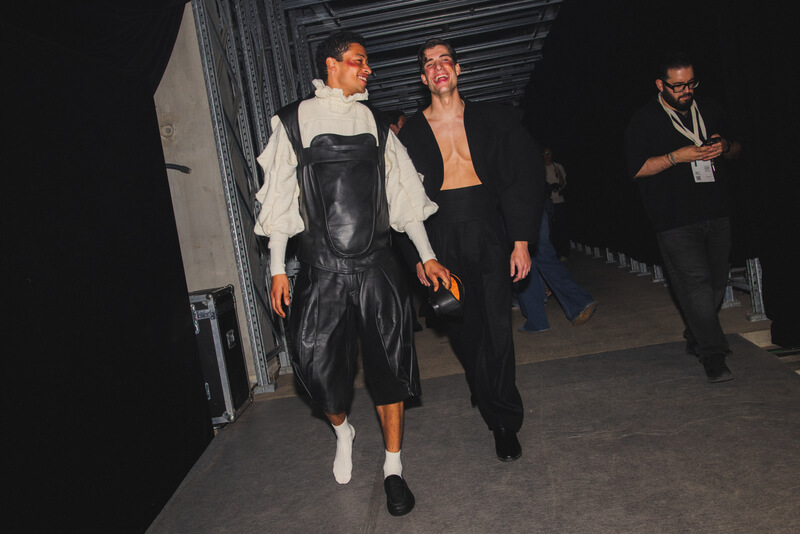
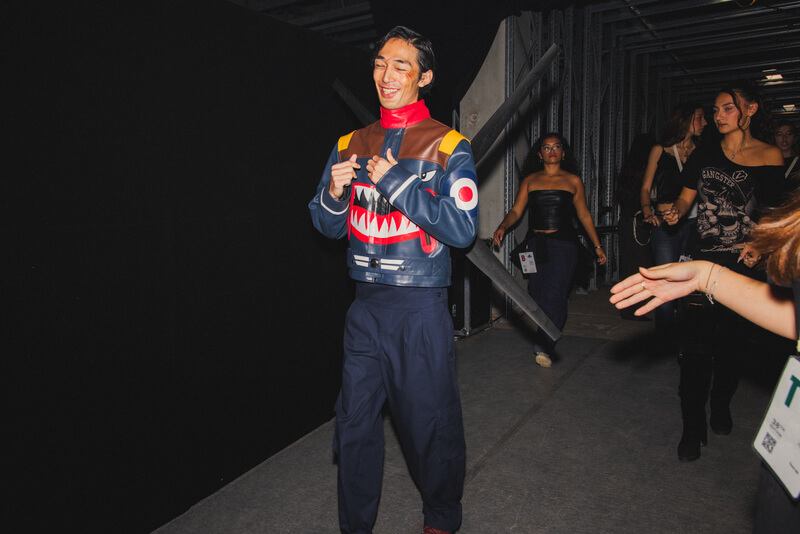
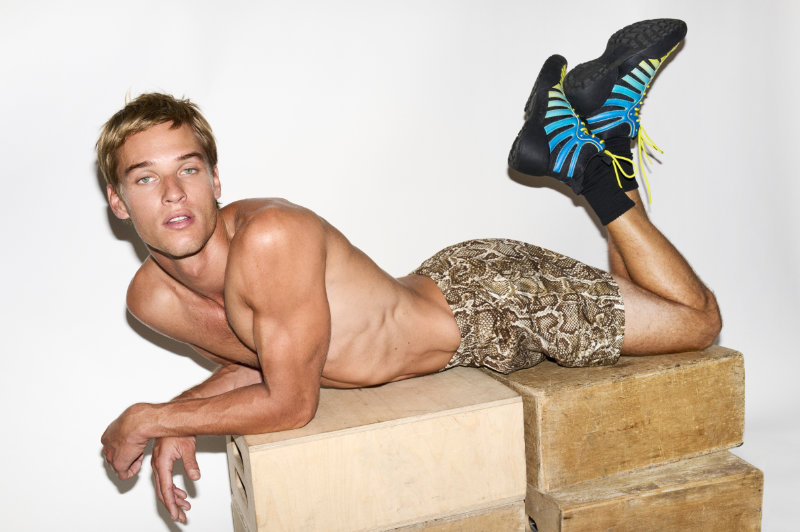
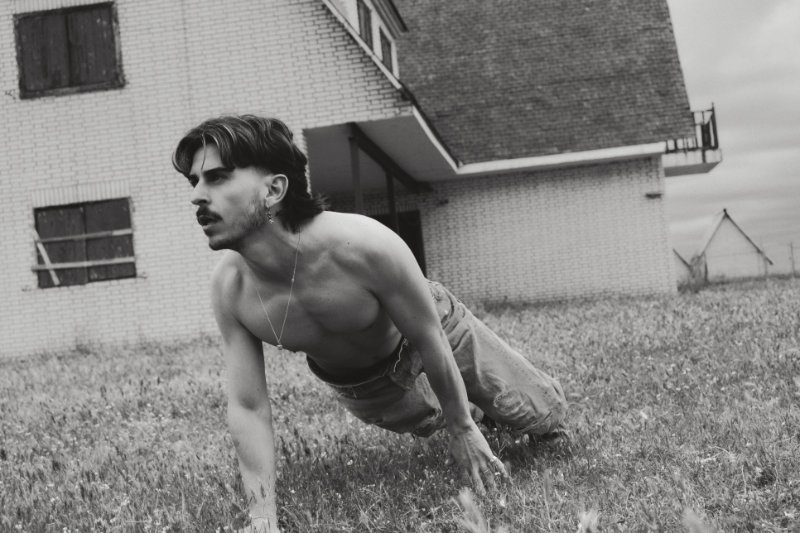
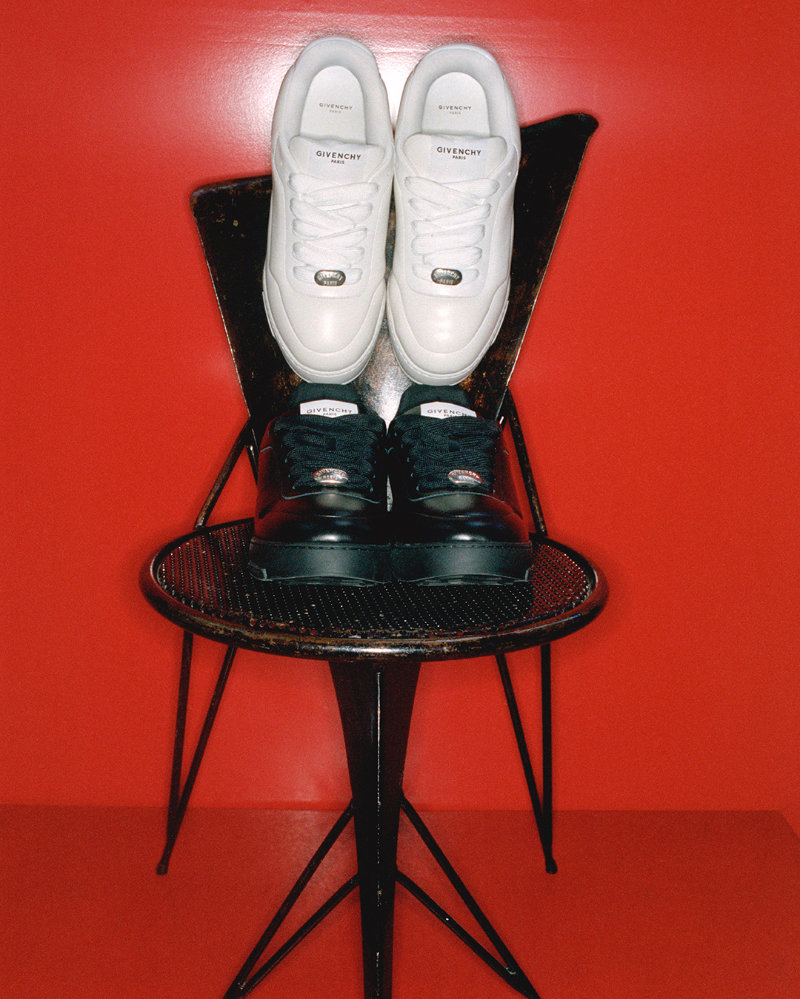
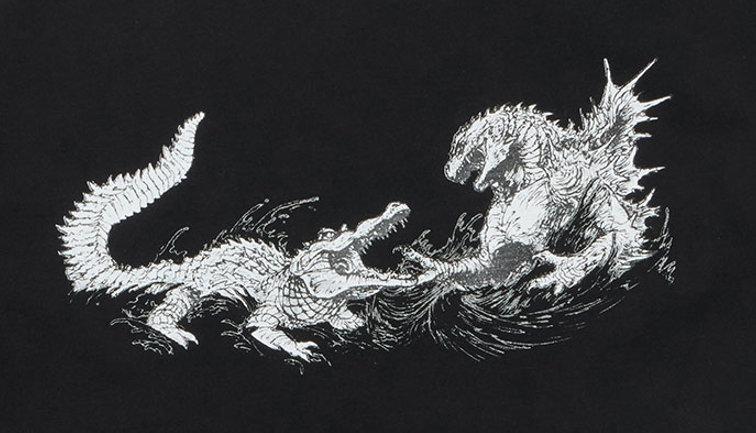
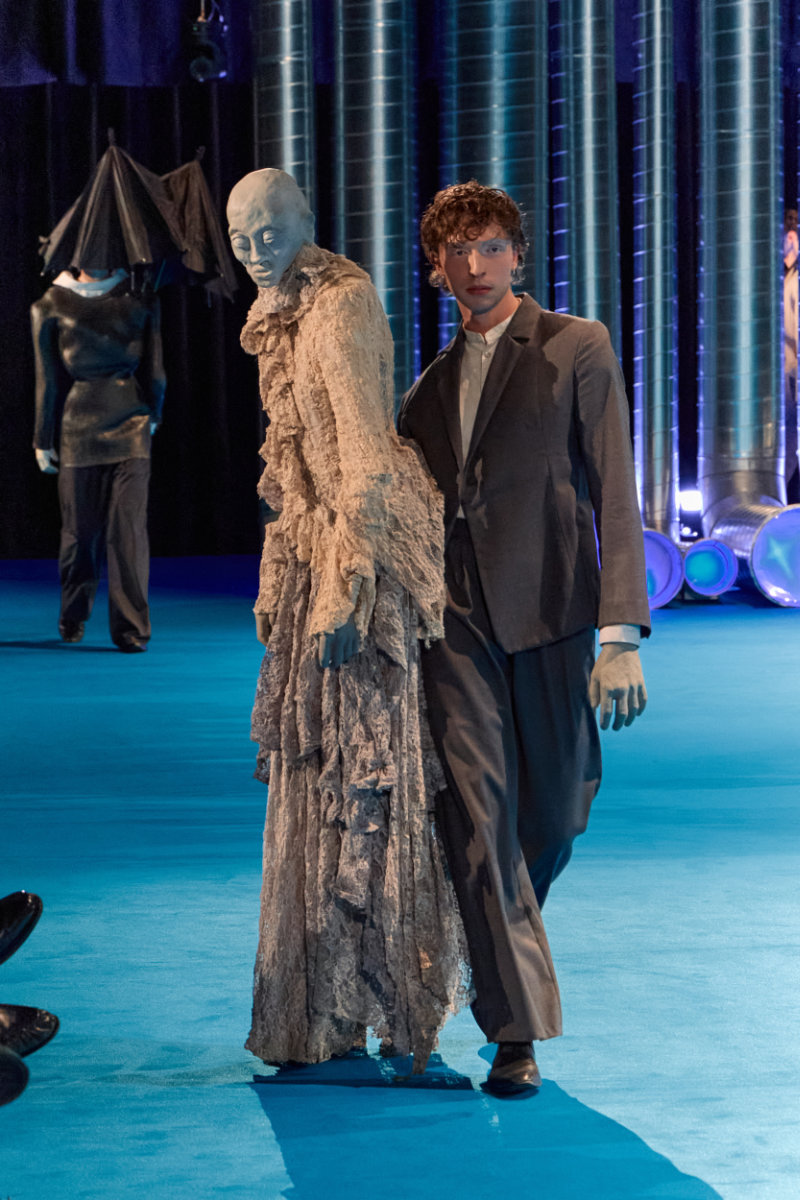
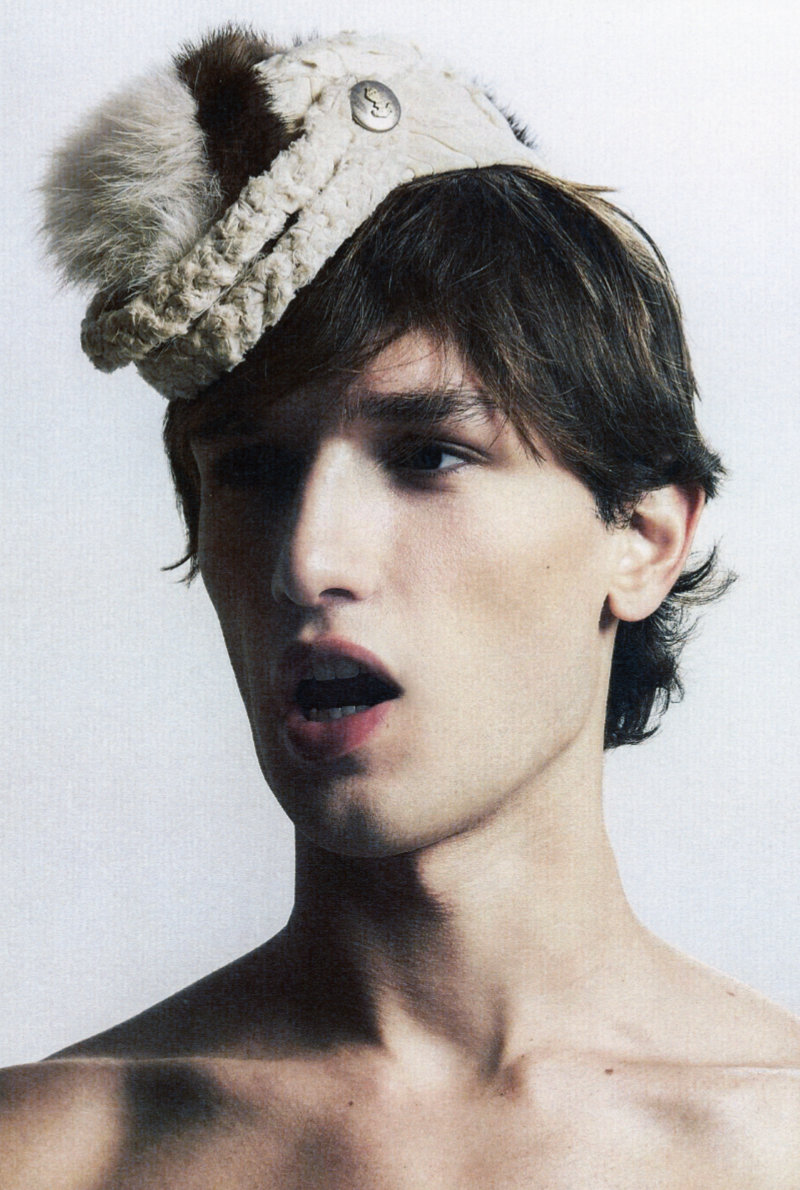
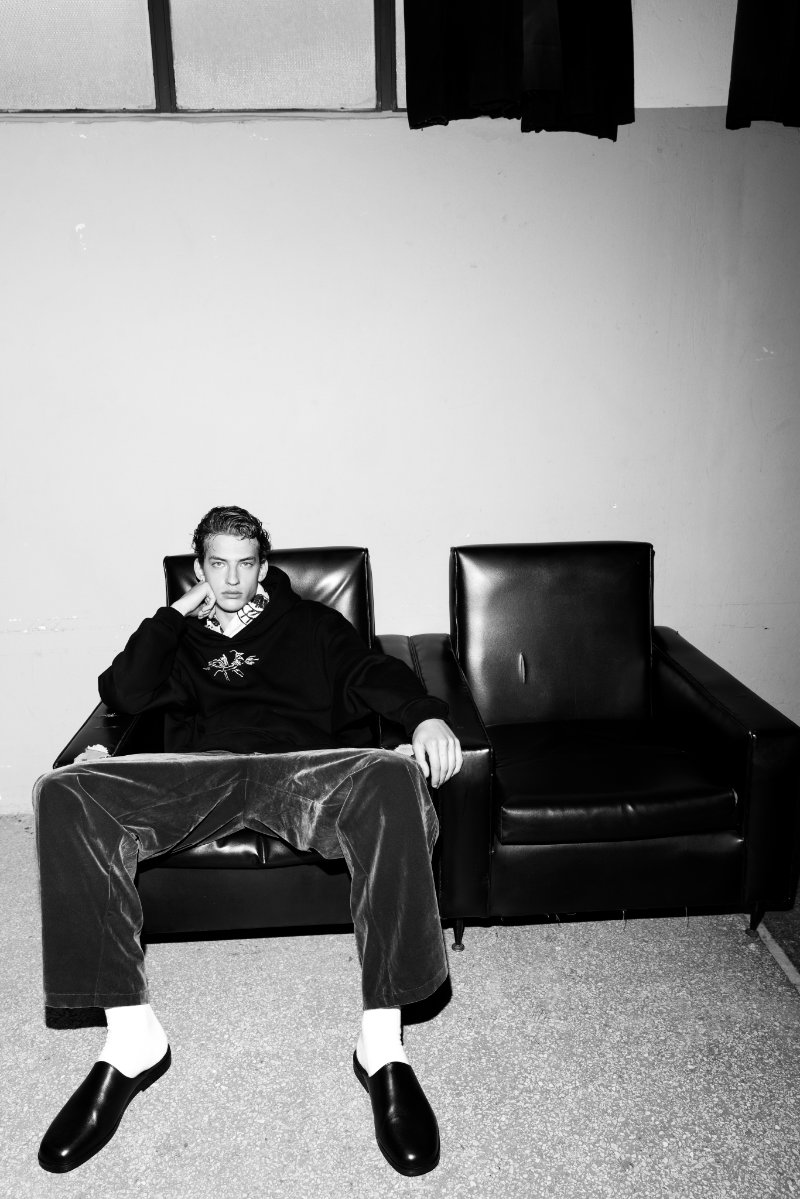
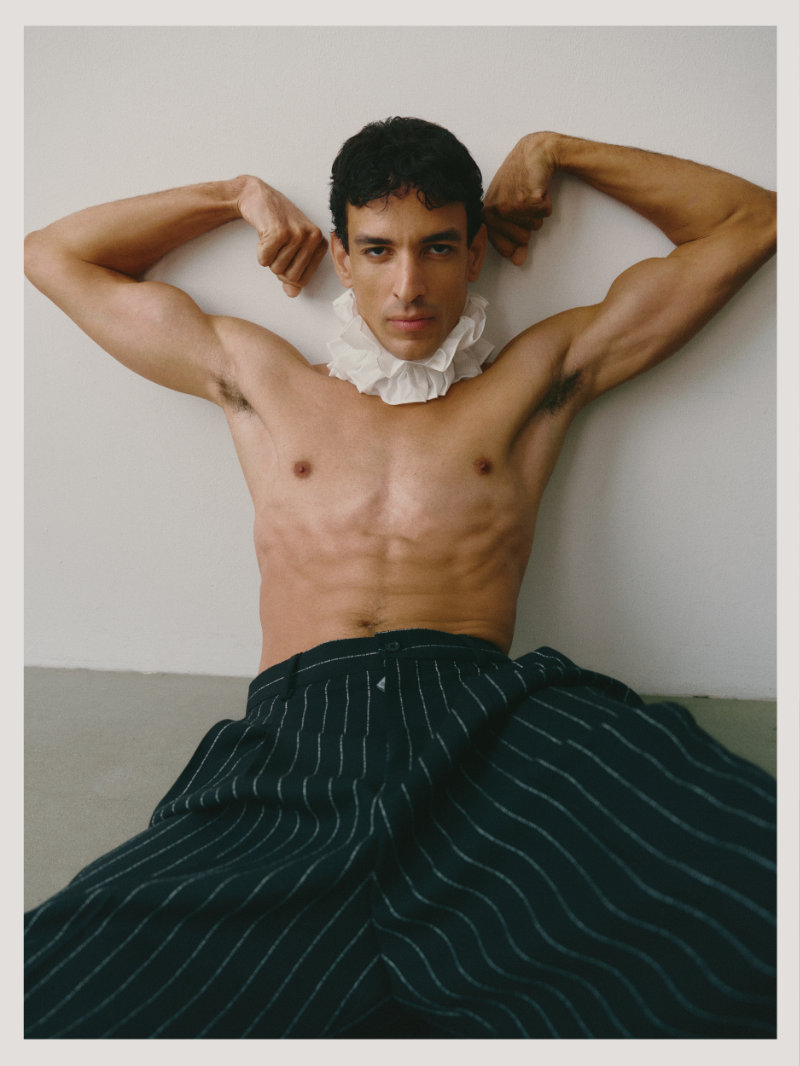
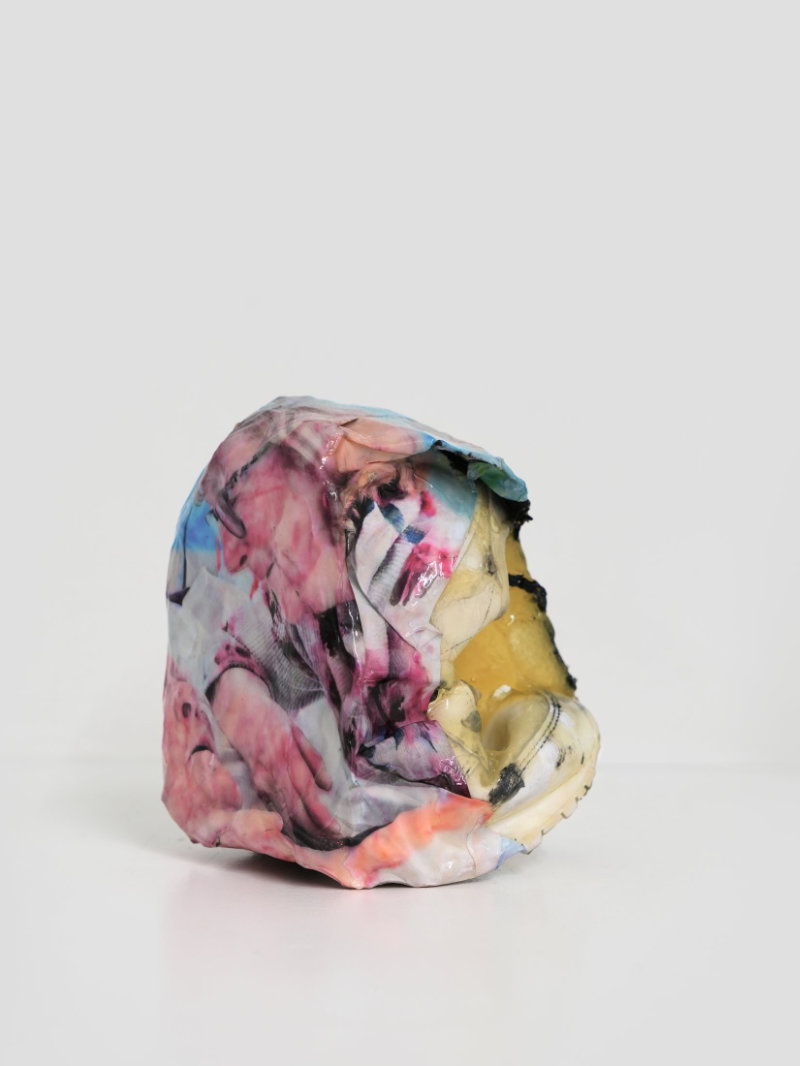
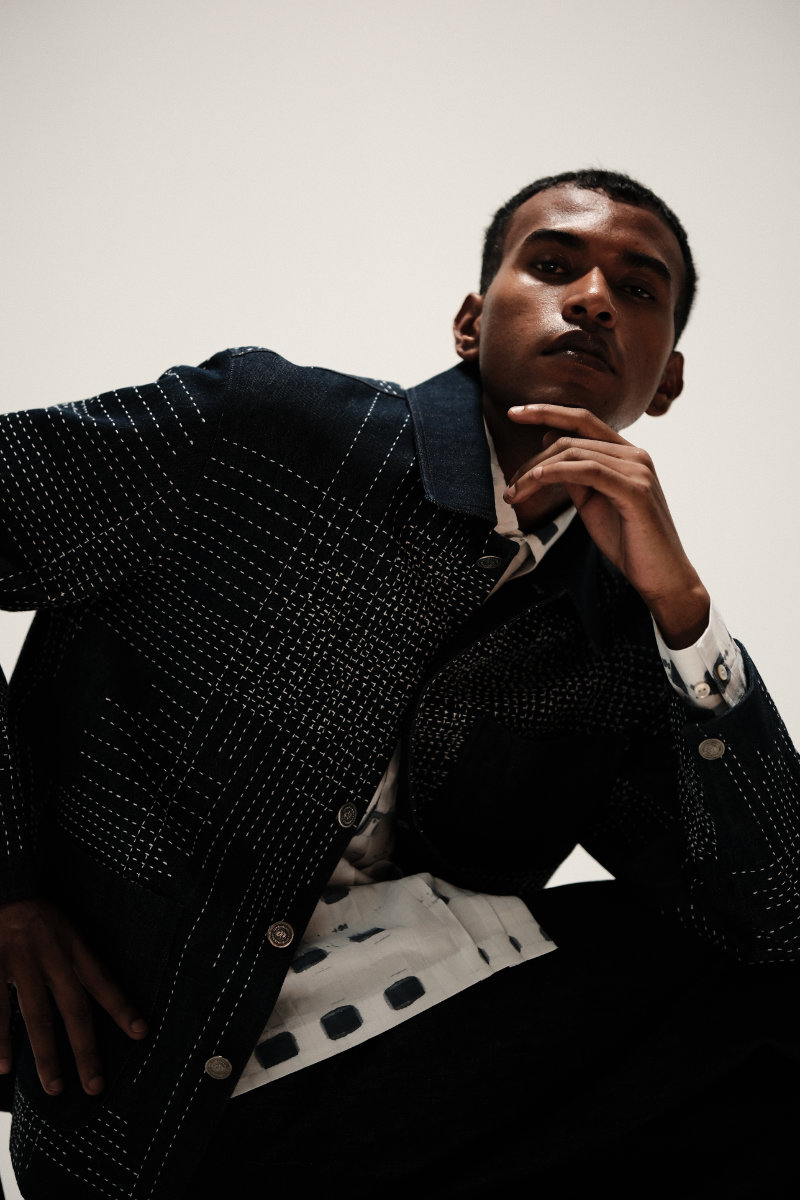
What happens when a carpet becomes a coat, a loafer transforms into a jacket, and a suitcase finds a second life as a garment? For L’AMAR, fashion is an exercise in hybridisation, visual metaphor and creative subversion, where unexpected connections blur the boundaries between art, design and craftsmanship.
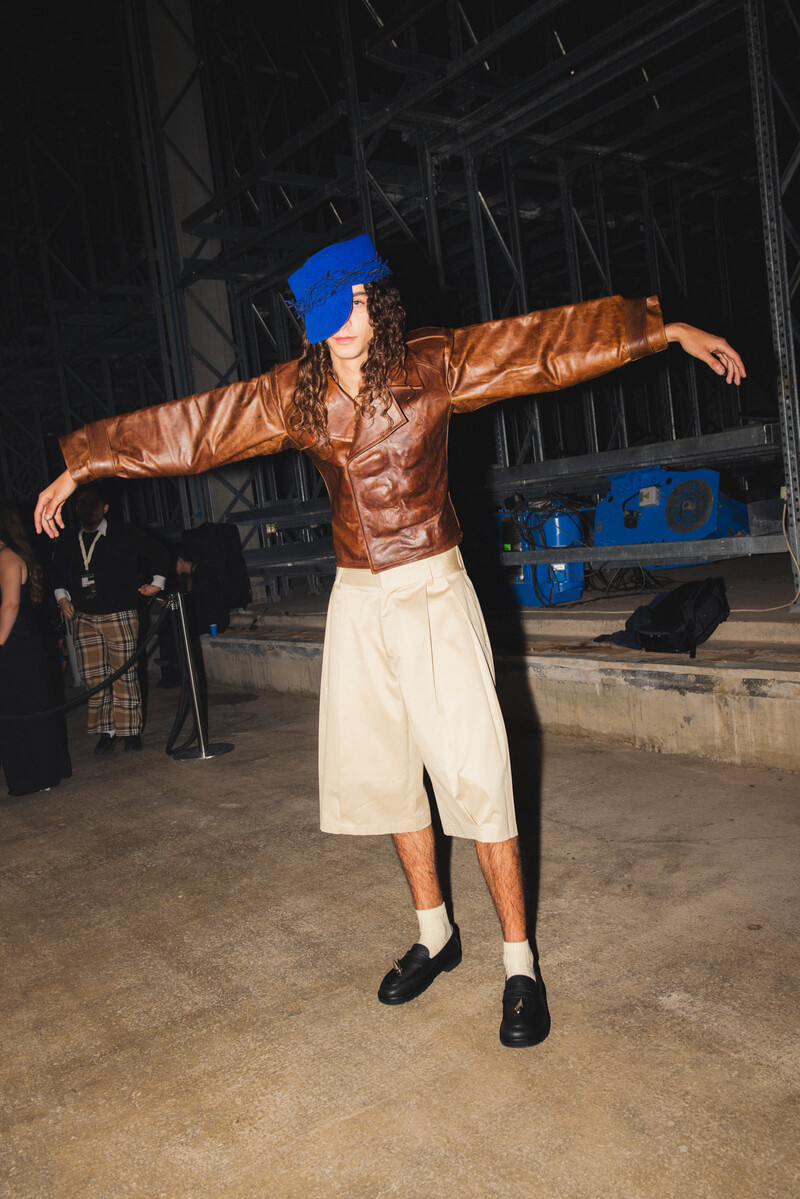
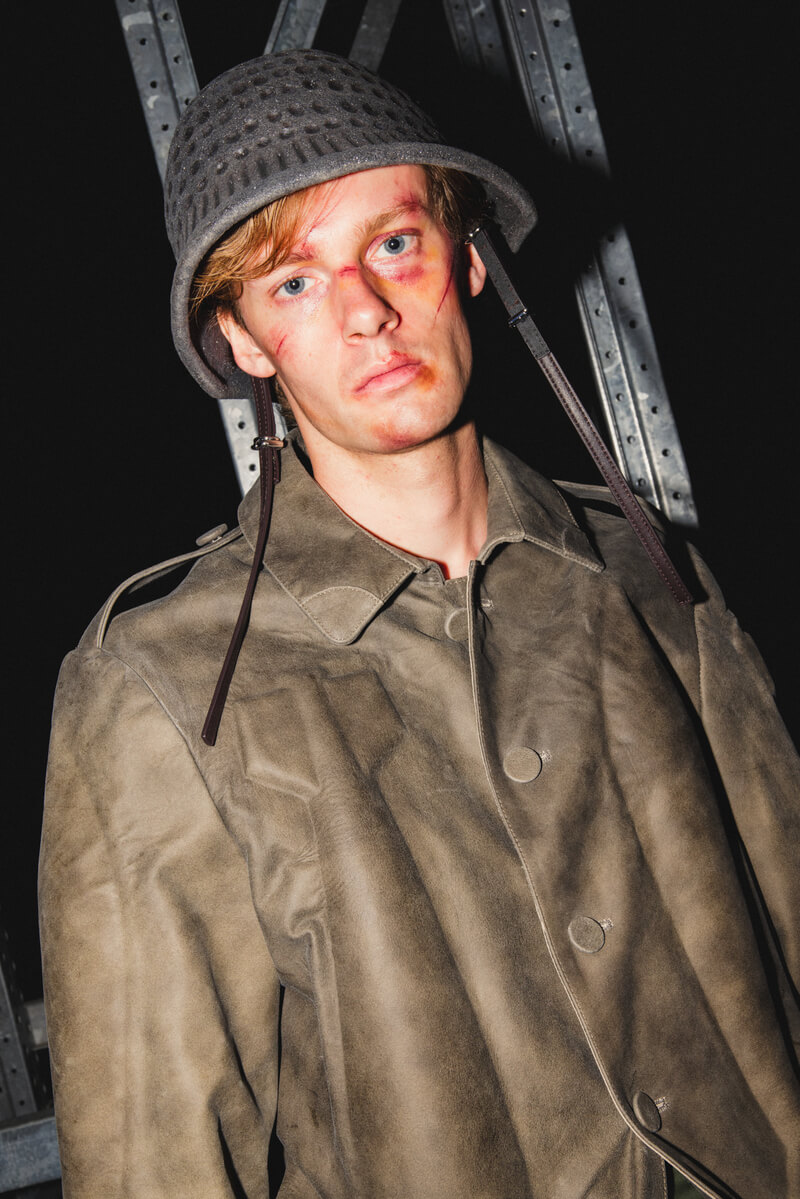
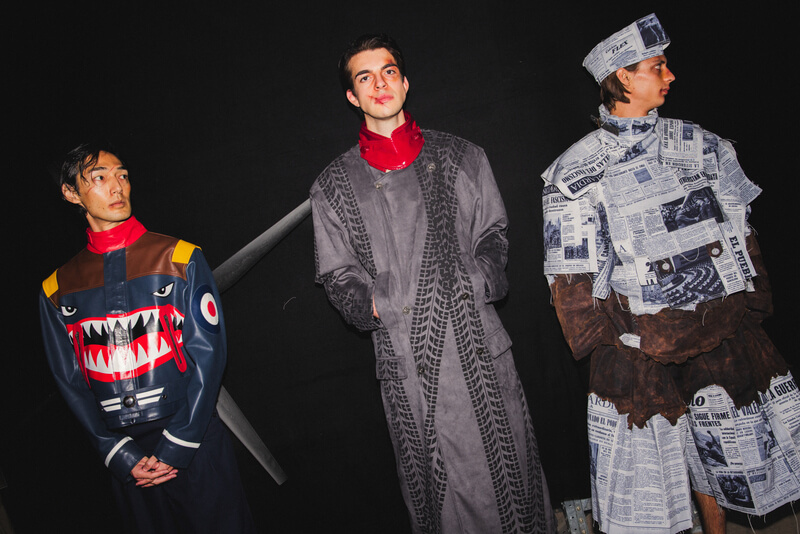
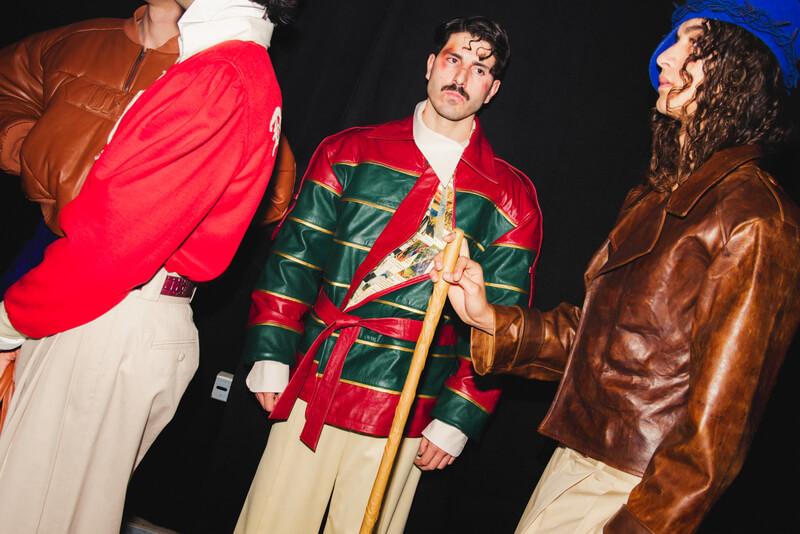
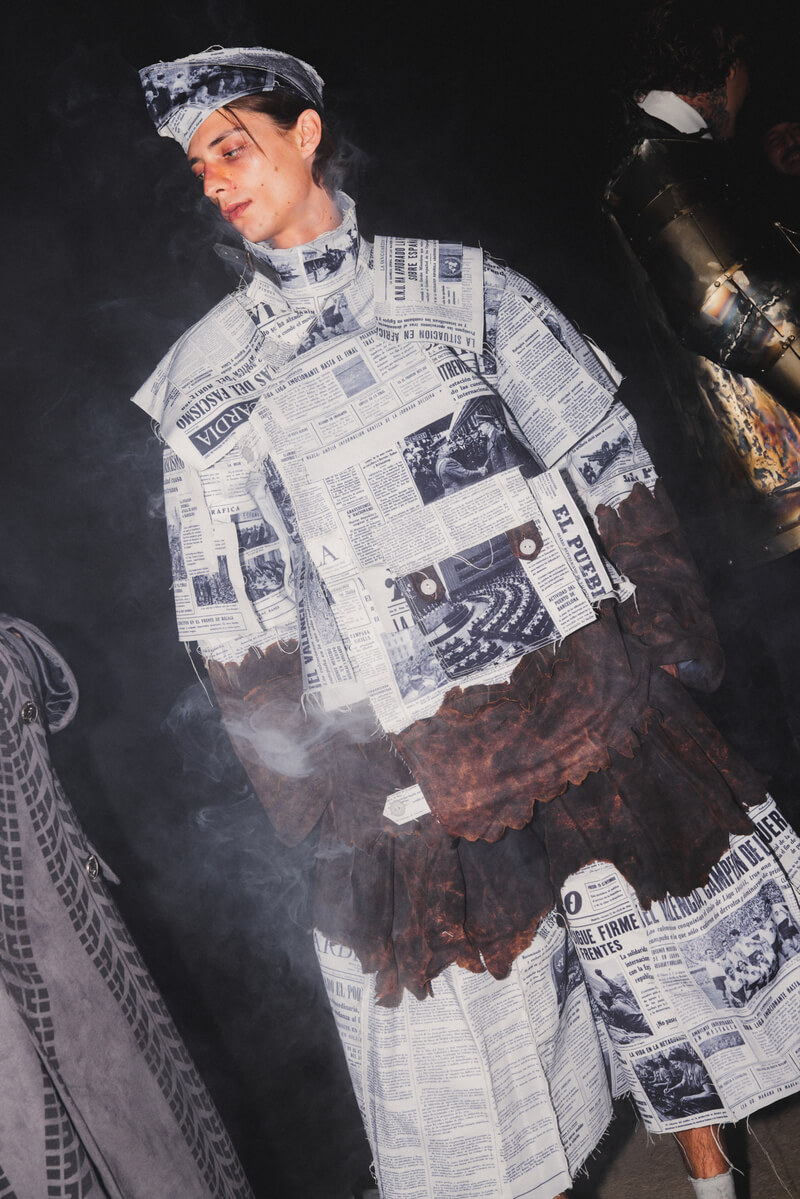
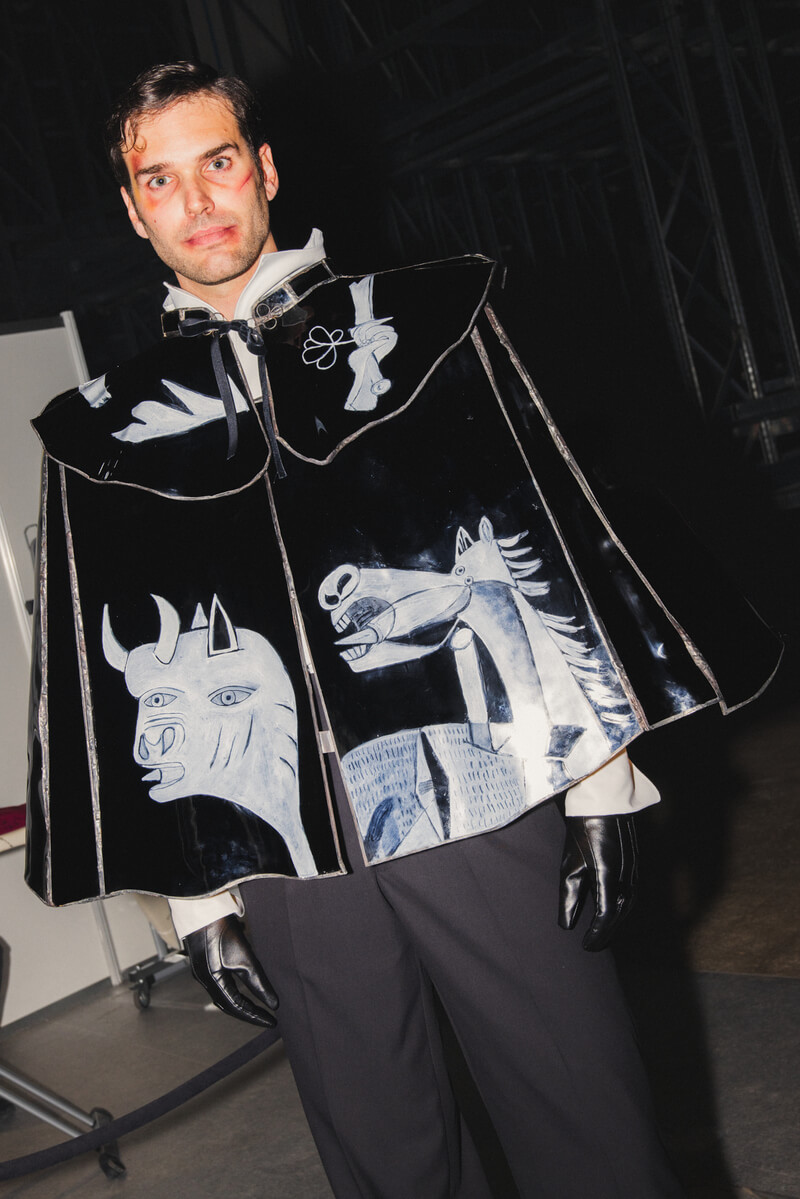
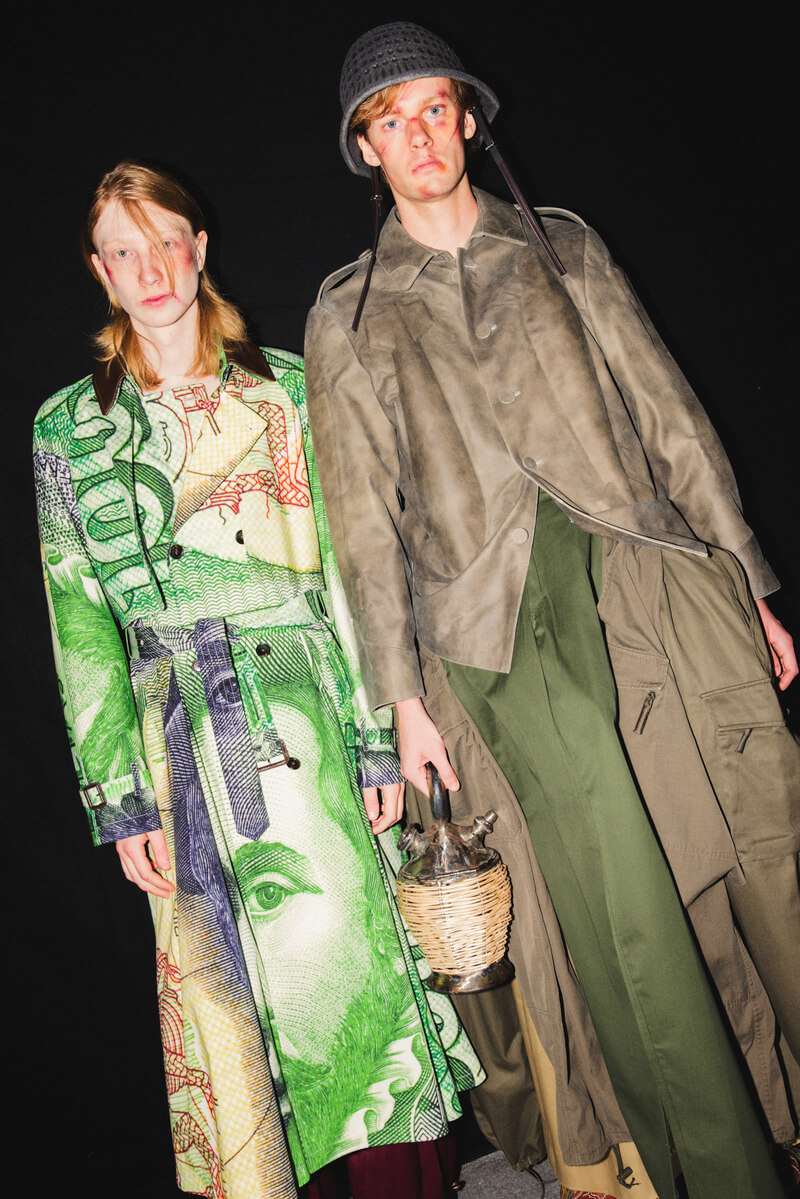
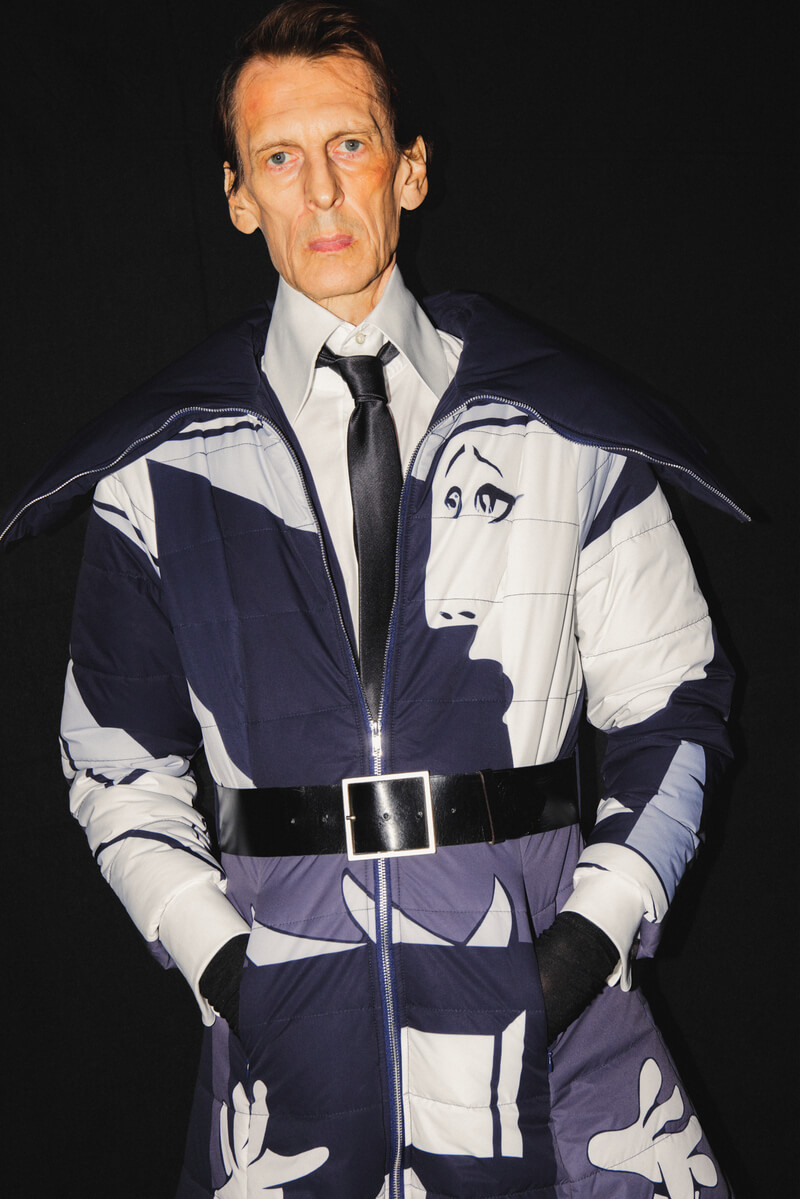
Presented at 080 Barcelona Fashion, ‘Desertores’ looks back at the Spanish Civil War, drawing inspiration from those who risked their lives to protect Spain’s artistic heritage. Yet this is no exercise in nostalgia. Through unconventional tailoring, meticulous craftsmanship and a distinctive graphic sense of irony, creative director Nacho Lamar reinterprets historical references through a contemporary lens, transforming garments into objects that challenge conventions and invite new readings. At the intersection of art and fashion, clothing becomes more than a layer over the body and becomes a living language of memory, identity and expression, shaped and conceptualised by a multidisciplinary team obsessed with every detail.
Driven by an insatiable curiosity for the creative process, L’AMAR embraces creative fluidity, weaving together cultural references and artistic disciplines to construct a universe where function and concept collide and tradition makes room for experimentation. We sit down with Nacho Lamar to unpack the narratives behind the collection, explore the power of creative cross-pollination and discover what it means to keep pushing the boundaries of fashion.
Your new collection, ‘Desertores’, draws inspiration from the people who risked their lives to protect Spain’s artistic heritage during the Spanish Civil War. What led you to this story, and why did you feel it was important to tell it through fashion today?
I found my inspiration after watching a documentary about saving the Prado museum. I was drawn to those men, art lovers and intellectuals who risked their lives to protect Spain’s artistic heritage amid the devastation of the Spanish Civil War. The idea of putting your own life at risk, even to the point of losing it, to save a work of art was what inspired me to create Desertores.
How do you translate historical events and artistic references into contemporary garments without losing the complexity of their original meaning?
The leitmotif behind our collections is hybridisation and visual metaphor. That period holds enormous value, both in its objects and forms and in its aesthetics and graphic design. These elements help us transform garments, giving them a second life and a new language, always through a lens that looks towards the future.
Your creative practice spans different disciplines, from photography and graphic design to ceramics and pattern cutting. How do these different fields influence your understanding of fashion design?
From my perspective, all the arts are interconnected. They all have something in common, they are all allies, and they all contribute something. Art is an amalgam of disciplines, and we cannot leave any of them behind; they all need to be present throughout the creative process.
The language of design is healing and playful. It works like a blender of emotions and different forms of expression that ultimately come together to convey a single message.
Art plays an important role in your creative universe. Are there any particular artists, movements or cultural references that have shaped your understanding of clothing as a form of expression?
Conceptual art and the last 150 years of modern art history, from painting and sculpture to architecture and graphic design, are a constant source of inspiration for me. I am moved by artists who understand that the same message can be translated through different disciplines, establishing parallels between them. That unexpected twist, that duality of meanings and interpretations, is what truly moves me.
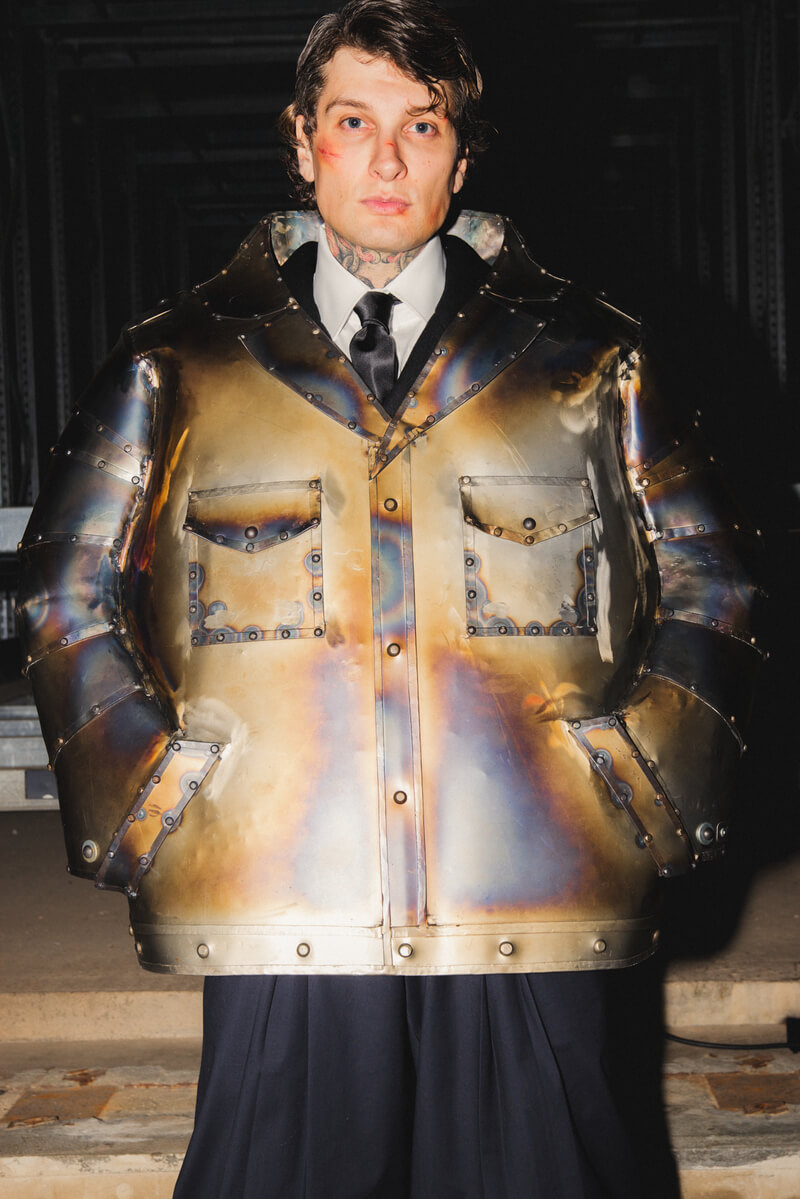
Tailoring and craftsmanship are fundamental pillars of your work. How do you balance respect for traditional techniques with the desire to experiment and challenge established conventions?
I don’t question it. I simply act. I let my intuition guide me, driven by creation and innovation. I rely on feasibility, but at the same time, I challenge it and tear it apart. I pursue a goal, but I also feel the need to break it down, deconstruct it and reinterpret it. I act out of passion and love for creation.
You often build your collections around a strong conceptual narrative. At what point does that narrative become a garment, and how do you ensure the pieces stand on their own beyond the story that inspired them?
It’s a huge puzzle with an infinite number of pieces that I work on little by little. I start with the corners, jump to the centre, go back to the top, look for a pattern, tackle the most difficult parts and separate the pieces until I find a way to fit them together.
The whole process is built on research: graphic references, films, audio recordings, essays and any other source that allows me to delve deeper. I immerse myself in history, and I’m a massive nerd. The nerdier I get, the more energy I find and the more empowered I feel to translate everything I learn into new forms of expression. Observation is undoubtedly my greatest ally.
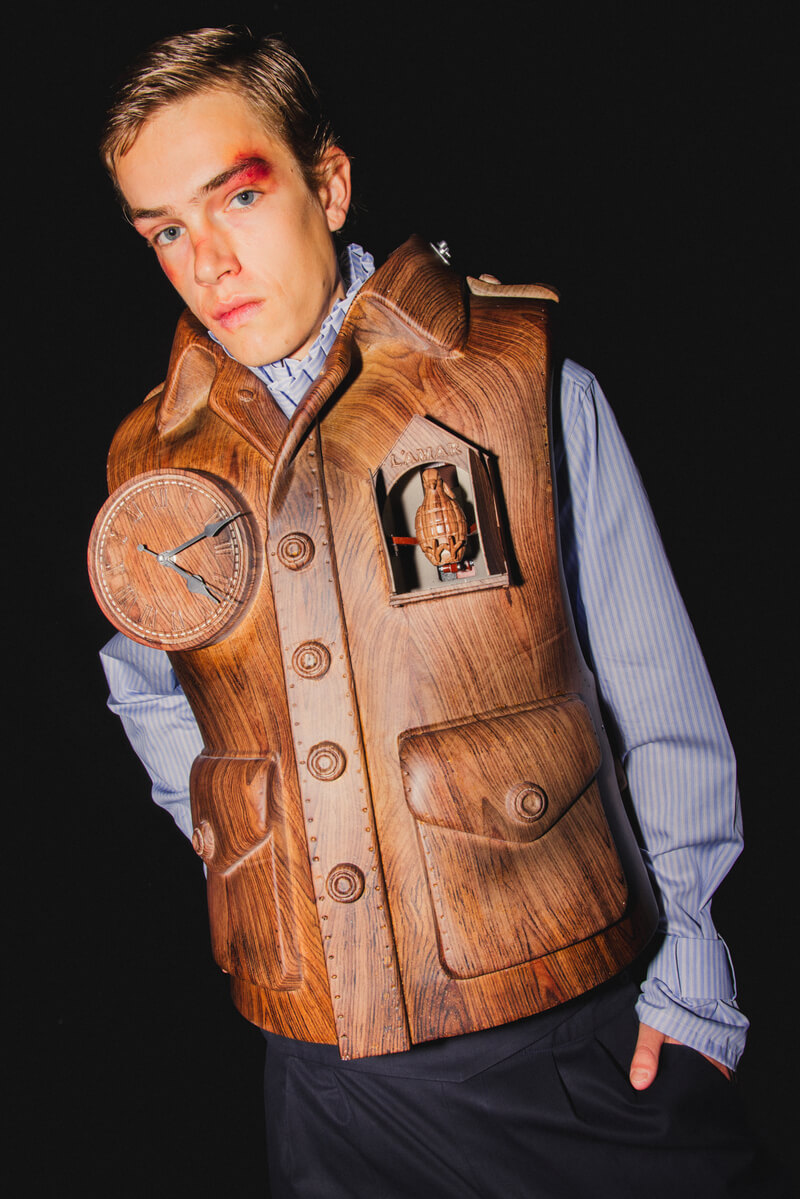
Which elements of ‘Desertores’ best express the ideas behind the collection, and what details might go unnoticed at first glance?
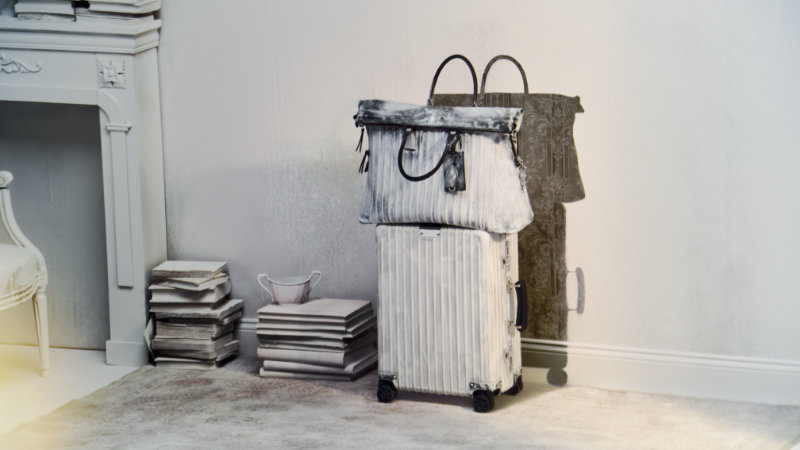
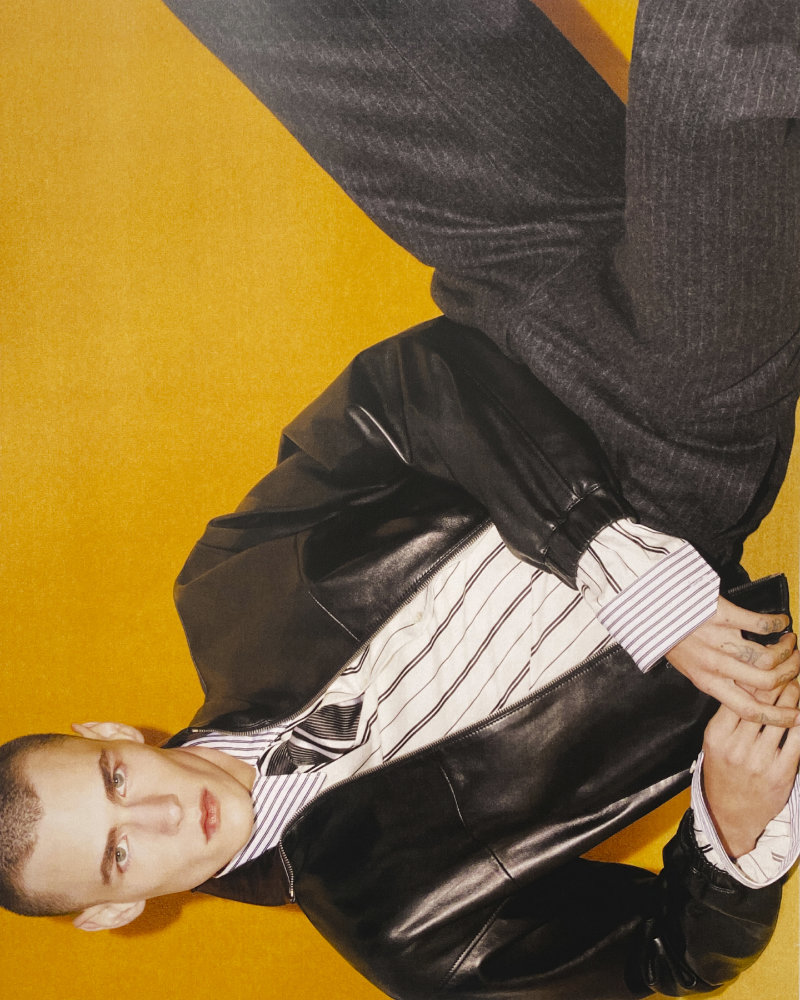
I don’t think there’s anything in particular that goes unnoticed. I believe everything follows a visual coherence and has its own distinctive, easily recognisable language. It’s precisely the final design decision that turns each garment into a unique piece: a carpet coat, a loafer jacket, a seal sweater or a suitcase jacket.
This hybridisation of concepts gives rise to distinctive, recognisable pieces designed to inspire and surprise, always with that ironic, graphic touch that makes them memorable and allows them to stay with you.
You see clothing as a form of non-verbal communication. What do you think fashion can express that words cannot?
Clothing, fashion, garments, whatever you want to call that layer we put over our bodies is energy, mood, power, feeling, memory and identity. It is far more valuable than people realise. Fashion is alive.
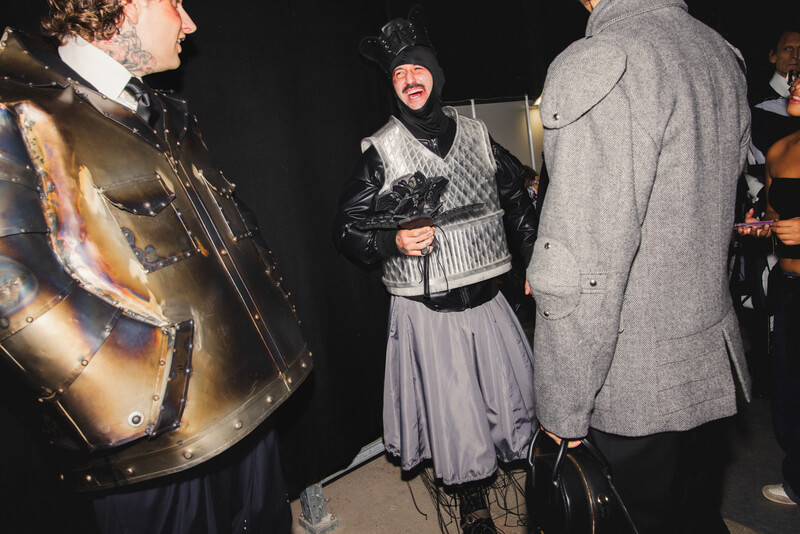
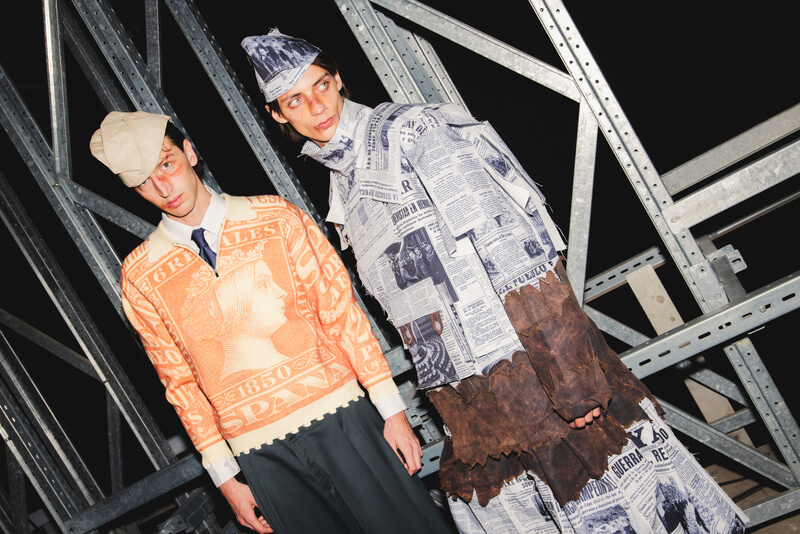
This season marks L’AMAR’s first presentation at 080 Barcelona Fashion. What does this platform represent for the brand, and how does it fit into the stage of evolution you’re currently experiencing?
It’s the first time we’ve taken a more professional step onto the national fashion scene, and we’re very happy with the result. It has been a showcase for our creative language, and we’ve received some very positive feedback, which fills us with energy and gives us the momentum we need to keep fighting this uphill battle.
Our business structure is built around classic tailoring, which coexists with our more creative universe. These are two worlds that feed into one another, and we want to keep nurturing both, with the excitement and ambition to continue presenting our collections and, in the future, make the leap onto the international stage.
Barcelona has a rich creative history spanning art, architecture and design. How does the city influence your work, and do you think a distinct identity is emerging within its contemporary fashion scene?
Barcelona is a city that breathes art, design and creativity, where disciplines such as architecture, painting and fashion coexist and feed into one another. I believe it is developing its own identity within contemporary fashion, one based on experimentation, craftsmanship and transgression. Its greatest strength is precisely that creative freedom, which allows different languages to emerge, established conventions to be broken and the future to be embraced. That’s why I chose to present our latest collection at 080, a runway that embodies art, transgression and a constant desire for change.
As an independent designer, how do you navigate the tension between maintaining a clear artistic vision and building a sustainable fashion business?
It’s a constant struggle between the need to create and the responsibility of sustaining a business structure. My mind wants to experiment without limits, but there are foundations that need strengthening to keep everything standing. That lack of time creates a certain sense of dissatisfaction, although I’ve also learnt that stopping, gaining perspective and taking a breath are essential to maintaining balance and keeping my feet on the ground.
Looking ahead, what questions are you interested in exploring through your work, and how do you envision L’AMAR’s creative evolution?
Right now, I’m finding it difficult to think clearly. It’s only been a few days since we presented the collection, and I’m feeling deeply exhausted, but also very satisfied. I need to stop, gain some perspective and regain my balance before drawing any conclusions.
What I do know is that my mind is tireless and insatiable; it always wants more. The more love I put into what I do and the more I create, the better I feel. I want to evolve, change, challenge myself, improve and constantly push my own boundaries. There is still so much more L’AMAR has to give.