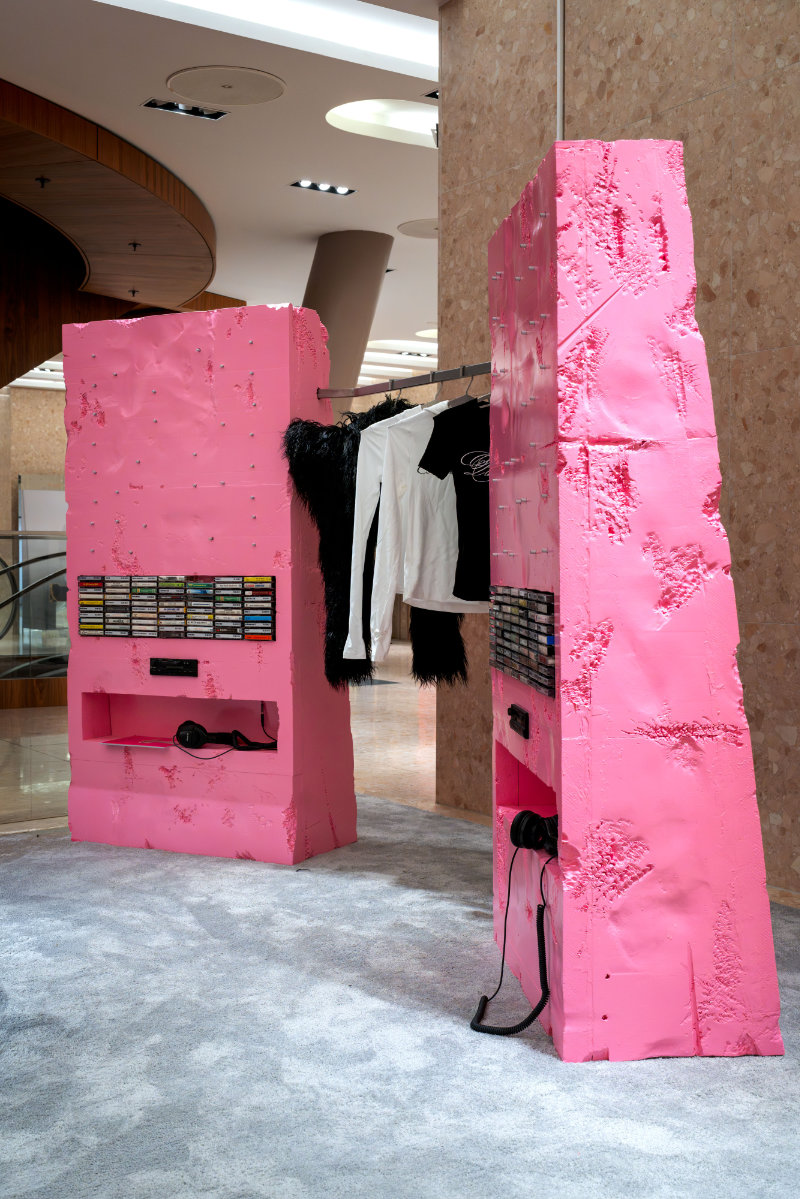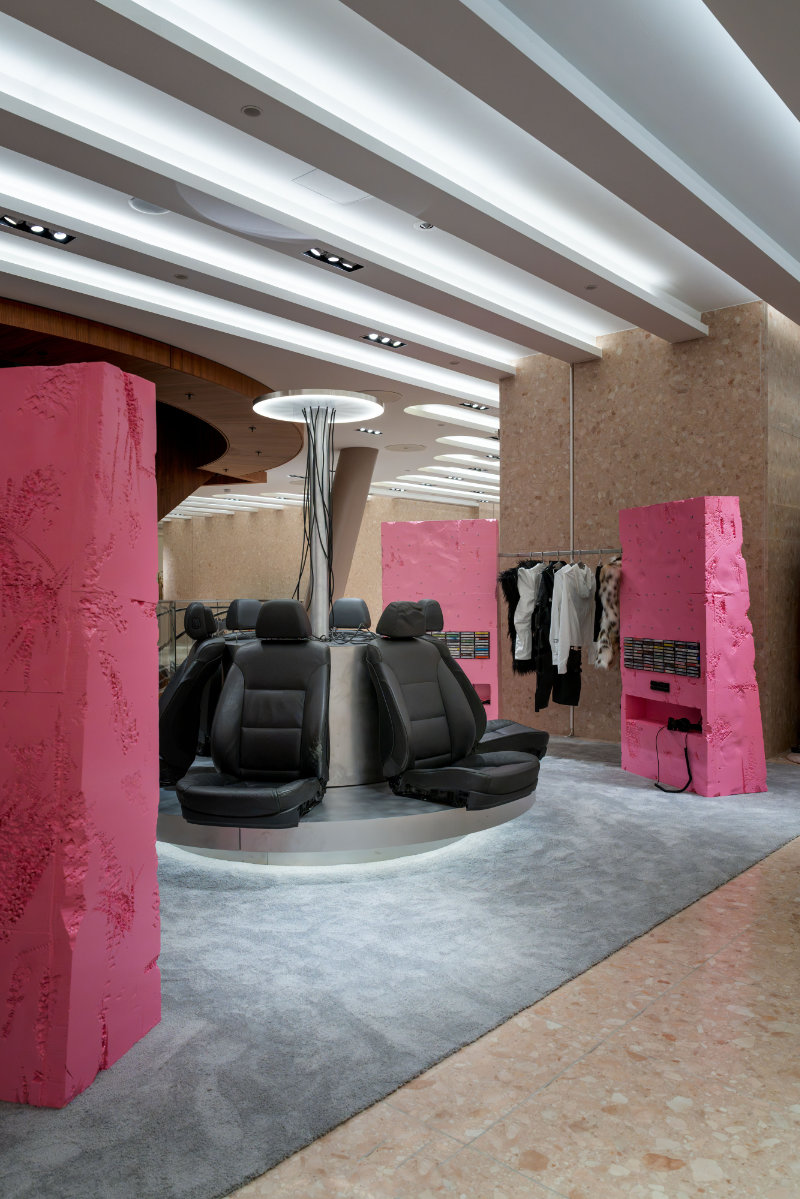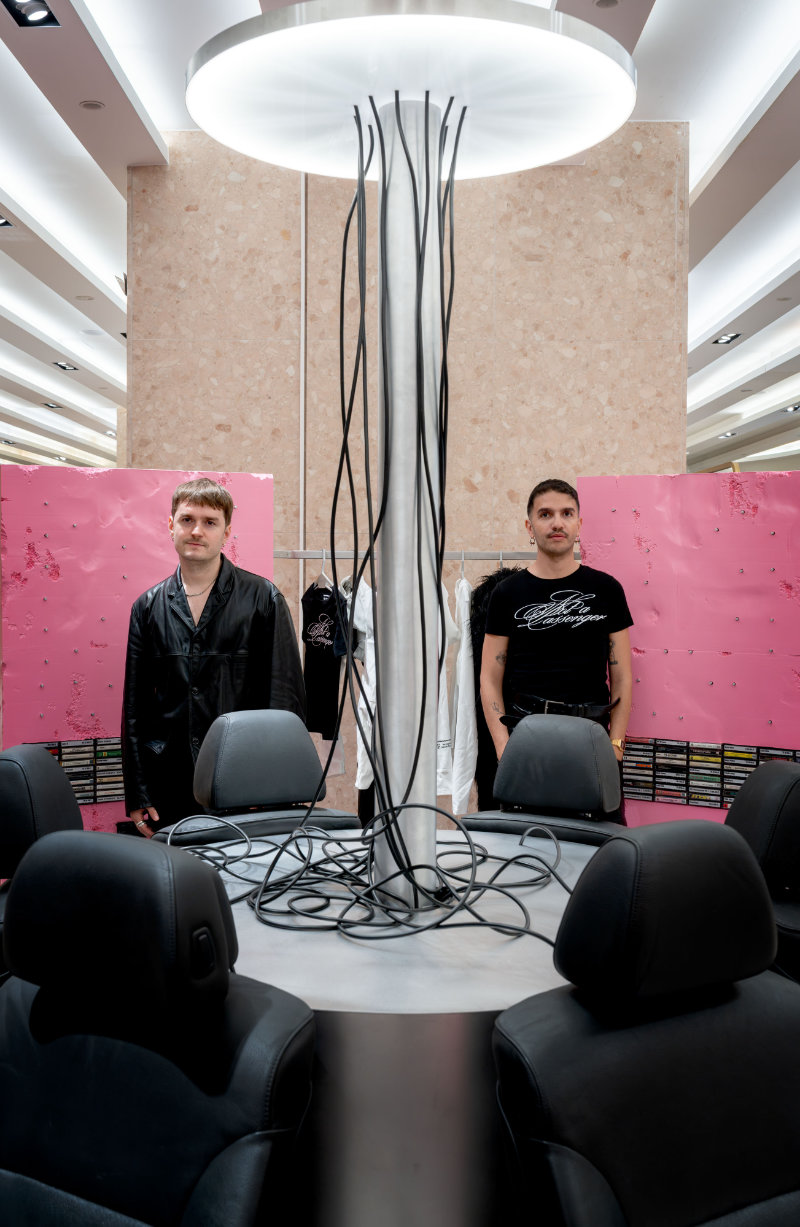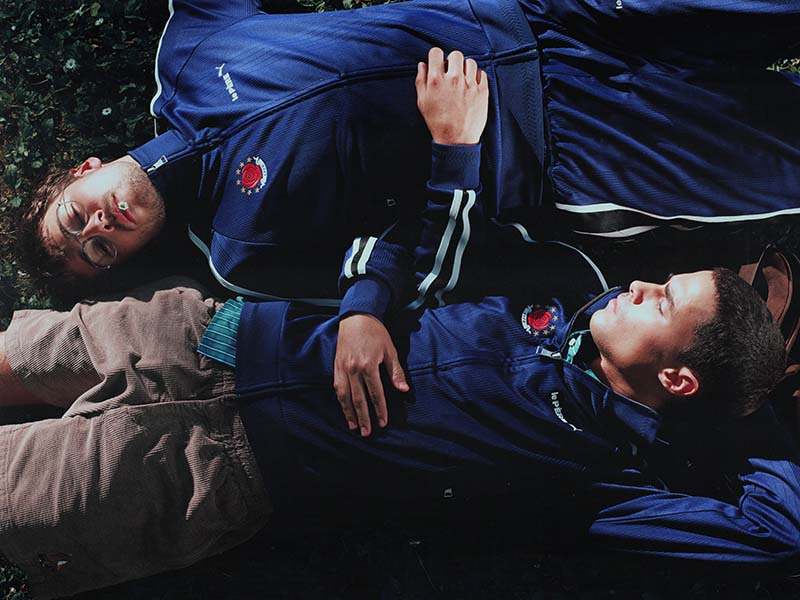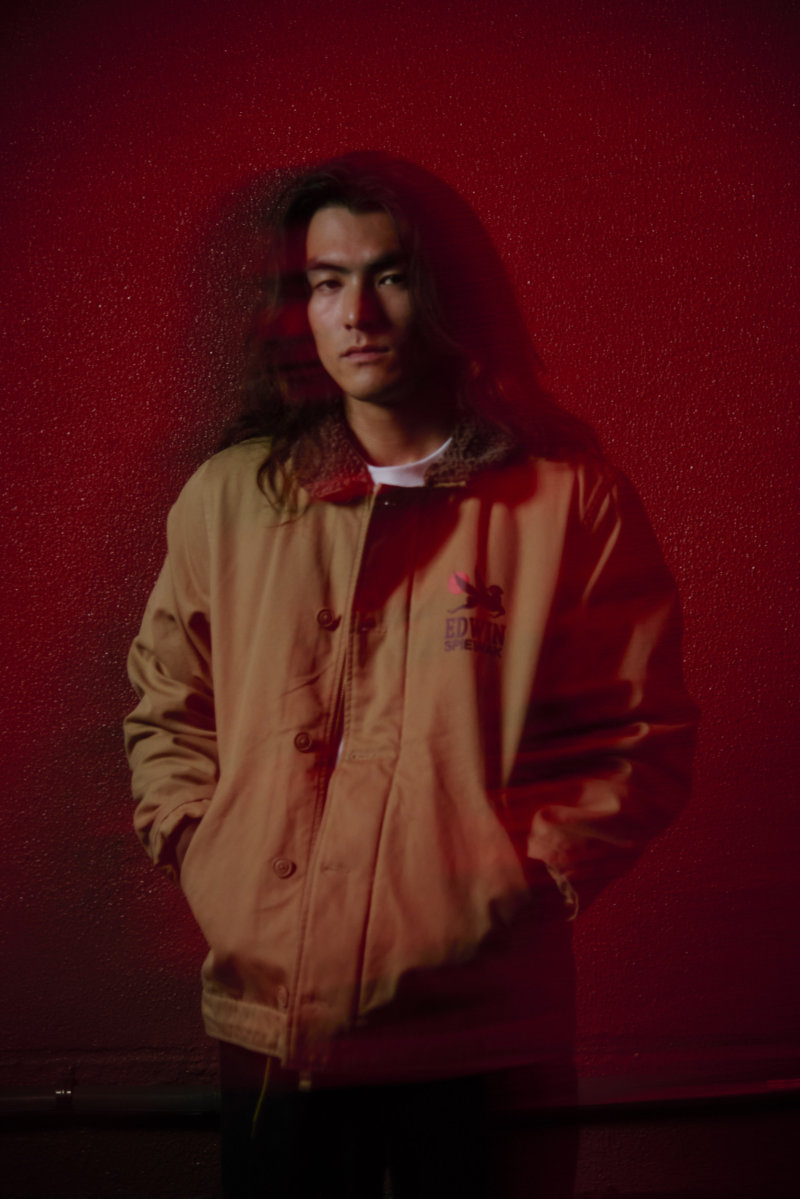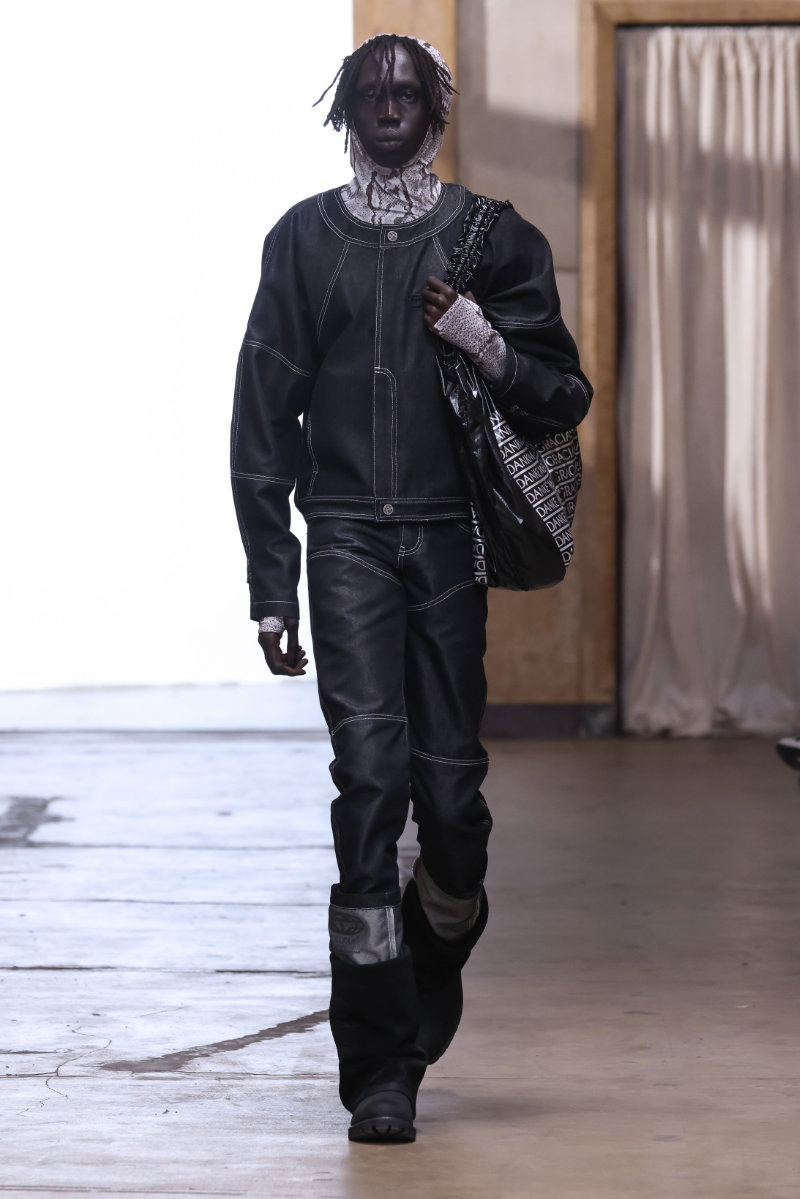
In a hybrid artistic piece that intersects music, fashion, and architecture, Yont studio interpreted the aesthetic codes of “Not A Passenger,” the latest Telekom Electronic Beats clothing capsule, this time in collaboration with Namilia. It’s about putting yourself in the driving seat and choosing what soundtracks that. Messy, sweaty, queer, the project proposes new codes for life that collapse multiple cultural moments to embrace analogue, tangible connection, patience and chaos. We exchanged ideas for Fucking Young!
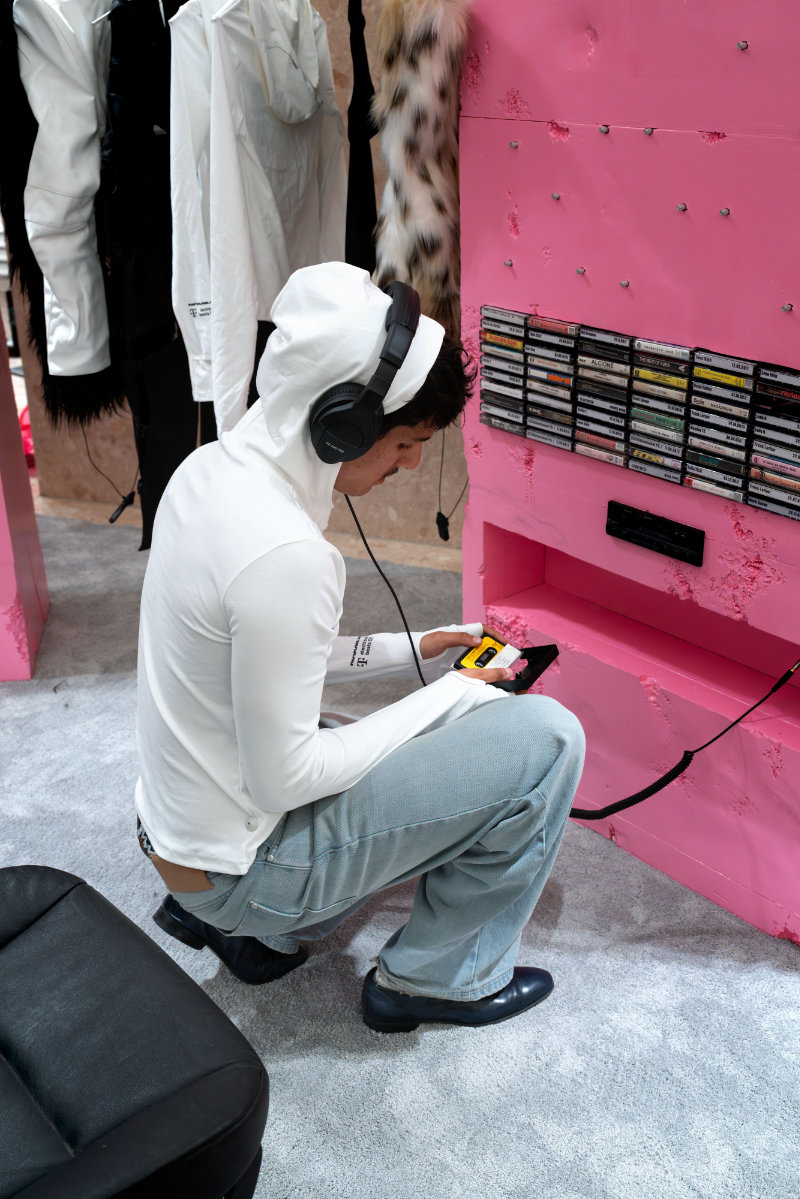
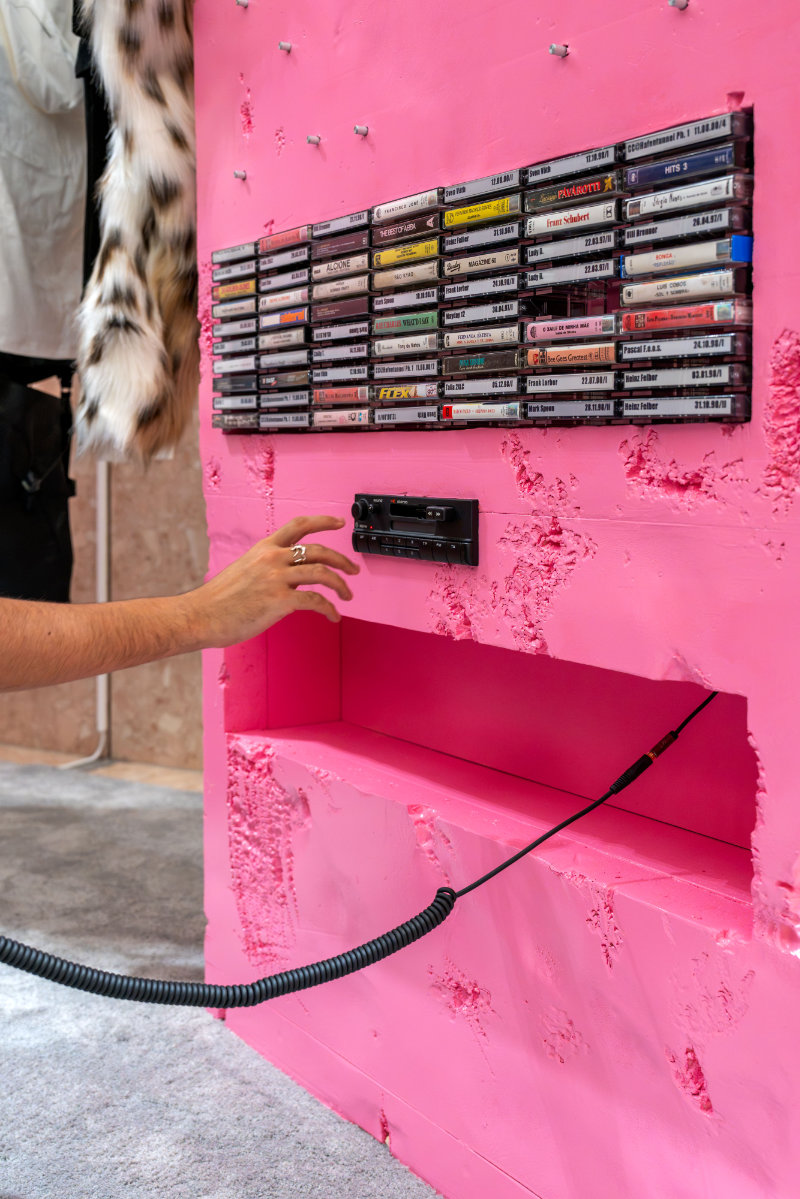
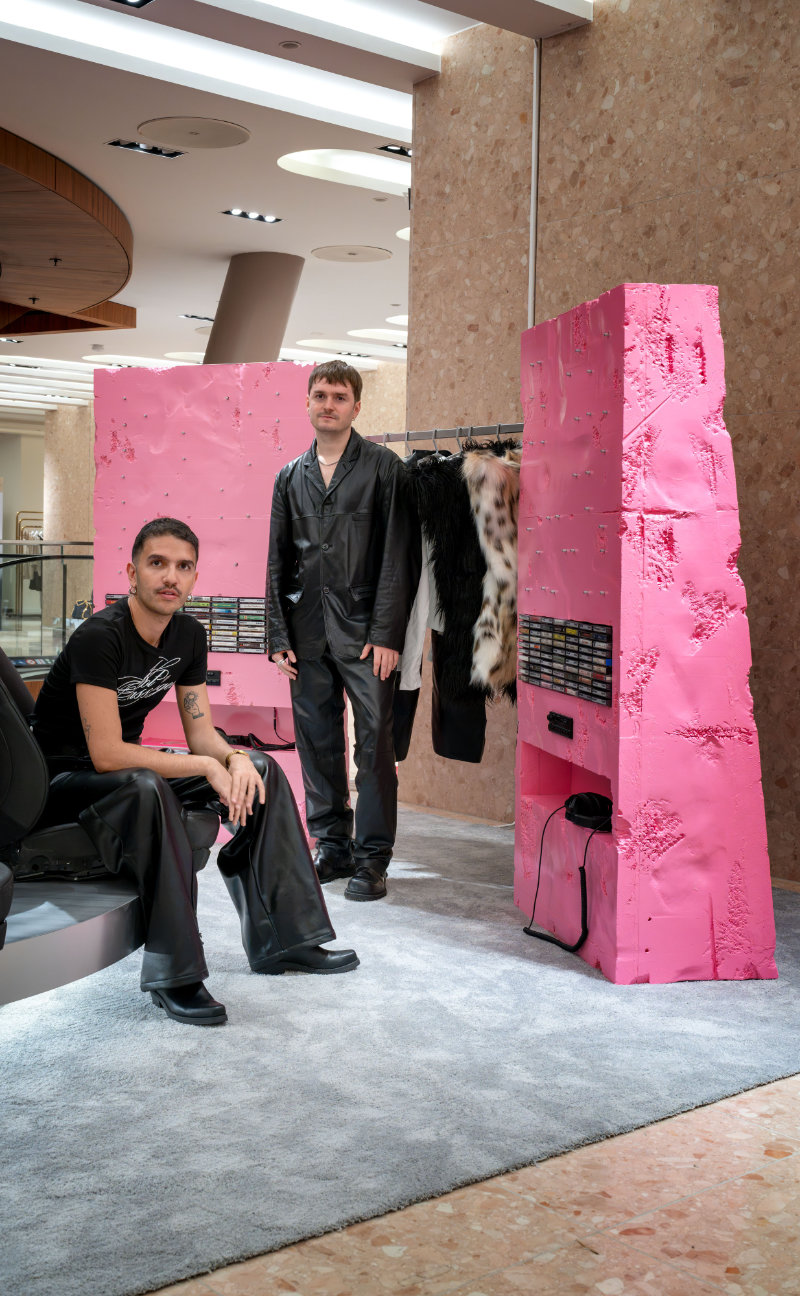
Telekom Electronic Beats x Namilia’s tight line of t-shirt, cap and hoodie encircle an installation at KaDeWe in Berlin that puts music right at the centre (both physically and theoretically) with an interactive listening space complete with about 140 cassette tapes.
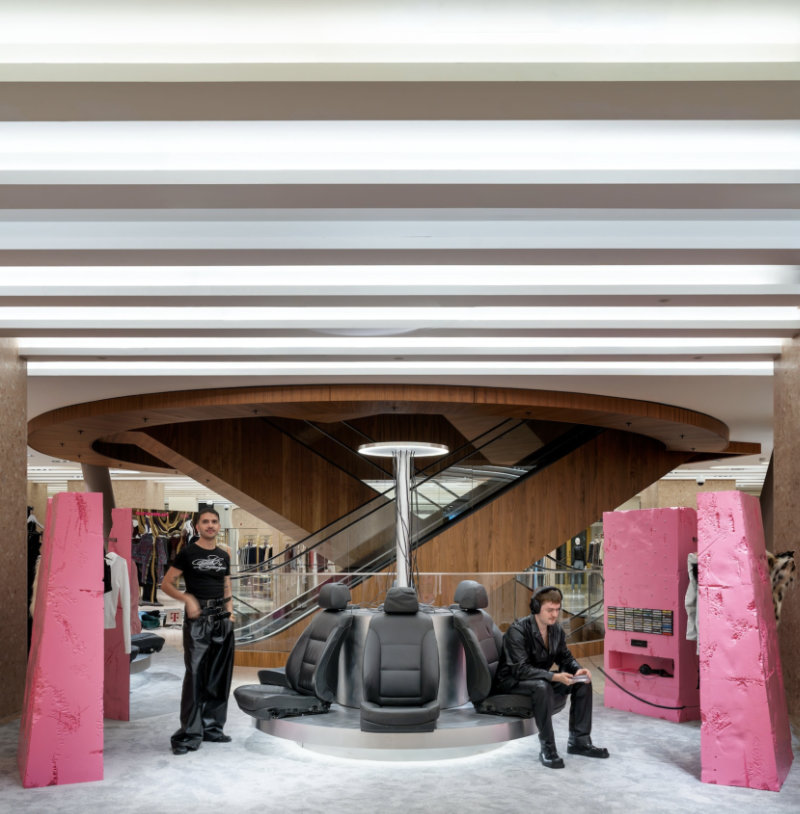
Serdar Ayvaz and Coşan Karadeniz of YONT create a world completed by participation, skilfully forming a conversation on “Passenger” that draws from fashion, music and design. Their hot leather car seats indulge “late-90s fantasies of speed and status”, whilst the profound inclusion of analogue tapes a tool from “before everything became skippable” YONT collage timelines to explore what we want to take forward in this moment. Perhaps, more hope and less distraction. More purpose. The installation offers a moment to pause, to engage deeper in culture.
“‘Not a Passenger’ means being in the driver’s seat, choosing your own influences, expressing yourself freely and constantly reinventing yourself.” Nan Li and Emilia Pfohl of Namilia explain. It’s bold and empowering.
The unifying principle of queer collaboration shouldn’t overdetermine the exciting collaboration that deals as well in the universal: ‘Passenger’ is about choice and agency. YONT’s comment rings true: “For us [queer identity] comes through more as an attitude: exaggeration, humour, contradiction, sensuality, exposure, the freedom to reinterpret familiar objects, focus on non-binary meanings; if it makes sense.” Here, the participant chooses their own journey.
“Passenger” puts the audience and participants into an active rather than passive position. How did YONT interpret that message?
We didn’t want the passenger to be someone just being carried along. In our version, they observe, choose, and build their own experience; there’s no prescribed route, no single focal point. Visitors decide where to sit, what to play, what to touch. Without someone using it, the space stays unfinished.
Music is central, quite literally, as the listening booth is in the middle. Which parties or music events have shaped your identities?
It is quite central to our practice, yes. Places & parties like Berghain, Cocktail d’amore, Labdance, and Powerdance are probably the first ones.
As your interactive sound installation was made in response to the Namilia x Telekom Electronic Beats fashion collection, there’s a certain complexity to the project. How did this collaboration come together?
The project brought together different practices with the same interests: music, fashion, contemporary culture. We’d been following both Namilia and Telekom Electronic Beats for a while, so when they reached out, it felt natural. The collection was co-created with Wet Leg and built around Iggy Pop’s “The Passenger,” which gave us a lot of layers to respond to. It was so much fun.
What ties together the collaborators is queer identity. Along with the pink walls, what symbols has YONT added to the LGBTQ+ storytelling?
We didn’t want queer identity boiled down to a fixed set of symbols. For us it comes through more as an attitude: exaggeration, humour, contradiction, sensuality, exposure, the freedom to reinterpret familiar objects, focus on non-binary meanings; if it makes sense. The installation combines glossy pink volumes, black leather car seats, mirrors, visible cables and hooks that read as something else entirely. Tough and soft, controlled and messy, monumental and intimate, all at once. That contradiction feels inherently queer to us; nothing here has to be only one thing.
How did the pink butt plugs in the concept images make it into the sculpture for “Passenger”?
It’s actually based on Namilia’s perfume bottle, which already carries that erotic ambiguity. We translated its shape into custom 3D-printed hooks on one of the sculptural units. We liked that it’s functional, playful and a bit provocative, like the installation itself. It turns a piece of branding into an architectural detail without losing the humour.
There’s a brutalist element to the cement walls, brought up to date with the modern sports-car seats. The constellation of inspirations spans different eras. Can you chart some of the key cultural moments you reference?
The installation deliberately collapses several eras instead of reconstructing one. The forms feel archaic and brutalist, while the glossy finish and the car seats evoke late-90s fantasies of speed and status. The cassette archive brings in another timeline entirely: mixtape culture, from before everything became skippable. Iggy Pop, Bowie, rhythms from all over the world, e.g., some baile funk, bossa nova, amapiano, or old-school hip hop, or DJs like Lady D. and Sven Väth. We liked placing these moments side by side and letting them form something new.
The “Hot Mess” slogan and the installation bring up ideas of heat, burning rubber, disintegration and reconstruction. As a queer collective, what has YONT left in the past and built anew?
We’ve tried to leave behind the pressure to be polished, resolved, or easy to categorise. “Hot Mess” resonates because mess can be productive; it exposes the systems, emotions and contradictions conventional design tends to hide. What we want to build instead is a practice where different disciplines and identities coexist without a clean hierarchy. Interiors behave like objects, furniture becomes scenography, technical necessities become ornament. Queerness, for us, is partly about dismantling inherited definitions and building something new from the pieces.
The installation foregrounds analogue culture. What are you nostalgic for?
That sense of anticipation. With a cassette you can’t skip endlessly, you choose something, insert it, press play, and wait. Sometimes you land in the middle of a song and just stay there. Also, there is an alternative source of music when it comes to analogue, because they are not all digitised. And the tactility of it all.
Was “Back to the Future” a reference for the furniture, or were any films an inspiration for this meeting of audio and material culture?
Not a direct reference, though we understand the association. It’s a good one! 2001: A Space Odyssey, Blade Runner, and The Matrix would also be close to what we had in mind.
What makes for the biggest self-reinvention: a new haircut, moving to another city? We’d love to hear your anecdotes.
Moving to another city, easily. Coming from Turkey as two queer people and building a life in Berlin meant learning to see ourselves from a different distance. You bring your heritage with you, but also adapt to a new context, re-challenging yourself, etc. It’s refreshing.