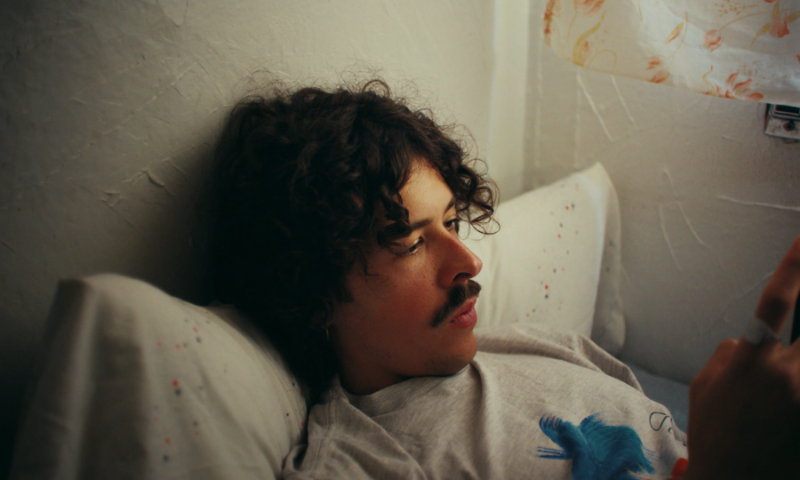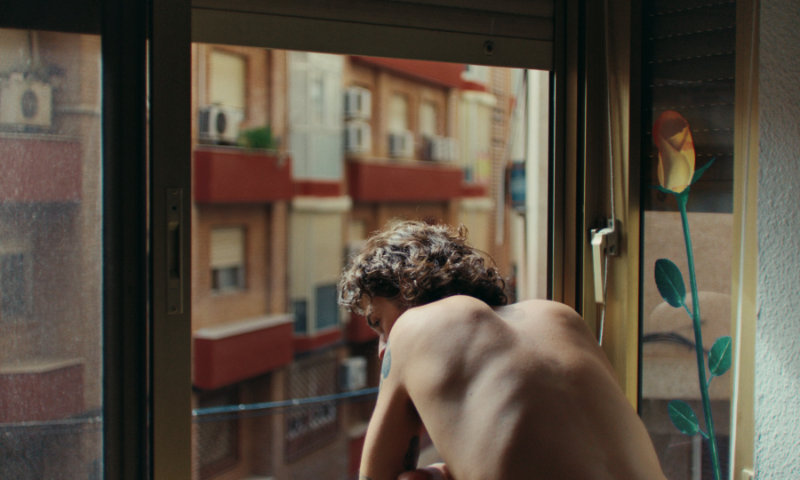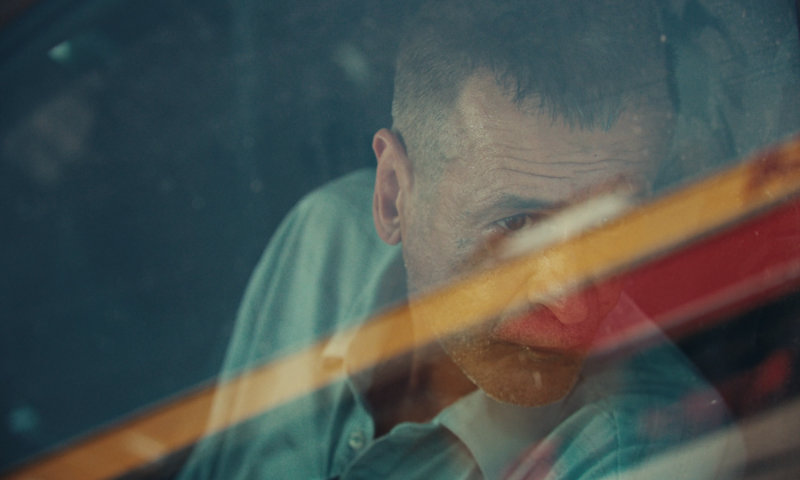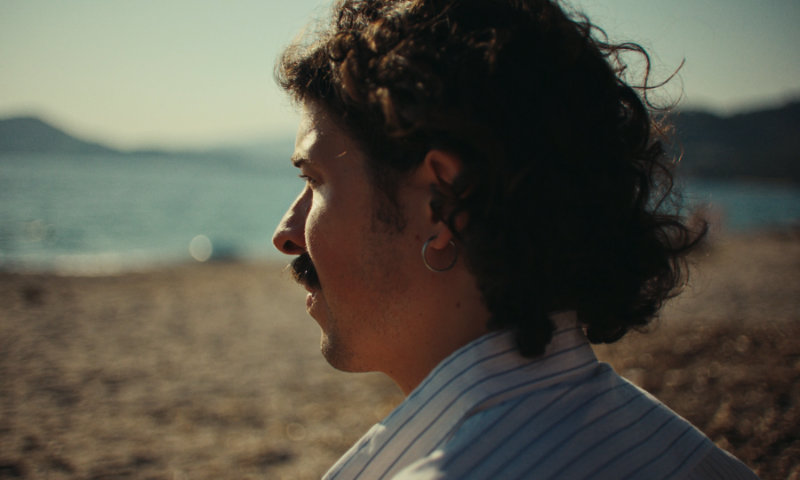
From painting graffiti in the sun-drenched streets of Murcia to commanding attention on the international festival circuit, Spanish filmmaker Carlos Saiz has carved out a distinct voice in contemporary European cinema. His debut feature, Lionel, blurs the fragile boundaries between documentary and narrative fiction, capturing the raw, unpolished contours of a working-class family mourning losses and navigating unspoken affections. Saiz operates not from a blueprint of traditional screenwriting, but from an instinctual need to chronicle reality, transforming real-life relationships, unexpected roadside mishaps in France, and unscripted emotional catharsis into celluloid gold.
In an era dominated by polished aesthetics and calculated commercial formulas, Saiz’s work offers a refreshing, fiercely authentic counter-narrative. He relies on non-actors, lived environments, and profound human vulnerability to construct cinematic experiences that feel intimately lived-in rather than manufactured. Ahead of his anticipated upcoming projects, we sat down with the director to discuss the ethics of filming loved ones, the unexpected chaos of his on-set dynamics, why he refuses to lean on conventional dramatic tropes, and how anchoring his storytelling in absolute truth has fundamentally reshaped both his art and his understanding of family.
Tell me, out of curiosity: why does this family interest you so much?
I’ve been interested in Lionel for a long time, ever since I met him fifteen years ago when we both painted graffiti in Murcia. He’s a real street kid, from a tough neighborhood. His mother just passed away, and his father is completely… I mean, to me, he’s an orphan, but he possesses a very deep sensitivity: he introduces me to music, photography, and cinema. That contrast captivated me right from the start.
So I started taking photos of him with my phone, recording him, making little scenes. Things grew; I met his father, and my mind was blown. Everything grew out of portraiture, just like you might portrait a friend or a family member with your phone. There’s an instinct, and to sound a bit pedantic, it runs throughout art history, a very natural impulse to portray your friends and loved ones.
It started there and went further. When I met his father and realized there was a deeper emotional density suitable for a feature film, we began planning it as a movie. But at first, it was very organic and took place over several years. Later we made a short film that turned out amazing and toured festivals… It was all so gradual that we didn’t even notice; there was never an official moment of “hey, let’s make a feature film.”
So at first you didn’t know anything about Lionel’s family history?
I discovered that later. At first, I wasn’t driven by a specific theme, because I don’t make films based on themes, but rather on characters and territories. However, I later realized that the emotional distance between Lionel and his father was very similar to the distance I had with my own mother. Obviously in a different context, because our families are not alike, but they shared that inability to say things to each other or express affection through words.
And why make a film about Lionel instead of your mother?
Because not everyone is cinematic. It’s a hard word to define, but being cinematic means being ready and willing to be filmed, and they have a natural gift for cinema. They possess a strong ability that not everyone has. In fact, there are key people in their lives who aren’t in the film because they weren’t cinematic, like Lionel’s girlfriend.
How much of this film is truth and how much is fiction?
We tried to make all the emotions and storylines you see on screen real. For example: everything regarding the mother, the deceased brother, the firefighter, Alicia’s boyfriend, and Lionel’s friends. However, fictional elements were introduced, like the scene where Lionel tries to flirt with a girl.
We wanted to show an imperfect kid who, in this generational clash, also resembled his father and was awkward with the opposite sex. We wanted that imperfection, and we knew that if we shot a real party, it wouldn’t happen spontaneously, even if Lionel might act like that in real life. Producers were asking for a more perfect kid to contrast with an imperfect father, but I wanted Lionel to have his flaws too: the scene at the Social Security office confronting that lady, or when he bothers his friend while he’s working painting…
It was also crucial to reflect masculinity and show him acting awkwardly around the opposite sex. In this case, we turned to fiction because you can’t just shoot a party and expect something like that to happen out of nowhere; you have to prepare it a little.
Weren’t you afraid that the story wouldn’t hold up for an entire feature film?
The good thing is that before making the short, they had taken a trip to take Alicia, his sister, to France for the first time. That trip was pure chaos. Lionel kept telling me about it and sending me photos… It was pure cinema.
At times, it wasn’t just the father’s pronunciation that was hard to understand, but also his actions…
Sure, now I have my doubts. Sometimes you only understand two out of every five words from him. Some people told me we should have included subtitles, while others loved it as it is. I’m in favor of subtitles, although cinema sometimes overemphasizes them. When you talk to someone on the street or at a party, you don’t understand every single word either. The dialogue is fine, but so is his animalistic side.
Besides, I think it’s justified: at the beginning, he’s presented almost like an ogre. In fact, his daughter refers to him as “daddy ogre.” If you notice, the opening is dark, set in the cave where they make bread. That lack of clarity reinforces his raw character; he represents the instinctive side, and his son represents the rational one.
Did they ever hesitate to show so much intimacy?
They won’t stop! The father keeps calling me to make another movie.
Where did you draw the line?
There is a lot of love between us. It’s like when you sit down with a friend to talk: you know exactly what you can discuss and what you can’t. I knew those boundaries. There are many of their secrets, especially the father’s, that I cannot reveal in an interview or a film. There was strong trust that the shoot would be a safe space. There are topics you can discuss and others you can’t. Obviously, the mother’s death is addressed, which is a heavy subject, but there was an unwritten pact about how far we could go.
Was there ever a moment where one of them said, “cut this out”?
It was us, not them. For instance, while shooting in the barbershop, the father starts talking about the mother, and Lionel breaks down in tears just listening to him. We decided it was too much for that moment and saved it for the editing room. It would have felt too exploitative at that moment, and we weren’t looking for that.
What decision-making power did the non-actors have during post-production?
None. They saw the movie, and this was a mistake on my part, directly at Seminci, in a packed theater for the world premiere. It was a massive shock for them, and then suddenly having to step onto the stage for Q&As… It was a huge impact, and I wouldn’t do it again. Not because they wanted to change anything, because there is so much love and respect between us, but because of the shock.
How did they take it?
They were stunned: the sisters crying heavily, Lionel crying too, and the father completely disoriented. What blows my mind is that the father, and especially his wife, Lali, a traditional woman from a small town, absolutely love the film.
Wait, the father has a wife?
Yes, the father has a wife, Lali. In fact, at the beginning of the movie, even though you can barely understand him, he says: “I’m going to tell Lali not to notify anyone when I die.” And she loves the result; I don’t really know why!
A scene that felt a bit disorienting was the rave scene. Why not sleep in a hotel instead of waiting in the car and partying?
It’s true that maybe we didn’t portray the map and geographical distances clearly. They are in Marseille and heading to Toulon, which is over an hour away. They are passing through; it happens to be Alicia’s birthday, and she wants to go to a rave. The others give in, they are supposed to go in, though they regret it later, and wait in the car to drive back. It’s a middle point, like driving to Murcia and staying out for a party night in Albacete. The crazy thing is that the rave was real.
Do you want to make a sequel?
I want to make something like a spin-off focused on the father. He doesn’t know anything yet, because one of the things I’ve learned is that I can’t tell him at the beginning; if you do, you might spend three years looking for funding, and those three years would be a constant hassle with him asking “When are we shooting? When are we shooting?”
So he knows nothing, but there is a story based on reality: a trip he has to make to Paris to sort out some paperwork. I want to build something around that, though I don’t want to reveal too much yet. It would focus solely on the father.
No plans to introduce the family?
If we do it, it would be very organic, but we’ll see.
Speaking of family, Lionel’s sister-in-law, the one they go yell at in her house… Does that woman actually exist?
She exists, the brother’s story is true, and it’s true that he hates her, but that wasn’t actually her house.
Do you think that if your relationship with your mother had been different, you would have made this movie?
That’s a great question. I don’t know. I think if I had an idyllic family and perfect, high-level communication, I wouldn’t have made it; exploring family themes wouldn’t have crossed my mind.
How is your relationship with your father?
With my father, I have a different kind of communication, a softer one… With my mum, it’s all about the inability to say things face-to-face and how we end up giving love through food instead. Like Lionel making bread or giving a sandwich to his son… It’s always objects, never words. With food, I’ve had many issues with my mother, because it was the only way she found to say “I love you.” Food connected everything.
How did you arrive at the final scene of the film?
The original ending was going to be different. Suddenly, we decided to shoot everything chronologically, which was another battle with production, because first everything is in Murcia and then everything is in France. We fought hard for it, even if returning to shoot that final scene was more expensive.
That’s when you realize what you’ve achieved: in that moment, you go, “Wow, look at what we’ve done.” I simply told them, “Say goodbye,” and that happened. Unexpectedly, Lionel felt the need to ask his father about his mother, creating an unplanned catharsis. You realize the subconscious had probably planned that moment of farewell, a closing where they had to speak their mind because otherwise, they didn’t know when they’d get the chance again.
I remember it was a very intense moment for me: I had to walk around the block because I started crying so hard that I felt embarrassed; I hid and walked away for a moment.